News
NLC backs civil servants’ demand for ₦500,000 minimum wage, ₦500/litre petrol

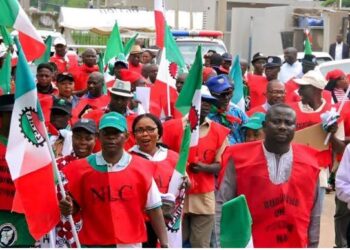
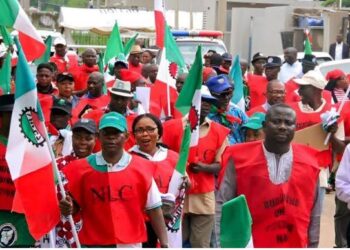
The Nigeria Labour Congress (NLC) has backed the demand by civil servants for a new national minimum wage of ₦500,000 and a reduction in the price of petrol to ₦500 per litre, as workers seek relief from rising living costs.
The demand was contained in a letter addressed to President Bola Tinubu by Olowoyo Gbenga, National Secretary of the Joint National Public Service Negotiating Council (JNPSNC), Trade Union Side.
The labour council called on the Federal Government to immediately constitute a committee to negotiate a new national minimum wage ahead of January 2027.
Labour demands fresh wage negotiation
The unions described the proposed ₦500,000 minimum wage as realistic, arguing that the continued increase in the cost of essential goods and services had weakened workers’ purchasing power.
They also raised concerns over the rising price of petrol, which they said had reached ₦1,430 per litre and above in some parts of the country.
According to the council, the increase in fuel prices has further worsened the cost-of-living crisis by driving up transportation expenses and the cost of food production.
The JNPSNC gave the Federal Government until September 30, 2026, to address its demands, warning that worsening economic hardship was creating tension among workers.
Unions reject palliatives
The council represents several public-sector unions, including the Nigerian Civil Service Union, Association of Senior Civil Servants of Nigeria, Medical and Health Workers Union and National Association of Nigerian Nurses and Midwives.
The unions criticised temporary food-distribution programmes and other palliatives, arguing that the interventions were not sustainable and did not reach the majority of Nigerians.
They instead called for measures capable of providing broader economic relief, particularly through a reduction in the cost of petrol.
The council said making petrol available at ₦500 per litre would have a wider impact on Nigerians by reducing transportation costs and expenses associated with food production.
It argued that lower fuel prices would help ease pressure on households and businesses while reducing some of the economic effects of high transportation costs.
Workers seek improved purchasing power
The labour unions also maintained that improved remuneration for workers and greater stability in fuel prices were necessary to restore purchasing power and improve productivity.
They said addressing the demands would also contribute to maintaining industrial peace amid growing concerns over the economic conditions facing workers.
The council therefore urged the Federal Government to engage with organised labour on the proposed new minimum wage and take steps to reduce the price of petrol as part of measures to address the cost-of-living pressures.



APC presidential campaign council to Atiku: Explain legal basis, ₦21 trillion cost of petrol subsidy plan

Nigeria’s envoy to Jamaica presents credentials, seeks deeper bilateral ties

I rejected N250m bribe to support Obasanjo’s third term bid – Farouq Aliyu

What Jonathan’s airport use means for Ebonyi aviation facility – State government

Police arrest three suspected cattle rustlers, recover 11 cattle in Jigawa

Emulate Uba Sani on mass transit scheme – Tinubu to govs

‘Lawyer who’s never entered courtroom’ | ‘Engineer running streetlights on generators’ — Makinde, Alli trade jabs

Ogun 2027: Collect APC money, vote PDP – Sowunmi-Kolapo
-

 News2 days ago
APC presidential campaign council to Atiku: Explain legal basis, ₦21 trillion cost of petrol subsidy plan
- News3 days ago
Nigeria’s envoy to Jamaica presents credentials, seeks deeper bilateral ties
- Breaking3 days ago
I rejected N250m bribe to support Obasanjo’s third term bid – Farouq Aliyu
- News3 days ago
What Jonathan’s airport use means for Ebonyi aviation facility – State government