News
TEDx Wibsey: Nigerian scholar advocates people-centred city design

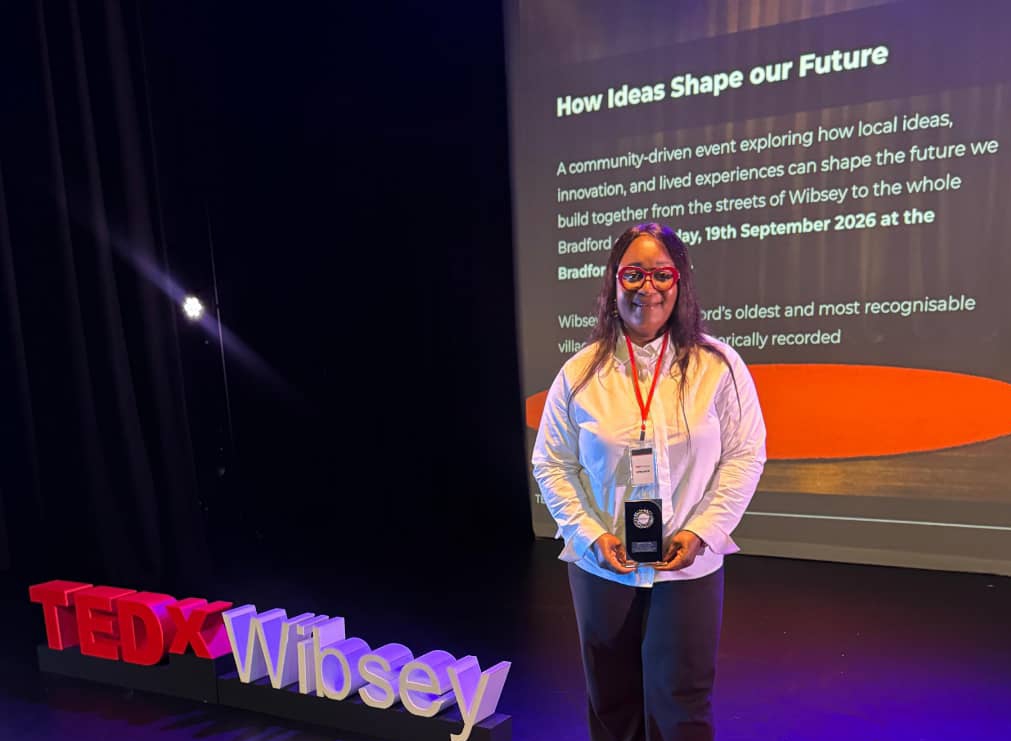

Oyibo Salihu
A Nigerian-born public speaker, Dr. Osemeike Gloria Eyieyien, has called for a shift in urban planning towards designing cities that promote human connection and a sense of belonging among diverse populations.
Dr. Eyieyien made the call while speaking at the TEDx Wibsey event in Bradford, United Kingdom, which attracted scholars, diplomats and thought leaders from across the globe.
In her presentation titled “The Future Is Social Product: Designing Cities for Connection,” she emphasised that cities should go beyond merely accommodating people of different races to becoming spaces where individuals can genuinely interact, engage and build meaningful relationships.
According to her, the future of urban development must prioritise people and relationships, noting that physical infrastructure alone cannot foster unity or social cohesion.
“At a time when cities are increasingly shaped by technology and rapid development, there is a need to ask how we can intentionally design spaces that bring people together to live peacefully and productively,” she said.
Dr. Eyieyien stressed that creating environments where people feel a true sense of belonging is essential for global peace, unity and progress, particularly in multicultural societies.
She further explained that cities are not just defined by buildings, roads and infrastructure, but by the quality of social interactions they enable.
“From public spaces and streets to neighbourhoods and community facilities, design can create opportunities for people to meet, connect and actively participate in community life,” she noted.
She introduced the concept of “social product,” which focuses on the social value generated by spaces, rather than just their physical attributes.
Dr. Eyieyien challenged stakeholders in urban development to rethink how environments are structured, posing critical questions about how streets, public spaces and neighbourhoods can be designed to encourage interaction and community bonding.
Her message, she said, is particularly relevant to Bradford, a city known for its cultural diversity, as well as other cities grappling with population growth and social integration.
“As cities continue to evolve, the real challenge is not just accommodating more people, but creating spaces where meaningful connections can thrive,” she added.
Dr. Eyieyien concluded that the cities of the future must be intentionally designed to foster interaction, participation and a strong sense of belonging, rather than simply serving as places where people reside.



AGF Urges Court to Throw Out El-Rufai’s ₦1bn Rights Suit

âThe money was for the artistesâ â Peter Okoye admits receiving about $800k in royalties, says Jude got nothing

Naira faces fresh pressure due to strong dollar, fuel costs

AFC supports ₦729 billion series 2 bonds to advance Nigeria’s power sector reforms
âHe is fine. Most of the girls are lying and bitter because he didnât end up with themâ â Audrey Cyrilâs fiancéâs brother speaks on infidelity saga

Court adjourns El-Rufai’s N1 billion rights suit against ICPC, others

‘Don’t hire mobs, buy votes’ – IGP Disu warns politicians ahead 2027 elections

100-year-old woman, 60 others memorise Qur’an in Kano
-

 Breaking3 days ago
AGF Urges Court to Throw Out El-Rufai’s ₦1bn Rights Suit
- Special Reports2 days ago
âThe money was for the artistesâ â Peter Okoye admits receiving about $800k in royalties, says Jude got nothing
- News3 days ago
Naira faces fresh pressure due to strong dollar, fuel costs
- News13 hours ago
AFC supports ₦729 billion series 2 bonds to advance Nigeria’s power sector reforms