News
Kebbi: Gov. Idris positioning education for the long haul

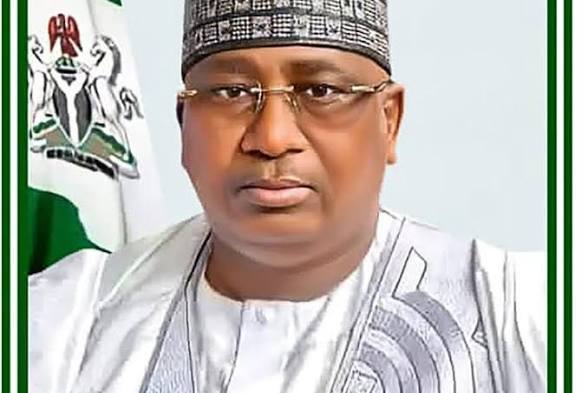
Education has emerged as one of the defining areas of the Governor Nasir Idris administration in Kebbi State, not only because of the volume of interventions recorded across the sector, but also because of the breadth of the government’s approach to rebuilding it.
From basic education to tertiary institutions, from classrooms and school furniture to teacher recruitment and training, and from staff welfare to scholarships for students, the administration has pursued interventions that suggest an understanding that rebuilding education requires attention to the entire chain.
This is perhaps understandable given the background of Governor Idris, who came into public office from the teaching profession and the teachers’ union movement. Before becoming Governor of Kebbi State, he was a teacher and former President of the Nigeria Union of Teachers. His experience within the education system appears to have influenced the priority his administration has given to the sector.
The impact is perhaps most visible at the basic education level, where the condition of schools directly affects the largest number of children and families.
Within the first eight months of the administration, more than N9 billion was committed to repositioning education, with interventions covering the construction of classrooms, provision of motorised boreholes and hand pumps, toilets, furniture, renovation of dilapidated classrooms, textbooks and writing materials.
As a teacher, Gov Idris is well aware that these are the things that determine whether a children of the poor masses would walk into functional schools that are convenient for learning, or an environment that makes learning unnecessarily difficult.
Nasir knows better than most, that a classroom without furniture takes away the dignity of learning, breaking the will of the pupils grow into scholars that can challenge their counterpart who sat and learnt in convenient chairs. Likewise, a school without water creates another burden for children and teachers, even as dilapidated classrooms can become a danger to the students. And without books and other learning materials, even the best teacher will find it hard to transmit knowledge.
It is against this background that the administration’s investment in basic education becomes significant. Between June 2023 and May 2024, the State Universal Basic Education Board spent more than N8.17 billion in expenditure on construction, renovation, procurement, furnishing and other infrastructure across schools in the state.
Among the projects commissioned during the period were three Junior Secondary/Vocational Schools located in Birnin Kebbi, Bagudo and Ngaski.
The emphasis on Junior Secondary and vocational education is particularly important because this is the stage where many children begin to develop the academic and practical skills that will eventually determine the direction of their education and, in many cases, their future livelihoods.
The administration has also sought to improve access for children who have traditionally remained outside the formal education system. To this end, six mega schools were being constructed to provide access to Almajiris and other out-of-school children, while other interventions were directed at expanding the capacity of existing schools.
The significance of these investments goes beyond the structures themselves. A government can construct hundreds of classrooms, but the real question is whether there are enough teachers to occupy them and whether those teachers have the skills and motivation to deliver quality instruction.
Governor Idris’ administration appears to have recognised this early. In January 2024, 2,400 primary school teachers commenced training under a state government programme designed to strengthen teaching capacity. The Governor, while declaring the training open, pledged that teachers would receive particular attention under his administration.
The administration subsequently moved into recruitment, bringing 2,000 new teachers into the system in 2025 to address manpower shortages in the state’s schools. The exercise attracted 18,000 applications, with 4,000 candidates screened in the process. Graduates, HND holders, postgraduate qualification holders and NCE holders formed part of the pool from which the recruits were selected.
The logic is simple: schools need teachers, but the system needs more than just numbers. It needs competent teachers who are adequately prepared for the changing demands of education.
This may also explain the administration’s interest in reviving teachers’ training colleges. In 2024, Governor Idris announced plans to establish two teachers’ training colleges, one for males and another for females, arguing that the disappearance of such institutions had contributed to the weakening of teaching quality and methodology.
The proposed institutions, if realised and properly sustained, could provide another layer to the state’s effort to strengthen the teaching profession from the point of entry rather than waiting until teachers are already in the classroom before addressing gaps in their preparation.
There is also the issue of keeping children in school. For many families, the cost of education does not end with the provision of a classroom. Books, uniforms, transportation and other expenses can become barriers, particularly for children from less privileged homes.
This is why the administration’s interventions for students and scholarship beneficiaries are an important part of the wider education story. In 2024, Governor Idris approved N309.58 million for foreign scholarship obligations covering 63 students in India and 23 in Egypt. The state government also reported that local scholarships had been paid to students studying in 36 tertiary institutions across Nigeria.
By 2025, the administration had spent about ₦2.7 billion on tuition fees for Kebbi students studying within Nigeria and abroad, while more than ₦4 billion in outstanding scholarships, tuition fees and related expenses had also been cleared.
The message running through these interventions is that access to education cannot be separated from affordability. A child cannot benefit from a well-equipped school if circumstances force that child out of school. Similarly, a student who has secured admission into a university can still lose the opportunity if tuition and other obligations remain unpaid.
It is only after looking at these interventions at the basic and secondary levels that the administration’s tertiary education interventions become even more significant. At the tertiary level, Governor Idris has also turned attention to an area that has repeatedly generated tension in Nigeria’s higher education system: staff welfare.
The Kebbi State Government approved and released N172 million for the payment of the Consolidated Academic Tools Allowance and Consolidated Non-Teaching Tools Allowance to the ASUU, SSANU, NASU and NAAT chapters of the state-owned Abdullahi Fodiyo University of Science and Technology, Aliero.
But the administration did not stop at clearing the outstanding obligations. Governor Idris also approved the incorporation of the CATA/CONTTA structure into the university’s monthly subvention, creating an annual financial commitment of more than N2 billion. Another N151.51 million was approved and released for the payment of identified annual increment arrears owed to university staff.
The approach is significant because it moves the issue from emergency intervention to recurrent financial planning. Instead of allowing obligations to accumulate until they become industrial disputes, the government has sought to build them into the institution’s regular funding structure.
There has also been substantial investment in facilities across tertiary institutions. More than ₦2.07 billion was approved and released for interventions in state-owned tertiary institutions, with the aim of strengthening facilities and improving the environment for teaching, learning and research.
One of the most visible interventions was the distribution of seven 32-seater, fully air-conditioned coaster buses to seven state-owned tertiary institutions. The beneficiaries are Abdullahi Fodiyo University of Science and Technology, Aliero; Adamu Augie College of Education, Argungu; Kebbi State College of Nursing Sciences, Birnin Kebbi; Kauran Gwandu College of Nursing and Midwifery Sciences, Ambursa; College of Health Sciences and Technology, Jega; Kebbi State Polytechnic, Dakingari; and College of Advanced and Legal Studies, Yauri.
The intervention may appear simple, but the daily functionality of an institution is often determined by such details. Staff and students need to move; institutions need basic facilities; and the learning environment must be made as conducive as possible.
Beyond individual interventions, however, the more interesting development may be the attempt to give education a longer-term policy and financial framework. Kebbi’s 2025 approved budget allocated more than ₦10.56 billion to basic education capital expenditure, including the construction of primary schools and ECCDE centres, construction and renovation of Junior Secondary Schools, renovation of existing schools and provision of furniture. Another N3 billion was provided for the digitisation of primary school employees.
The state has also developed a Medium Term Basic Education Strategic Plan for 2024–2027, undertaken teacher baseline mapping and produced a final report on the 2025 basic education teacher recruitment.
This is important because the future of education cannot be built around projects alone. It requires a system that knows how many teachers it has, where the gaps are, which schools need intervention, how children are performing and where resources should be directed.
Governor Idris’ background as a teacher may have influenced the attention being given to these issues, but the larger question is whether the interventions can be sustained and translated into measurable improvements in learning outcomes.
That is ultimately where the success of any education reform should be judged. For now, however, Kebbi’s direction is difficult to miss.
The administration is investing in the physical infrastructure of schools, expanding access, recruiting and training teachers, supporting students, addressing scholarship obligations and strengthening tertiary institutions. More importantly, these interventions are increasingly being backed by budgetary commitments and planning frameworks.
The real achievement, therefore, may not be any single classroom, school, bus, scholarship or financial release. It may be the attempt to build an education system in which the different parts work together.
A child needs a school; the school needs a teacher; the teacher needs training and the right tools; the student needs support to remain in school; and the tertiary institution needs the resources to prepare the next generation.
If that chain remains intact, then the investment being made today will continue to produce dividends long after the individual projects have been commissioned.
That is why the story of education under Governor Nasir Idris may ultimately be less about the number of projects delivered and more about whether Kebbi is building an education system capable of serving its people for the long haul. And from the direction of the interventions so far, that appears to be the destination.
…Lukman writes from Birnin Kebbi



TikTok influencer Kholegrams faces backlash after asking fans to pay ₦100,000 to hang out with her

Dollar to Naira: Naira holds steady as official rate trades at ₦1,327.08

HK boss denies maltreating man, explains why he sold his phone for ₦90,000

2027: Ondo APC constitutes presidential campaign council, nominates Aiyedatiwa chairman
Iran president says talks with US is ‘meaningless’

500 women groups endorse Tinubu’s re-election as First Lady assures better Nigeria

Helicopter Crashes In Nigeria, Many Feared Dead

Court orders NDLEA boss appearance in Kyari alleged cocaine trial
-

 Special Reports3 days ago
TikTok influencer Kholegrams faces backlash after asking fans to pay ₦100,000 to hang out with her
- Special Reports3 days ago
Dollar to Naira: Naira holds steady as official rate trades at ₦1,327.08
- Special Reports3 days ago
HK boss denies maltreating man, explains why he sold his phone for ₦90,000
- Politics3 days ago
2027: Ondo APC constitutes presidential campaign council, nominates Aiyedatiwa chairman