News
South-east group defends Orji Kalu over ₦14.286 billion constituency projects


The Coalition of South East Youth Leaders (COSEYL) has defended Senator Orji Uzor Kalu over the alleged ₦14.286 billion constituency-project allocation attributed to him by the Labour Party senatorial candidate for Abia North, Chief David Ogba Onuoha Bourdex.
COSEYL, in a statement signed by its President General, Comrade Goodluck Ibem, and Publicity Secretary, Comrade Okey Nwaoru, described Bourdex’s interpretation of the funds as a misunderstanding of the constitutional roles of the National Assembly and the executive arm of government. Blueprint reports
The group argued that constituency-project allocations contained in the federal budget should not be interpreted as money personally given to legislators for execution.
According to COSEYL, the National Assembly is constitutionally responsible for lawmaking, representation, oversight and participation in the budgetary and appropriation process, while ministries, departments and agencies (MDAs) are responsible for implementing projects after appropriation.
COSEYL challenges Bourdex
The South East youth group challenged Bourdex to produce documentary evidence showing that the alleged ₦14.286 billion was transferred to Kalu’s personal account, constituency account, political organisation or any other account under his direct control for the execution of federal projects.
COSEYL said that without such evidence, describing the amount as money “given” to the senator could create a misleading impression about how constituency interventions are funded and implemented.
The group maintained that there was a distinction between a legislator identifying or advocating for a project in the budget and the actual execution of such a project.
It said once a project is appropriated in the federal budget, the relevant government agency is responsible for procurement, contract award, supervision and implementation in line with public-finance and procurement regulations.
The group therefore urged political actors to distinguish between budgetary provisions and actual disbursement of public funds.
‘National Assembly appropriates, MDAs execute’
COSEYL said the controversy surrounding the alleged ₦14.286 billion allocation had highlighted the need for greater public understanding of the budgetary process.
It explained that constituents could identify roads, schools, healthcare facilities, water projects and other interventions required in their communities, while their representatives could facilitate their inclusion in the national budget.
However, according to the group, such inclusion does not mean that the legislator becomes the custodian or implementing authority of the funds.
“A budgetary allocation to a federal project is not the same thing as money handed to a legislator,” the group said.
COSEYL added that the appearance of a project under a constituency-intervention heading did not automatically make the legislator who advocated for it the owner or executor of the project.
The group said questions about the performance of such projects should instead focus on the responsible MDA, contractor, contract value, amount appropriated, funds released, amount paid and level of implementation.
Calls for scrutiny of project execution
While defending the legislative role in the budget process, COSEYL said concerns over abandoned, delayed or poorly executed constituency projects should not be ignored.
The group said where there are questions about the implementation of a project, appropriate government agencies and contractors should be subjected to scrutiny.
It listed issues that should form part of such scrutiny, including the identity of the implementing agency, contract award process, contract value, amount appropriated and released, payments made and the actual state of the project.
According to COSEYL, those are the issues that should form the basis of an accountability debate rather than presenting the entire value of budgetary provisions as funds personally received by a senator.
The group said genuine accountability should be based on documentary evidence and verifiable information.
COSEYL raises Bourdex’s public record
COSEYL also questioned Bourdex’s record in public office, noting that he previously served as chairman of Ohafia Local Government Area of Abia State.
The group said his experience in local government administration should give him an understanding of the distinction between government revenue, budgetary appropriation, administration and project execution.
It consequently challenged him to make his own record in public office available for public scrutiny if he was seeking to engage voters on the issue of accountability.
COSEYL said questions about resources available to his administration, projects undertaken, completed projects and their impact on residents should equally form part of any conversation about public accountability.
It argued that those seeking public office should be willing to have their previous records examined alongside their criticisms of other public officials.
Group highlights Kalu’s interventions
In defending the senator, COSEYL said Kalu had facilitated various interventions in Abia North covering education, infrastructure, empowerment, employment facilitation, healthcare and community development.
The group maintained that residents of the senatorial district were in a position to assess the impact of interventions in their communities.
COSEYL said political disagreements should not result in the misrepresentation of the responsibilities of elected representatives or the workings of government.
It also cautioned political actors against using the economic difficulties confronting Nigerians as a basis for making unsubstantiated allegations against political opponents.
‘Political engagement should not be criminalised’
The group further said the presence of citizens at political gatherings should not automatically be interpreted as evidence that they had been financially induced.
According to COSEYL, political leaders routinely engage with constituents and supporters across communities, and such interactions should not be presented as evidence of wrongdoing without credible supporting evidence.
It nevertheless maintained that allegations involving public funds should be subjected to scrutiny where documentary evidence exists.
The group said political opponents should be free to question the performance of public officials, but such criticisms should be anchored on verifiable facts.
COSEYL urges Abia North voters to focus on records
COSEYL urged residents of Abia North and the wider South-East to examine political claims critically and distinguish between allegations, budgetary provisions and actual expenditure.
It said the debate over constituency projects should focus on what was appropriated, which agencies were responsible for implementation, what was released and whether the projects were delivered as intended.
The group reiterated that the National Assembly’s role includes lawmaking, representation, oversight and participation in the appropriation process, while executive agencies are responsible for implementing government projects.
It therefore called on Bourdex to provide documentary evidence for his allegation concerning the alleged ₦14.286 billion attributed to Kalu.
COSEYL said a clearer understanding of the constitutional responsibilities of the various arms of government would promote a more informed debate ahead of the political contest in Abia North.



TikTok influencer Kholegrams faces backlash after asking fans to pay ₦100,000 to hang out with her

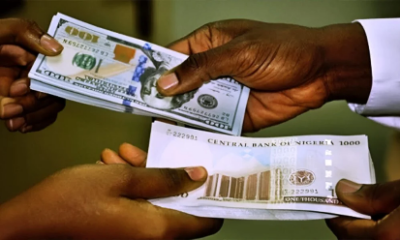
Dollar to Naira: Naira holds steady as official rate trades at ₦1,327.08

HK boss denies maltreating man, explains why he sold his phone for ₦90,000

2027: Ondo APC constitutes presidential campaign council, nominates Aiyedatiwa chairman

Helicopter Crashes In Nigeria, Many Feared Dead
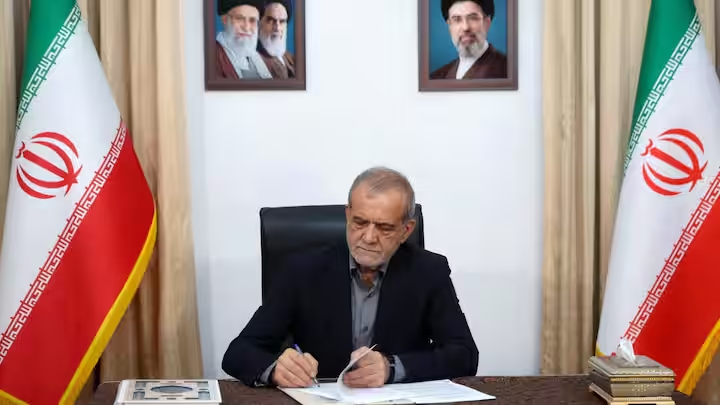
Iran president says talks with US is ‘meaningless’

Food critic, Opeyemi Famakin shares warning spa owner gave him against taking IV infusion for skin glow

Murder suspect slumps, dies at Bayelsa High Court
-

 Special Reports3 days ago
TikTok influencer Kholegrams faces backlash after asking fans to pay ₦100,000 to hang out with her
- Special Reports3 days ago
Dollar to Naira: Naira holds steady as official rate trades at ₦1,327.08
- Special Reports3 days ago
HK boss denies maltreating man, explains why he sold his phone for ₦90,000
- Politics3 days ago
2027: Ondo APC constitutes presidential campaign council, nominates Aiyedatiwa chairman