Special Reports
Governor Sanwo-Olu declares âstate of emergencyâ on waste management

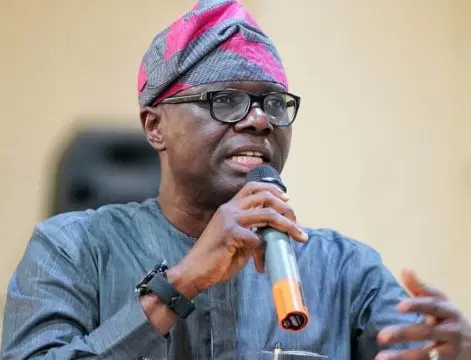

Governor Babajide Sanwo-Olu of Lagos State has declared a “small state of emergency” on waste management to tackle mounting refuse collection and disposal challenges across the metropolis.
The declaration followed an inspection tour of the Olusosun dumpsite in Ojota, where the governor was accompanied by Deputy Governor Dr. Obafemi Hamzat and the Commissioner for Environment and Water Resources, Tokunbo Wahab. The visit was aimed at identifying operational bottlenecks and deploying immediate, medium, and long-term interventions.
Acknowledging recent pressure on waste collection that led to indiscriminate refuse dumping, Sanwo-Olu outlined the state’s immediate strategy to overhaul operations.
“We are here for ourselves to see what the problem is and what is happening, so that we can clearly declare what we will call a small state of emergency,” Sanwo-Olu said. “This is necessary for us to get out of this very unpleasant situation and restore effective waste collection and disposal across Lagos.”
To address the backlog, the state is expanding daily intake at Olusosun from 250–350 trucks to 350–450 trucks by increasing active tipping points from two to as many as five. Interventions are also slated for Solu 3, Iwulepe in Ikorodu, Oke-Osho in Epe, and Erikitte in Badagry.
“We are hoping that in another six weeks, we will have four active dump sites , Olusosun, Solu 3, Iwulepe and Oke-Osho with a fifth one at Erikitte in Badagry,” Sanwo-Olu noted. “What that will do is enhance and improve the turnaround of trucks on the various roads, so that they do not come to one dump site and spend 12 hours or even an entire day before they can discharge.”
As part of the structural overhaul, construction is underway for two 2,400-metric-tonne transfer loading stations at Olusosun and Solu 3 in Alimosho. These hubs will feed waste to material recovery facilities being established in Oke-Osho and Erikitte.
“The two transfer loading stations should be able to receive about 500 trucks per day, while the material recovery sites will allow us to further sort and convert waste into other useful materials,” he explained. “These are medium to long-term solutions, and we expect the facilities to begin taking shape before the end of the year, with completion expected between the second quarter of next year and the first quarter.”
He added: “These are tens of millions of dollars of investment in waste management that will form part of the long-term solution to solving waste generation, waste disposal and waste conversion in the state.”
To strengthen fleet capacity, the state government has procured 160 new compactor trucks, with additional units arriving through partner firm Zoomlion alongside specialized landfill compactors.
“We do not want to have 800 PSPs when only 400 are effective. We need to purge the system and create space for more investors and people who have the capacity to come in,” Sanwo-Olu said.
The governor also issued a direct call to Lagos residents to fulfill their civic obligations by paying for waste disposal services.
“Lagosians, in particular, want service, but we do not want to pay for the service. I think this era has to stop,” he stated. “It is unfair to see people rendering services and people are not paying them for the services they are rendering.”



2027: I’ll crash petrol price to N200 per litre within 12 months – SDP’s Adebayo

Osun governor Adeleke goes to Europe on vacation
64-year-old woman rescued from debris 10 days after floods in Nepal (video)
Lagos police probe viral video of physical clash between officers and youths in Surulere

Oba of Benin suspends Isikhuan praise singers over ‘breach of palace tradition’

SEC Approves N2.15tn Dangote Refinery IPO, Offer Opens September 14

Osun: Adeleke empowers pardoned inmates with POS machines, cash

BREAKING: BBN: Nomy kicked out of Big Brother house, her participation revoked
-

 Politics3 days ago
2027: I’ll crash petrol price to N200 per litre within 12 months – SDP’s Adebayo
- News3 days ago
Osun governor Adeleke goes to Europe on vacation
- Special Reports3 days ago
64-year-old woman rescued from debris 10 days after floods in Nepal (video)
- Special Reports3 days ago
Lagos police probe viral video of physical clash between officers and youths in Surulere