News
2027 elections: Shehu Sani warns North against disrupting power rotation

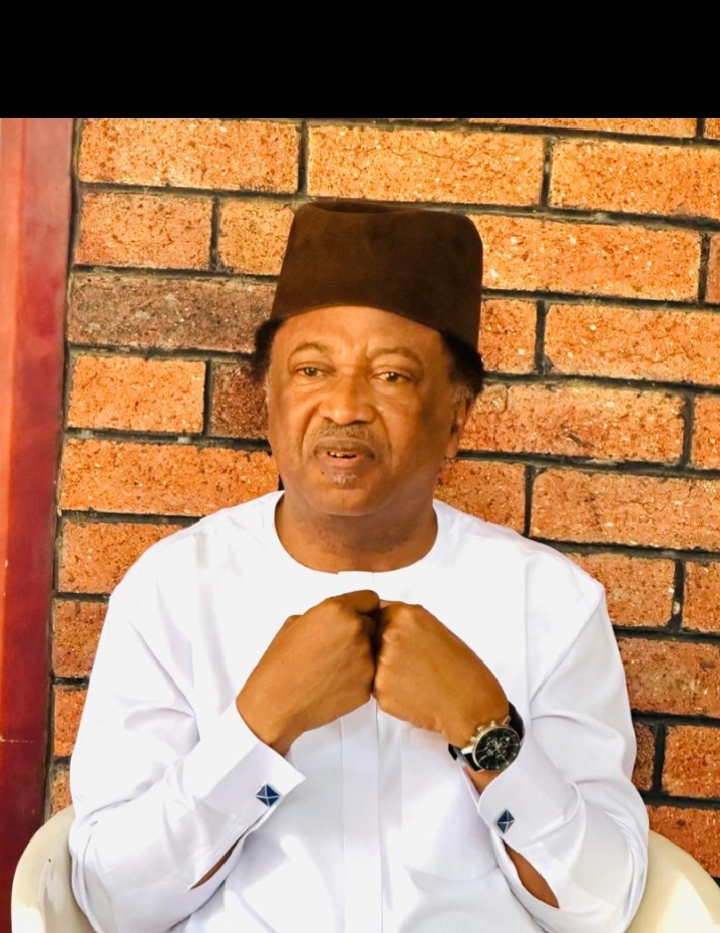
Former Kaduna Central Senator, Shehu Sani, has warned northern political leaders against seeking to displace the South from the presidency in the 2027 general election, saying such a move could revive separatist agitations and deepen political tensions across the country.
Sani argued that respecting the informal principle of rotational presidency was essential to national cohesion, insisting that President Bola Ahmed Tinubu should be allowed to complete the South’s turn before the North seeks to return to power. He maintained that northern politicians could pursue the presidency in 2031 without undermining the existing arrangement. Blueprint reports
The former lawmaker, who is seeking a return to the Senate to represent Kaduna Central, spoke during an interview with select journalists in Kaduna on Friday. He addressed power rotation, insecurity, the performance of successive administrations and the need for effective legislative representation to tackle the North’s development challenges.
According to Sani, any attempt to truncate the South’s expected tenure could undermine confidence in the Nigerian political system, particularly among communities that believe the rotation arrangement offers them a fair opportunity to produce the country’s president.
“The danger of disrupting this rotational idea is the fact that whatever you are doing to Tinubu for ethnic reasons, Tinubu must go,” he said.
Sani argued that the expectation of political inclusion at the highest level had helped reduce the appeal of separatist movements in some parts of southern Nigeria. He cited agitation for Biafra in the South-East, a Yoruba republic in the South-West and a Niger Delta republic in the South-South as examples of movements whose political environment, in his view, had been influenced by the prospect of having leaders from those regions occupy the presidency.
“Today, if you look at it, the agitation for Biafra has gone to the lowest point because they are hopeful that one of their own is contesting the presidency of this country,” he said.
He maintained that the presence of a southern president could strengthen the belief among people in the region that they had a stake in the Nigerian project, warning that disrupting the arrangement could fuel renewed grievances and create fresh difficulties for national integration.
The former senator’s argument was that political stability required leaders to consider not only their immediate electoral ambitions but also the implications of their decisions for the country’s delicate regional balance. He questioned how a president could govern effectively if large sections of the population believed that an agreed political understanding had been abandoned for partisan advantage.
North should wait until 2031, says Sani
Sani said the North had no compelling reason to demand an immediate return to the presidency after former President Muhammadu Buhari, a northerner, completed two terms in office between 2015 and 2023.
He argued that the eight-year tenure of Buhari made it politically reasonable for a southerner to succeed him, adding that the same consideration should guide discussions about the 2027 election.
“The principle of rotation of power makes it clear that Buhari has been in power for eight years. It is only logical and rational that you have a southerner,” he said.
Although Nigeria’s Constitution does not prescribe a formal rotational arrangement between the North and South, the principle has remained an important feature of political negotiations within and between the country’s major parties. Supporters regard it as a mechanism for promoting inclusion and balancing competing regional interests, while its critics have questioned whether it should take precedence over other considerations in choosing a president.
Sani’s position places him among those who believe that preserving the arrangement is necessary to sustain trust among Nigeria’s diverse political constituencies. Under that interpretation, the 2027 election should not be treated simply as an opportunity for one region to reclaim power but as part of a broader understanding about equitable participation in national leadership.
He also questioned arguments being advanced in support of former Vice-President Atiku Abubakar’s presidential ambition, asking why northern voters had supported other candidates against him in previous elections if the region consistently regarded him as its preferred choice.
Sani recalled Atiku’s presidential contests against former Presidents Olusegun Obasanjo, Umaru Musa Yar’Adua, Goodluck Jonathan and Buhari, arguing that the political calculations surrounding the former vice-president’s ambition had changed little over the years.
His remarks reflected the broader debate within the opposition and northern political circles over candidate selection, regional representation and the strategy for the 2027 presidential contest.
Tinubu’s security record should be compared with previous administrations
On the performance of the Tinubu administration, Sani acknowledged that insecurity remained a major concern, particularly in northern Nigeria, where communities continue to face banditry, terrorist attacks, kidnappings and other violent crimes.
However, he argued that the current security situation should be assessed against the record of previous governments rather than through ethnic loyalty or partisan considerations. He accused some northern political leaders of applying different standards to the security challenges under Tinubu and Buhari.
According to him, leaders who now criticise the current administration should also account for their positions during Buhari’s eight-year presidency, when mass abductions and attacks on schools and communities remained prominent national concerns.
Sani recalled the abductions involving students in Dapchi, Kankara, Jangebe and Yauri, as well as the kidnapping of students from Greenfield University in Kaduna State. He cited these incidents as examples of the prolonged security crisis that successive governments have struggled to contain.
He argued that the persistence of the violence showed that insecurity could not be reduced to the shortcomings of a single administration and that political leaders should be consistent in demanding accountability from those in power.
“We cannot address security challenges in the country when we shielded our own who failed to address the problem, and now shift blame and use it for political reasons to achieve certain political ends,” he said.
Sani’s position was not that the continuing insecurity should be overlooked, but that criticism of the government should be based on the realities confronting affected communities and the performance of successive administrations. He maintained that protecting political allies from scrutiny while attacking opponents over similar problems would make it more difficult to establish a consistent national response to insecurity.
The former lawmaker’s remarks come amid continuing concerns over attacks on rural communities, the abduction of residents and the disruption of farming and commercial activities in parts of the North. These challenges have also intensified demands for stronger security operations, improved intelligence gathering and more effective protection for vulnerable communities.
Calls for stronger northern representation
Sani also stressed the importance of effective representation at the National Assembly, arguing that the North needed legislators capable of articulating the region’s needs and pushing for practical responses to its security and development challenges.
He identified insecurity, poverty, poor healthcare delivery and educational deficits among the problems requiring sustained legislative attention, saying representatives should do more than participate in partisan debates or mobilise support during election campaigns.
According to him, Kaduna State’s strategic position in northern Nigeria makes the quality of its representation particularly important. He argued that legislators should be able to engage federal institutions, influence policy discussions and pursue interventions that respond to the needs of their constituents.
Reflecting on his previous tenure in the Senate, Sani claimed that he facilitated the establishment of between seven and eight primary healthcare facilities, scholarships, educational interventions, women’s empowerment programmes and other constituency projects.
He presented those interventions as examples of the practical work he believed should define legislative representation, insisting that elected officials should be judged by their contributions to the welfare of the people they represent.
The former senator also emphasised the need for political leaders in Kaduna to appreciate the state’s multi-ethnic and multi-religious character. He argued that politicians should build bridges across communities and avoid exploiting religious or ethnic differences for electoral advantage.
Kaduna has experienced recurring communal tensions and security challenges in different parts of the state, making questions of inclusion, representation and inter-community relations central to its political debates. Sani maintained that leaders seeking public office should recognise these realities and promote cooperation rather than deepen divisions.
Sani expresses confidence in Kaduna politics
The former lawmaker expressed confidence in his party’s prospects in Kaduna State but cautioned against treating the political dynamics of the state as identical to those of other parts of northern Nigeria.
He argued that political mobilisation increasingly driven by religious and ethnic sentiments could undermine constructive debate about governance, development and accountability. For him, Kaduna’s diversity makes inclusive political engagement especially important.
Sani urged Nigerians to draw lessons from previous administrations and recognise that political power is temporary. He warned leaders against using public office to intimidate critics or marginalise sections of the population, arguing that democratic leadership should be guided by responsibility, fairness and respect for differing opinions.
His comments placed the 2027 presidential contest within a wider debate about regional power-sharing, the management of insecurity and the responsibilities of political leaders in a diverse country.
While the principle of rotation remains informal rather than a constitutional requirement, Sani believes abandoning it before the South completes its expected turn could carry consequences beyond the presidential election itself.
He maintained that allowing the South to retain the presidency through 2027 would give the North an opportunity to prepare for a return to power in 2031 while preserving the spirit of political accommodation he considers necessary for national unity.



South-east group defends Orji Kalu over ₦14.286 billion constituency projects

Sowore Demands ₦500,000 Minimum Wage for INEC Staff

Kayode Akinmade: ₦3.5bn Ogun LG severance: When leadership meets compassion

Murder suspect slumps, dies at Bayelsa High Court

Kaduna PDP candidate condemns attack on campaign rally in Kafanchan

Kano govt orders immediate exit of civil servants who have reached retirement age

Umahi to Nigerians: Acknowledge Tinubu’s infrastructure projects

Mom influencer k!lls her partner and three kids in murd£r-su!cide hours after ominous final post
-

 News1 day ago
South-east group defends Orji Kalu over ₦14.286 billion constituency projects
- Breaking2 days ago
Sowore Demands ₦500,000 Minimum Wage for INEC Staff
- Breaking1 day ago
Kayode Akinmade: ₦3.5bn Ogun LG severance: When leadership meets compassion
- Politics3 days ago
Murder suspect slumps, dies at Bayelsa High Court