News
NPME 2026: FG move to extend Pharma Executive Order in Nigeria

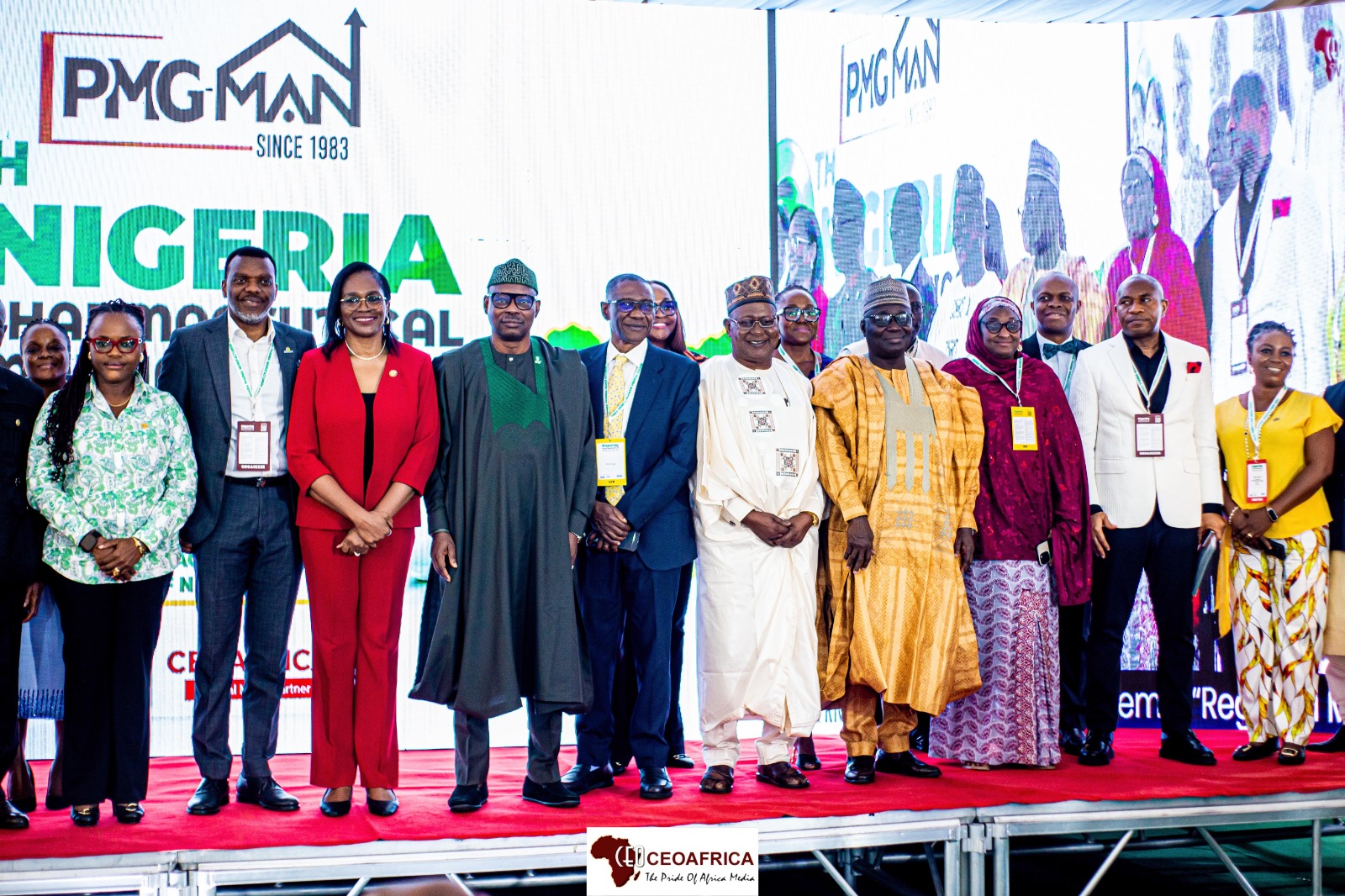
The Federal Government has indicated plans to extend the Presidential Executive Order supporting local pharmaceutical manufacturing by another two years.
This was disclosed by the Minister of State for Health and Social Welfare, Dr Iziaq Adekunle Salako, while declaring expo open the 8th Nigeria Pharmaceutical Manufacturers Expo (NPME) 2026, held at Harbour Point, Victoria Island, Lagos.
Dr Salako reaffirmed the Federal Government’s commitment to expanding domestic pharmaceutical manufacturing as a pathway to medicine security, healthcare resilience and economic development.
The Minister stressing the need to strengthen capacity across the pharmaceutical value chain, covering research and development, innovation, sourcing of active pharmaceutical ingredients and excipients, formulation, manufacturing and quality assurance, advocated for increased investment in sophisticated areas of pharmaceutical production, including biologics, vaccines and other critical health technologies, while urging stronger regional cooperation to address regulatory barriers limiting access to African markets.
Chairman of NPME 2026, Pharm. Dr Patrick Ajah, while speaking noted that no nation could achieve sustainable greatness without manufacturing what its citizens consume, describing the pharmaceutical sector as fundamental to national development, adding that the presence of high-level government officials, including the Minister of Education, represented a strong endorsement of PMGMAN’s mission.
Dr Ajah recalled that Nigeria’s drug consumption had historically been skewed towards imports, with about 70 per cent of medicines imported and 30 per cent produced locally, but said public-private collaboration over the past two years had begun to shift the balance, calling on stakeholders to partner with PMGMAN to drive sustainable growth, stressing that the expo had created opportunities for businesses to expand across Nigeria, Africa and the global market.
PMGMAN Chairman, Oluwatosin Jolayemi, in his remarks said the Nigerian pharmaceutical manufacturing sector was undergoing significant transformation, noting that the group now represents more than 200 local pharmaceutical manufacturing companies.
Jolayemi maintained that the gains recorded by the industry must be protected through policy consistency and a predictable investment environment, particularly as manufacturers continue to contend with high energy and production costs, supply-chain challenges, port inefficiencies, limited access to long-term capital and market-access constraints.
He appealed to the Federal Government to extend the Presidential Executive Order, whose current policy window is expected to expire in March 2027, by another two years to enable manufacturers deepen investments, expand production capacity and consolidate gains in medicine security, saying Nigeria’s ambition to become a regional pharmaceutical manufacturing hub must be anchored on a competitive, scalable and resilient domestic manufacturing ecosystem.
Minister of State for Industry, Trade and Investment, Senator John Owan Enoh, represented by the Director of Chemical and Non-Pharmaceutical Industry, Mr John Okpe Oluwa, said the Federal Government was committed to moving Nigeria from an import-dependent market towards greater self-sufficiency under the Renewed Hope Agenda.
Senator Enoh noted that the government was targeting 70 per cent domestic production of essential medicines while developing a resilient ecosystem capable of meeting the country’s medical needs, adding that increased domestic manufacturing capacity would provide a foundation for expanding Nigeria’s pharmaceutical exports into West Africa and the wider African market through the African Continental Free Trade Area (AfCFTA).
The Director-General of NAFDAC, Prof. Mojisola Christianah Adeyeye, disclosed that 37 local manufacturing facilities were undergoing retrofitting and construction upgrades to meet international standards.
Adeyeye said NAFDAC had made significant progress towards WHO global benchmarking and strengthened regulatory enforcement against non-compliant facilities, while reforms under the 5+5 policy had contributed to reducing drug importation and encouraging local manufacturers to improve their standards.
She stressed that Nigeria could not afford to reverse the gains recorded in local pharmaceutical manufacturing and urged the country to intensify efforts towards the production of vaccines and other critical health commodities.
The Director-General of the African Medicines Agency, Dr Delese Mimi Darko, called for stronger regulatory cooperation among African countries to accelerate access to quality-assured medicines and create a more integrated pharmaceutical market.
Dr Darko said the African Medicines Agency was established to strengthen and coordinate national regulatory systems rather than replace them, adding that regulatory harmonisation would enable manufacturers to navigate African markets more efficiently.
The Lagos State Government, represented by the Special Adviser on Health, Dr Kemi Ogunyemi, pledged continued support for the pharmaceutical manufacturing sector, particularly in addressing energy costs, infrastructure, long-term financing, skilled manpower and regulatory predictability.
In his closing remarks, Pharm. Frank Muonemeh, emphasised the need for stakeholders to remain committed to closing Nigeria’s medicine access gap and advancing greater medicine security across Africa.
PMGMAN also announced plans for the 9th Nigeria Pharma Manufacturers Expo in 2028, while preparations continue towards the commissioning of the ISRQ+ project.












“She wants me to stop talking against husband snatchers” — Rita Edochie speaks as she appears in court over the ₦1bn lawsuit filed against her by Judy Austin

Explainer: Duty-free does not mean tax-free for airport shops

Nigeria’s reform gains risk stalling without productivity push, CPPE warns

“I started listening to Fela Kuti when I first got Spider-Man role” — Andrew Garfield reveals how Nigerian music legend inspired his role

Lower tax interest to ease burden of business arrears

Adamawa governorship candidates sign peace accord ahead of 2027

2027: Learning Yoruba not enough – Lagos APC tackles Rhodes-Vivour

Atiku Tackles Tinubu Over $1.5bn World Bank Loan, Demands Debt Reckoning
-

 Special Reports3 days ago
“She wants me to stop talking against husband snatchers” — Rita Edochie speaks as she appears in court over the ₦1bn lawsuit filed against her by Judy Austin
- Business3 days ago
Explainer: Duty-free does not mean tax-free for airport shops
- Business3 days ago
Nigeria’s reform gains risk stalling without productivity push, CPPE warns
- Special Reports2 days ago
“I started listening to Fela Kuti when I first got Spider-Man role” — Andrew Garfield reveals how Nigerian music legend inspired his role