News
Nigeria’s foreign reserves hit $54.86 billion as 2026 gain tops $9bn

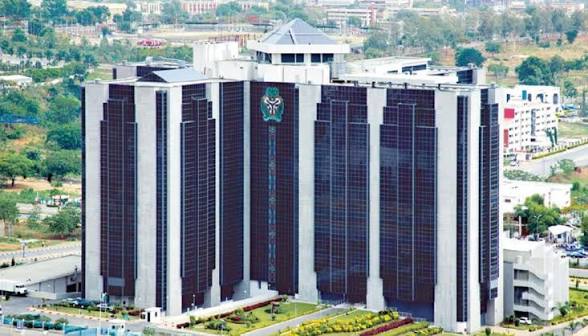
Nigeria’s external reserves climbed by $9.29 billion in the first nine months of 2026, more than seven times the increase recorded during the corresponding period of 2025, strengthening the country’s foreign-exchange buffer and providing additional support for naira market stability.
Data from the Central Bank of Nigeria (CBN) showed that reserves rose from $45.57 billion on January 2 to $54.86 billion on September 24, representing a 20.4 percent increase.
The comparable period in 2025 recorded a rise of about $1.32 billion, from $40.88 billion to $42.20 billion. The latest reserve position has also surpassed the CBN’s $51.04 billion projection for the end of 2026.
The accumulation accelerated during the year, with reserves crossing $50 billion on June 4 and reaching $51.92 billion by August 12. The stock subsequently moved above $53 billion on August 24 before rising to $54.08 billion on September 3.
By September 10, reserves had reached $54.41 billion, rising further to $54.69 billion on September 17 and $54.86 billion a week later.
The development comes amid improved foreign-exchange liquidity and stronger capital inflows. National Bureau of Statistics data show that Nigeria recorded $10.37 billion in capital importation in the first quarter of 2026, up significantly from $5.64 billion in the corresponding period of 2025.
Foreign portfolio investment accounted for a substantial portion of the inflows, although analysts note that portfolio funds are more sensitive to interest-rate movements, exchange-rate expectations and global financial conditions than longer-term foreign direct investment.
Analysts say the stronger reserve position gives the CBN a larger buffer for managing external shocks and foreign-exchange market pressures.
An economist and financial analyst, Olumide Adesina, said rising reserves could improve confidence in the naira by strengthening the country’s capacity to meet legitimate foreign-exchange obligations and absorb temporary external shocks.
He, however, cautioned that the quality and sustainability of the reserve accumulation remain important, particularly where inflows are driven by portfolio funds rather than stable export earnings or long-term investment.
Another analyst, Ayo Akinwumi, said the reserve growth provides greater room for the CBN to manage volatility in the foreign-exchange market, but should not be interpreted as evidence that underlying external vulnerabilities have disappeared.
He said sustained improvement would require stronger non-oil exports, stable crude-oil receipts, higher remittance inflows and continued investor confidence.
The CBN had projected that reserves would reach $51.04 billion by the end of 2026, based partly on expectations of stronger oil earnings, sovereign borrowing, diaspora remittances and improved foreign-exchange conditions.
The stronger external position coincides with recent efforts by the apex bank to stabilise monetary and foreign-exchange conditions. At its September 21–22 meeting, the CBN reset the Monetary Policy Rate to 23 percent from 26.5 percent while retaining the Cash Reserve Ratio for deposit money banks at 45 per cent.



Oil Marketers Slash Petrol Price to ₦1,350/Litre as Depot Rates Fall

If we got intimate 10 times, my ex-husband would ask for a threesome 9.5 times â U.S.-based Nigerian nurse, Sugar opens up on broken marriage

GAT trains Christian women, cultural leaders to prevent GBV in Kaduna

âI believe all men cheatâ â Actress and filmmaker Angela Eguavoen

Troops intercept N2.7m ransom, phones meant for terror kingpin in Katsina

Wisconsin Frat leaders arrested after cops find teen pledges covered in food in basement

2027 elections: Minister Umahi gives conditions for PDP, opposition to campaign in Ebonyi
Ugandan socialite Zari Hassan asks security to kick out guests wearing jeans and T-shirt at her birthday party (video)
-

 Breaking1 day ago
Oil Marketers Slash Petrol Price to ₦1,350/Litre as Depot Rates Fall
- Special Reports2 days ago
If we got intimate 10 times, my ex-husband would ask for a threesome 9.5 times â U.S.-based Nigerian nurse, Sugar opens up on broken marriage
- News3 days ago
GAT trains Christian women, cultural leaders to prevent GBV in Kaduna
- Special Reports2 days ago
âI believe all men cheatâ â Actress and filmmaker Angela Eguavoen