News
GAT trains Christian women, cultural leaders to prevent GBV in Kaduna

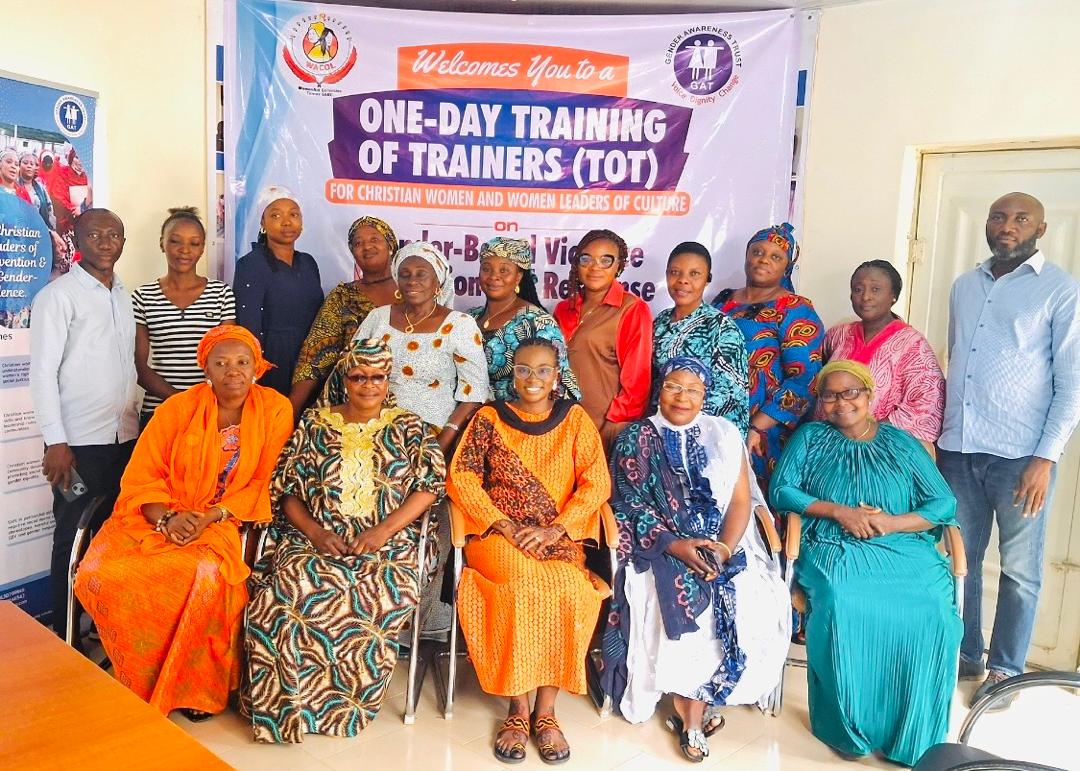
The Gender Awareness Trust (GAT) has trained Christian women and women leaders of culture in Kaduna State on strategies to prevent and respond to gender-based violence (GBV), with a call on the participants to use their positions of influence to challenge harmful social and cultural practices within their communities.
The one-day Training of Trainers (ToT), held in Kaduna on Thursday, brought together 12 selected Christian women and women leaders of culture from Zangon Kataf and Kaduna South Local Government Areas as part of the second phase of GAT’s intervention aimed at strengthening grassroots capacity for the prevention and response to gender-based violence. Blueprint reports
The training, organised under the Empowering Christian Women and Leaders of Culture for Prevention and Response to Gender-Based Violence in Nigeria project, was implemented by GAT with funding support from the Women Aid Collective (WACOL). The intervention is designed to leverage the influence of women within faith, cultural and community structures to promote positive attitudes, challenge harmful norms and strengthen local mechanisms for preventing violence against women and girls.
Women leaders as agents of change

Speaking during the training, GAT Executive Director, Dr. Lydia Umar, said the strategic positions occupied by Christian women and women leaders of culture placed them in a strong position to influence attitudes, behaviours and practices within families and communities.
Umar said participants were not only expected to acquire knowledge about GBV but also to become advocates and trainers capable of taking prevention messages to other members of their communities.
According to her, women leaders, faith actors, community influencers and custodians of culture have platforms through which they can shape conversations around relationships, family life, dignity and respect, making their involvement critical to efforts aimed at preventing violence before it occurs.
She noted that GBV should not be regarded merely as a social problem, stressing that its consequences affect the dignity, wellbeing, relationships and development of individuals, families and communities.
She therefore urged participants to use their respective platforms to promote values of dignity, justice, equality, respect and protection, while encouraging families and communities to reject behaviours and practices that expose women and girls to violence, abuse or discrimination.
Addressing harmful norms
The training also provided participants with an opportunity to examine how cultural and religious beliefs can influence attitudes and practices relating to gender-based violence.
Umar explained that addressing GBV required more than responding to cases after they had occurred, stressing the importance of prevention, awareness, early intervention and sustained community engagement.
She encouraged participants to distinguish between positive cultural and religious values that promote peaceful and respectful relationships and harmful interpretations or practices that could normalise violence or discourage victims from speaking out.
The approach is consistent with GAT’s wider work on gender-based violence and women’s leadership in Kaduna. In an earlier phase of the WACOL-supported project, the organisation trained women in faith and cultural institutions to strengthen leadership, public speaking, advocacy, mediation and dialogue skills for community engagement.
The organisation had also raised concerns about the culture of silence surrounding sexual and gender-based violence, particularly in some faith-based settings, noting that entrenched social, cultural and religious norms could sometimes limit women’s voices and access to justice.
From training to community action

A major component of Thursday’s exercise was the Training of Trainers approach, which requires participants to take the knowledge acquired beyond the training venue and share it with other women and community members.
Umar stressed that the impact of the programme would depend largely on the ability of the trainees to translate the lessons into practical activities within their communities.
She said the participants were expected to conduct step-down trainings in Zangon Kataf and Kaduna South, thereby extending the reach of the intervention and creating a wider network of women equipped to identify, challenge and prevent harmful practices associated with GBV.
The participants were also expected to develop practical action plans for cascading the knowledge and skills acquired during the training to other members of their communities.
The Executive Director said such an approach would enable the project to move beyond awareness creation by empowering community actors to become active participants in preventing violence and promoting healthier attitudes and behaviours.
She urged the participants to take the responsibility seriously, stressing that their positions within churches, cultural structures and communities gave them access to people who might otherwise be difficult for formal institutions and organisations to reach.
Strengthening grassroots prevention
According to GAT, the training was expected to increase the knowledge, confidence and practical skills of the Christian women and women leaders of culture to identify, challenge and prevent harmful social and cultural norms that contribute to GBV.
The organisation said participants were also expected to improve their ability to communicate prevention messages effectively and engage faith, cultural and community structures in addressing the issue.
The broader project was launched to strengthen the capacity of Christian women leaders and women leaders of culture to prevent and respond to gender-based violence in Kaduna and Katsina states. GAT previously disclosed that its Kaduna intervention was being implemented in Kaduna South and Zangon Kataf, with a wider target of reaching thousands of women through community and faith-based structures.
WACOL, which supports the project, has similarly emphasised the importance of engaging religious and cultural leaders in addressing violence against women and girls because of the influence such structures wield within communities. The organisation has identified harmful practices, including forced marriage, early marriage, female genital mutilation and discriminatory widowhood practices, among issues that can contribute to gender-based violence.
Participants expected to influence communities

The September 24 training therefore placed emphasis on practical community engagement, with participants encouraged to share experiences, ask questions and approach discussions around religion, culture, gender and violence with openness and mutual respect.
GAT said the immediate outcome of the exercise was increased knowledge, confidence and practical skills among the participating Christian women and women leaders of culture.
The organisation expects the participants to use those skills to influence positive attitudes and behaviours within their communities, strengthen conversations around prevention and encourage people to reject practices that contribute to the normalisation of violence.
The initiative also seeks to strengthen collaboration between women leaders, faith structures, cultural institutions and other community actors so that prevention efforts can be sustained beyond individual training sessions.
Umar encouraged the participants to see the exercise not simply as a capacity-building programme but as an opportunity to assume greater responsibility for promoting safer families and communities.
She said the success of the intervention would ultimately be measured by how effectively the lessons from the training were translated into community action and whether participants were able to influence positive changes in attitudes, behaviours and practices.
The latest training represents another step in GAT’s continuing engagement with women and community institutions in Kaduna, particularly in using grassroots leadership and community structures to address gender-based violence through prevention, awareness, advocacy and dialogue.
With the completion of the ToT, the 12 participants from Zangon Kataf and Kaduna South are expected to serve as community-level multipliers, cascading the knowledge acquired to other women and community members and helping to broaden grassroots efforts to prevent gender-based violence across the two implementing local government areas.



I’m Not Sure I’ll be Alive by 2027 Election – Peter Obi

How, Why I Started ‘Curiosity Made Me Ask’ Show, Isbae U Reveals

Caverton Rebounds 8.75% After Previous Session’s 9% Selloff

‘I’m not involved’ – Peter Obi disowns OK Movement Campaign Council

Another Nigerian man shot dead in South Africa

Nigeria, US Sign Deal to Boost Mining Investment

Police arraign 3 over $100,000 fraud in Abuja

Oil Marketers Slash Petrol Price to ₦1,350/Litre as Depot Rates Fall
-

 Breaking2 days ago
I’m Not Sure I’ll be Alive by 2027 Election – Peter Obi
- News2 days ago
How, Why I Started ‘Curiosity Made Me Ask’ Show, Isbae U Reveals
- Finance2 days ago
Caverton Rebounds 8.75% After Previous Session’s 9% Selloff
- Politics2 days ago
‘I’m not involved’ – Peter Obi disowns OK Movement Campaign Council