News
Breaking: FG announces 30-day discount on petrol amid subsidy debate

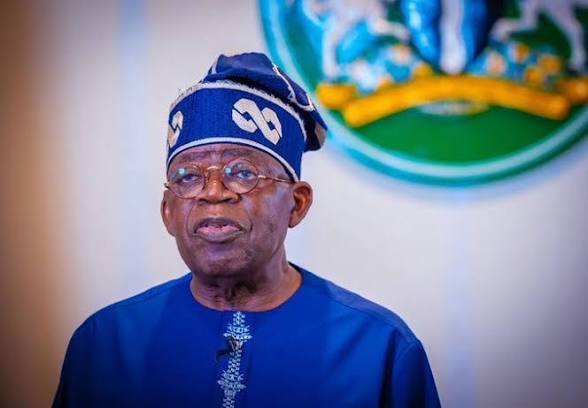
The Federal Government has announced plans to offer Nigerians cheaper petrol for 30 days through a discount at filling stations operated by the Nigerian National Petroleum Company Limited (NNPCL), in a move that could provide temporary relief to households and transport operators still grappling with high energy and living costs.
Minister of Finance and Coordinating Minister of the Economy, Taiwo Oyedele, disclosed the plan in Abuja on Thursday, saying the discount would particularly prioritise public transport operators. Blueprint reports
“There’ll be a discount on NNPC petrol for the next 30 days, with priority for public transporters,” Oyedele said. He also disclosed that the Federal Government would negotiate a lower landing cost for petrol, with the negotiated cost subject to monthly review.
The announcement comes more than three years after President Bola Ahmed Tinubu announced the removal of the petrol subsidy in May 2023, a policy that fundamentally changed the way petrol prices are determined in Nigeria and triggered one of the country’s sharpest cost-of-living shocks in recent years. It also comes at a time when the government is trying to demonstrate that the painful economic reforms introduced since 2023 can eventually translate into improved living conditions for Nigerians.
The immediate question, however, is whether the proposed 30-day discount represents a carefully targeted intervention to cushion consumers from high petrol prices or the beginning of a gradual return to the kind of government-supported fuel pricing regime that the Tinubu administration has spent the past three years dismantling.
Why was petrol subsidy removed?
Nigeria’s petrol subsidy existed in different forms for decades, with government absorbing part of the difference between the cost of importing or supplying petrol and the regulated retail price paid by consumers. The argument for maintaining the system was that keeping petrol relatively cheap would reduce transportation costs, protect households from international oil-price shocks and support businesses whose operations depended heavily on petroleum products. Over time, however, the subsidy became an increasingly expensive burden on government finances, while concerns grew about smuggling, fraudulent claims and the distribution of the benefits.
The World Bank estimated that Nigeria spent more than N8.6 trillion between 2019 and 2022 on gasoline subsidies and argued that the policy did not adequately benefit the poor, while also creating opportunities for smuggling and other forms of arbitrage. The International Monetary Fund similarly maintained that petrol subsidies disproportionately benefited wealthier consumers because people who consumed more fuel, particularly vehicle owners and businesses, received a larger absolute benefit than poorer Nigerians.
By the time President Tinubu assumed office on May 29, 2023, the subsidy had become one of the government’s most contentious fiscal issues. In his inaugural address, Tinubu declared that “fuel subsidy is gone”, immediately setting the country on a new path in which petrol prices would increasingly reflect market conditions rather than being fixed through government intervention. The World Bank subsequently estimated that the reform could generate about N2 trillion in fiscal savings in 2023 and more than N11 trillion between 2023 and 2025, compared with what would have been spent if the subsidy had continued.
The administration’s justification was therefore largely fiscal. Government argued that Nigeria could no longer continue spending enormous amounts to keep petrol artificially cheap while the country faced mounting debt, limited revenues, infrastructure deficits and pressure on foreign exchange. Removing the subsidy, officials said, would free resources for governments at federal and sub-national levels and allow the money previously used to support petrol consumption to be redirected towards infrastructure, social programmes and other development priorities.
The price Nigerians paid
The fiscal argument, however, came with a substantial immediate cost for Nigerians. Following the removal of the subsidy, petrol prices rose sharply, with the World Bank reporting an average 163 per cent increase in retail gasoline prices during the initial phase of the reform. Because petrol is deeply embedded in Nigeria’s economy, the effect went far beyond motorists. Transport fares rose, the cost of moving agricultural produce increased, businesses faced higher operating expenses and households had to spend more money simply to move from one location to another.
The pressure was compounded by the government’s foreign-exchange reforms and the depreciation of the naira. Nigeria’s dependence on imported refined petroleum products meant that the exchange rate became an important component of petrol pricing, while higher fuel costs fed into virtually every sector of the economy. The World Bank noted the significant short-term cost-of-living pressures created by the combined reforms, while the IMF also linked the sharp rise in inflation in 2023 to the effects of fuel subsidy removal and exchange-rate depreciation.
For ordinary Nigerians, the debate therefore moved quickly beyond the question of whether the subsidy was fiscally sustainable. The more immediate question became whether the savings being generated by government were translating into better living conditions. Families that previously spent a manageable portion of their income on transportation suddenly faced much higher costs, while businesses transferred increased logistics and energy expenses into the prices of goods and services.
Where did the subsidy savings go?
This question has remained at the centre of the political and economic debate surrounding the reform. In August 2026, the Federal Government said the removal of the petrol subsidy had mobilised N15.8 trillion in resources for the Federation between June 2023 and December 2025. Government officials, however, clarified that the figure should not be interpreted as N15.8 trillion sitting untouched in a special account labelled “subsidy savings”. Rather, it represented resources that became available to the Federation because government was no longer financing petrol consumption through the old subsidy arrangement.
The government has argued that the additional resources have strengthened the finances of the federal, state and local governments and created greater room for public spending. But the issue is more complicated than simply comparing the amount saved with the amount spent. Higher debt-servicing obligations, increased government expenditure and other economic pressures have absorbed a substantial portion of the fiscal gains. Reuters reported in July that the government acknowledged that the financial gains from subsidy removal and foreign-exchange reforms had largely been offset by higher debt costs and increased spending.
That reality helps explain why the latest petrol intervention is likely to attract close scrutiny. If government is now prepared to provide a discount on petrol, Nigerians will reasonably want to know whether the money will come directly from the budget, NNPCL’s revenues, a negotiated reduction from suppliers or another arrangement. They will also want to know whether the intervention is genuinely temporary or whether government is creating another mechanism through which it indirectly absorbs part of the cost of petrol.
Is this a return of fuel subsidy?
The distinction is important because the government has repeatedly rejected any suggestion that it intends to return to the old subsidy regime. Information Minister Mohammed Idris recently warned that restoring petrol subsidies would reverse some of the fiscal gains achieved through the reforms, while President Tinubu has also ruled out returning to the previous arrangement, arguing that doing so would take the country back to a system that had become increasingly difficult to sustain.
Oyedele’s latest announcement appears, at least from the information currently available, to be different from the old system. The minister did not announce a return to a permanent government guarantee of a particular pump price. Instead, he said government would negotiate a lower landing cost and offer a discount at NNPC stations for 30 days, with priority given to public transporters. If implemented in that form, the intervention would be closer to a temporary and targeted price-support measure than a restoration of the blanket subsidy.
But the practical distinction will depend on how the programme is eventually structured. If government ultimately pays the difference between the market cost and the price at which petrol is sold, then economically it would still amount to a subsidy, even if it carries a different name or is limited to a particular period. The real issue, therefore, is not what the intervention is called but who absorbs the cost, how much it costs government and whether Nigerians can clearly see the benefit.
How feasible is the 30-day plan?
There are reasons why the proposed intervention could be implemented relatively quickly. NNPCL operates a large network of filling stations across the country, giving the Federal Government a direct channel through which a discount could be introduced. The government’s decision to prioritise public transporters could also allow it to focus the relief on a segment of the economy with a direct connection to millions of Nigerians, particularly commuters who do not own vehicles but depend on buses, taxis and other forms of commercial transportation.
The proposal also comes at a time when Nigeria’s petroleum market is changing because of the expansion of domestic refining. The Dangote Petroleum Refinery has emerged as a major supplier to the domestic market and has reduced some of Nigeria’s historic dependence on imported refined products. Other refineries are also expected to contribute to domestic supply as their operations expand. Increased domestic refining could give government and marketers greater room to negotiate supply costs because the country would be less exposed to international shipping and some of the foreign-exchange pressures associated with importing finished petrol.
However, domestic refining does not automatically mean cheap petrol. The price Nigerians ultimately pay remains influenced by the cost of crude oil, the exchange rate, refinery operating expenses, transportation and distribution costs and other charges within the downstream petroleum market. Even with increased domestic refining capacity, movements in these factors can still affect pump prices.
The biggest question surrounding the 30-day plan is therefore who will finance the discount. If the Federal Government negotiates a lower landing or supply cost and the product is subsequently sold to consumers below the effective market price, someone will have to absorb the difference. It could be government, NNPCL, a refinery or another participant in the supply chain. Without clear disclosure, there is a risk that the arrangement could simply move the subsidy from one part of the government’s accounts to another without addressing the underlying problem.
There is also the question of what happens at the end of the 30 days. A temporary reduction could offer meaningful relief to consumers, but if petrol prices immediately return to previous levels once the programme expires, its wider impact on inflation and household welfare could be limited. It could also create uncertainty for transport operators who need to plan their fares and operating costs beyond a single month.
Public transport priority
The decision to prioritise public transporters is potentially one of the most significant aspects of the announcement. If properly implemented, it could allow government to target the economic chain through which petrol prices affect the largest number of people. Lower fuel costs for buses, taxis and other commercial vehicles could reduce pressure on transport fares, which in turn could provide some relief to workers, students, traders and other Nigerians who depend on public transportation.
But the policy will require a credible verification mechanism. Government will have to determine which transporters qualify, how the discount will be accessed and how it will prevent discounted petrol from being diverted into the wider market. Without effective monitoring, there could be opportunities for abuse, particularly if some individuals attempt to obtain the discounted product and resell it at prevailing market prices.
Nigeria’s experience with the former subsidy regime provides a warning. Artificially low petrol prices created significant incentives for smuggling and cross-border arbitrage, while shortages and long queues became recurring features of the market. The World Bank has previously noted that subsidy removal eliminated many of the incentives associated with the old arrangement. A new intervention would therefore need to be designed carefully enough to provide relief without recreating the same distortions.
What domestic refining changes
The emergence of large-scale domestic refining provides perhaps the strongest argument for exploring a different approach to petrol pricing. If Nigerian refineries can consistently process locally produced crude and supply a significant proportion of domestic demand, the country could gradually become less vulnerable to international refined-product prices, shipping costs and foreign-exchange fluctuations.
The Dangote refinery’s expanding operations are particularly significant in this regard. The refinery has been increasing its crude purchases from Nigeria, with Reuters reporting that it secured about 16 million barrels of Nigerian crude for October 2026, equivalent to roughly 520,000 barrels per day. That represents a substantial proportion of its 700,000-barrel-per-day nameplate capacity.
The long-term solution, therefore, may not be another subsidy but a combination of competitive domestic refining, reliable crude supply, stable exchange rates, efficient distribution and genuine competition among suppliers. If those conditions improve, petrol prices could become less dependent on government intervention.
Relief or another subsidy?
For Nigerians, the immediate concern is straightforward: how much will petrol cost at NNPC stations once the programme begins, and will lower pump prices translate into lower transport fares and cheaper goods?
For government, however, the calculation is more complicated. The administration has spent the past three years defending subsidy removal as an unavoidable reform that would restore fiscal sustainability. It must therefore demonstrate that the latest intervention is a targeted and temporary response to current market conditions rather than a return to the expensive system it abolished.
The government should also provide details of the programme, including the exact discount per litre, the number of stations involved, the quantity of petrol covered, the beneficiaries, the funding arrangement and the criteria for selecting public transport operators. Such information would make it possible to assess whether the intervention is genuinely affordable and targeted.
Ultimately, the success of the 30-day plan should not be measured simply by whether Nigerians see a lower price on the pump for one month. The more important test is whether the intervention can provide immediate relief without undermining the fiscal gains of the subsidy reform, while the government continues to build a petroleum market in which competition, domestic refining and efficiency – rather than perpetual government intervention – help determine prices.
For millions of Nigerians facing high transport and food costs, even temporary relief would be welcome. But the bigger economic challenge remains how to make that relief sustainable without returning the country to the fiscal and market distortions that prompted the removal of the petrol subsidy in the first place.



HK boss denies maltreating man, explains why he sold his phone for ₦90,000
Iran president says talks with US is ‘meaningless’

500 women groups endorse Tinubu’s re-election as First Lady assures better Nigeria

AMAC, Carter center team up to tackle gender-based violence

Court orders NDLEA boss appearance in Kyari alleged cocaine trial

Ex-‘American Idol’ contestant Caleb Flynn sentenced to life in prison over murder of his wife

Sowore Demands ₦500,000 Minimum Wage for INEC Staff

Murder suspect slumps, dies at Bayelsa High Court
-

 Special Reports3 days ago
HK boss denies maltreating man, explains why he sold his phone for ₦90,000
-

 Special Reports3 days ago
Iran president says talks with US is ‘meaningless’
- News2 days ago
500 women groups endorse Tinubu’s re-election as First Lady assures better Nigeria
- News2 days ago
AMAC, Carter center team up to tackle gender-based violence