News
Remembering Ejigbo national heroes of September 26 1992

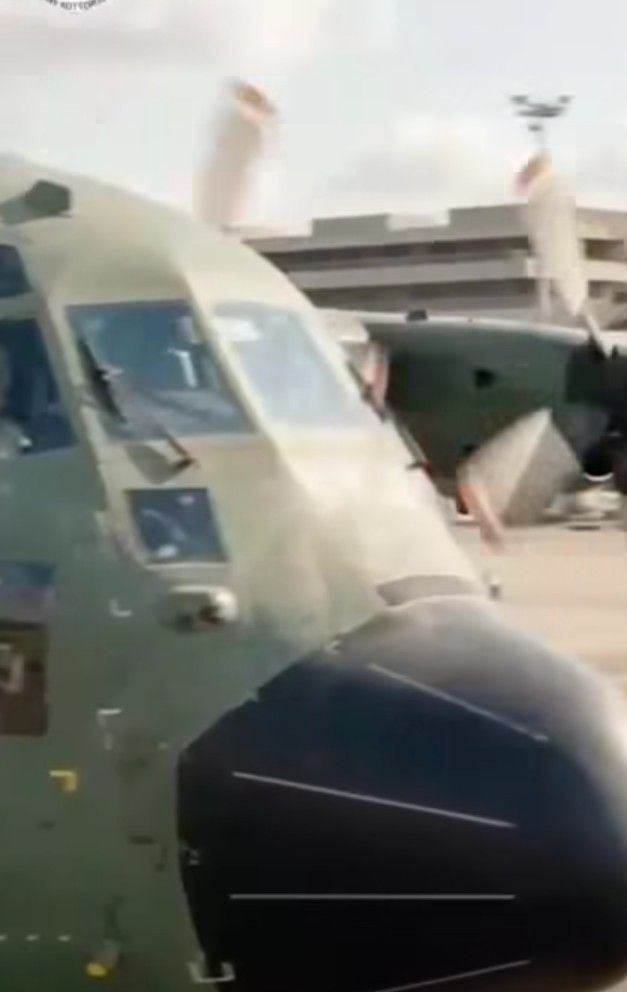

Today September 26 marks another solemn anniversary of one of the darkest tragedies in the history of the nation’s Armed Forces when the 1992 Nigerian Air Force C-130 Hercules disaster occured at Ejigbo, Lagos.
On that fateful Saturday in 1992, Nigerian Air Force C-130H aircraft NAF911 departed Lagos on a flight to Kaduna. Shortly after take-off, the aircraft suffered multiple engine failures and crashed into the swampy Ejigbo canal area. There were no survivors.
Behind the cold statistics were fathers, husbands, sons, brothers, colleagues, friends and promising professionals whose lives had been dedicated to the service and protection of Nigeria.
They left their homes that morning expecting to return, but they never did.
That is why September 26 should never become just another date on Nigeria’s calendar; it should be a day of national remembrance, a day when Nigeria pauses to honour the men and women who paid the ultimate price in service to their country.
It should also be a day when the nation remembers the wives who became widows, the children who became fatherless, parents who lost their sons and daughters, and the families whose lives were permanently altered by a tragedy that occurred within minutes.
I have had the privilege and responsibility of working as an expert in procurement with the United States Armed Forces for almost five years, including during the wars in Afghanistan — Operation Enduring Freedom — and Iraq — Operation Iraqi Freedom.
That experience gave me a deeper understanding of what military service means.
Behind every aircraft that takes off, every convoy that moves, every operation that is launched and every soldier who enters a dangerous theatre of operation, a human life exposed to risks that many civilians may never fully comprehend.
I have seen enough of the military environment to understand that service to one’s country is not merely a job; it is a commitment; it is discipline and it is a responsibility. In the most extreme circumstances, it is a willingness to make the ultimate sacrifice.
That is why the familiar American expression, ‘Thank you for your service’ carries such profound meaning.
It is a national acknowledgement that the freedoms, security and prosperity enjoyed by a society are sometimes purchased at an extraordinary human cost.
America’s prosperity and security have, in part, been built and defended by generations of men and women who served and by those who never returned home.
Their blood is part of the history of that nation. That reality has profoundly shaped my understanding of military service.
And that is why I cannot look at the Ejigbo tragedy merely as an old newspaper story or another historical statistics.
I understand what it means for a nation to send its people into harm’s way.
I understand what it means for families to wait for loved ones who may never return.
I understand why those who serve deserve more than applause while they are alive and ceremonial remembrance after they are gone. They deserve a nation that remembers its obligations to them and to their families.
Thirty-four years is a long time in the life of a nation, but time must never be allowed to erase memory.
The Ejigbo tragedy was not merely an aviation accident; it represented a devastating loss of human capital at a critical period in Nigeria’s military history.
A generation of trained officers disappeared in one catastrophic event, leaving behind families, colleagues and a nation struggling to absorb the magnitude of the loss.
There have been differing historical accounts concerning the exact number of people aboard the aircraft, but what remains beyond dispute is the scale of the tragedy: There were no survivors. The dead cannot speak for themselves.
Where history leaves unanswered questions, a responsible nation must preserve the records, investigate the facts and learn the lessons. We must remember without manufacturing facts. We must mourn without politicising the dead and we must investigate without allowing historical uncertainty to become an excuse for forgetting.
To the Nigerian officers and personnel who boarded NAF911, Nigeria remembers you. To the soldiers, airmen and other military personnel who perished, Nigeria remembers your service. To the foreign military personnel who lost their lives alongside their Nigerian colleagues, Nigeria remembers your sacrifice and honours your memory. To the pilots and crew who confronted an unfolding emergency with precious seconds available to them, we honour your courage.
And to the families who continued living after that terrible day, your loss is also a part of Nigeria’s history.
May the souls of all those who perished rest peacefully in the bosom of the Almighty God. May God comfort their families, their children and all who loved them. May their memories remain a blessing.
May their labour never be in vain.
This is where remembrance must become responsibility.
A nation cannot adequately honour its fallen heroes merely by laying wreaths, firing ceremonial salutes and delivering speeches once a year.
A responsible nation must ask how well are we protecting those who are still serving, how well are we supporting the families of those who have fallen, are military families receiving their lawful entitlements promptly, are widows and children adequately protected from financial hardship, are veterans receiving proper pensions, healthcare, housing and reintegration support?
These are not partisan questions, but national questions.
The sacrifice of a military officer should never become the beginning of a family’s economic suffering.
When a Nigerian soldier dies in the line of duty, the nation should not remember only the uniform he or she wore, but remembers the human beings who depended on that person: The widow, the children, the ageing parents, the siblings, the family whose future suddenly changed. That is the human side of military sacrifice and that is why the welfare of our Armed Forces must become a permanent national priority.
As Nigeria approaches the 2027 general elections, the welfare of the Armed Forces deserves a serious place in the national policy conversation. Whatever political party forms the next government, Nigerians should demand measurable commitments to prompt payment of pensions, gratuities, insurance benefits and legitimate entitlements to military families.
There should be a transparent and time-bound compensation framework for families of personnel who die in active service or military-related accidents, comprehensive medical and psychological support for serving personnel, veterans and their immediate dependants, affordable housing and educational support for children of fallen service members, modern equipment, aviation safety systems, maintenance standards and professional training, etc.
Perhaps Nigeria needs to develop its own deeper culture of appreciation for military service.
When we say to a soldier, “Thank you for your service,” it should not end with the words. It should mean: ‘we would equip you properly’, we will protect you as much as circumstances permit, we will care for your family if you do not return, we will honour your sacrifice, we will pay what is lawfully owed to you.
Ultimately, it is what it is: the men and women who serve in dangerous environments understand that the possibility of death is part of the risk they accept, but accepting the risk does not absolve the nation of its responsibility.
As Nigerians approach the 2027 general elections, the memory of Ejigbo should encourage something deeper than political slogans.
It should compel us to ask what kind of leadership we want for Nigeria.
Leadership should be measured not only by what politicians promise during campaigns, but also by how institutions treat ordinary citizens and those who accept extraordinary risks on behalf of the country.
A soldier who leaves home to defend Nigeria should be able to trust that Nigeria will not abandon his or her family if the ultimate sacrifice is made. That is the social contract. That is why the memory of Ejigbo should transcend party politics.
We should remember the fallen not merely with tears, but with institutional reforms.
Perhaps, the greatest tribute Nigeria can offer the Ejigbo heroes is to ensure that their sacrifice continues to teach the living. Let September 26 become an annual national moment of reflection on military service, aviation safety, veterans’ welfare and the responsibilities of government toward families of fallen personnel.
Let their names be preserved.
Let their children know that their fathers and mothers were not forgotten. Let future generations learn that public service carries dignity — and that the nation must reciprocate that service with honour, justice and care. The waters of Ejigbo swallowed an aircraft in 1992, but they must never swallow the memory of the men and women who were aboard it. Their lives mattered and their sacrifice must continue to challenge Nigeria to build a country where those who defend the nation are protected, respected and properly cared for in life and in death.
As we remember them on this 34th anniversary, may Nigeria find the wisdom, courage and integrity to build institutions worthy of the sacrifices made by its defenders.
May the labour of our heroes past never be in vain.
Adenekan writes from Chicago, Illinois.



AFC supports ₦729 billion series 2 bonds to advance Nigeria’s power sector reforms

EFCC Warns: Diverting Tithes, Offerings to Private Businesses Is Criminal Offence

Polygamous Ghanaian man shares maternity photos with his two wives

Patoranking, Mr P, Duncan Mighty, others headline VANITI Lagos 3rd anniversary

Court orders enforcement against Rahamaniyya group Chairman’s properties over $40m debt

Four die as boat carrying eight capsizes in Jigawa
Man reportedly caught after withdrawing â¦1.4m from stroke-battling motherâs account to fund betting

I’ve never slept with another woman since I married my wife. I am a faithful husband – Nigerian man says
-

 News3 days ago
AFC supports ₦729 billion series 2 bonds to advance Nigeria’s power sector reforms
- Breaking2 days ago
EFCC Warns: Diverting Tithes, Offerings to Private Businesses Is Criminal Offence
- Special Reports3 days ago
Polygamous Ghanaian man shares maternity photos with his two wives
- Breaking2 days ago
Patoranking, Mr P, Duncan Mighty, others headline VANITI Lagos 3rd anniversary