News
Pro-Tinubu group tackles Atiku over wage, fuel subsidy proposals


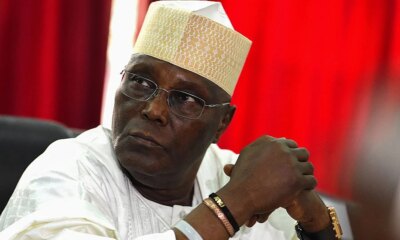
The Tinubu Support Group Advocacy Hub has faulted proposals by the Atiku Abubakar campaign organisation for a higher minimum wage and targeted petroleum subsidy, arguing that Nigeria needs structural economic reforms rather than temporary relief measures.
The group’s National Director of Communications, Osabinu Olufemi, stated this in a statement on Tuesday while responding to comments attributed to Atiku’s Director of Strategic Communications, Phrank Shaibu.
Olufemi said genuine concerns over the welfare of Nigerians deserved serious consideration but warned against economic prescriptions that, according to him, could fail to address the underlying weaknesses in the economy.
He said the central question was whether Nigeria should return to policies that provide temporary relief or continue with reforms aimed at rebuilding the productive capacity of the economy.
“The Tinubu Administration has chosen the latter,” Olufemi said.
He argued that President Bola Tinubu inherited an economy burdened by fiscal pressures, infrastructure deficits, distorted subsidy arrangements, declining government revenues and other structural weaknesses.
According to him, the administration therefore embarked on difficult reforms intended to address the fundamentals of the economy.
“These reforms have not been painless. Nigerians have experienced real hardship, and the administration must continue to respond with measures that cushion the impact on households and businesses,” he said.
Olufemi, however, maintained that acknowledging the hardship should not amount to abandoning structural reforms.
He questioned the sustainability of proposals centred primarily on increasing workers’ wages without corresponding improvements in the productive capacity of the economy.
“A country cannot permanently solve an economic crisis simply by increasing nominal wages while the productive capacity of the economy remains weak,” he said.
He listed higher productivity, stronger domestic production, improved infrastructure, energy security, industrial expansion, investment and a broader revenue base as necessary foundations for sustainable wage growth.
On the proposal for another petroleum subsidy, Olufemi said Nigerians deserved to know its full fiscal implications.
He argued that an unsustainable subsidy would eventually put additional pressure on government finances and limit resources available for education, healthcare, roads, security and infrastructure.
He described the proposal as “a pot of porridge”, saying it might provide temporary relief but would eventually become empty if the underlying economic problems were not addressed.
“Nigeria needs an economy capable of producing the resources required to provide affordable energy and sustainable social protection, not an endless cycle of borrowing and subsidising consumption,” he said.
Olufemi also urged Nigerians to assess the administration’s economic programme through infrastructure, investment, agriculture, domestic refining, energy and industrial production.
He said government had a responsibility to clearly communicate its achievements while acknowledging areas where implementation remained inadequate.
The group also criticised what it described as the presentation of alternative economic proposals without sufficient attention to their costs and funding sources.
“The Atiku campaign organisation is entitled to criticise the administration. That is part of democracy,” Olufemi said.
“However, political criticism becomes less useful when every difficult economic reality is presented as evidence that nothing is working, while every alternative proposal is presented as though it carries no cost.”
He urged Nigerians to demand details on how proposed wage increases would be financed and how long any proposed fuel subsidy could be sustained.
Olufemi said Nigeria’s economic future should be anchored on increased production, investment, refining, exports and infrastructure development.
“Nigeria must produce more, invest more, refine more, export more and build more. That is how a sustainable economy is created,” he said.
The group consequently urged Nigerians to look beyond campaign rhetoric and examine the substance, financing and likely implications of competing economic proposals.



Oil Marketers Slash Petrol Price to ₦1,350/Litre as Depot Rates Fall

Man City should be relegated to League Two, handed six-year transfer ban âFormer England footballer Darren Bent (Video)

SERAP Gives CBN 7 Days to Explain Missing $6.23m Election Funds, ₦1.63trn Loans

Fuel price: Tinubu’s N70,000 minimum wage can only buy 50 litres of petrol – Atiku

Police Arrest Two Suspected Kidnappers in Oyo

Can Nigeria’s 350bps rate cut finally unlock cheaper credit?

Rykardo Agbor survives ghastly car accident weeks after father’s burial [VIDEO]

2027: El-Rufai Political Prisoner, Release Him if He Poses No Threat – Phrank Shaibu
-

 Breaking2 days ago
Oil Marketers Slash Petrol Price to ₦1,350/Litre as Depot Rates Fall
- Special Reports2 days ago
Man City should be relegated to League Two, handed six-year transfer ban âFormer England footballer Darren Bent (Video)
- Breaking2 days ago
SERAP Gives CBN 7 Days to Explain Missing $6.23m Election Funds, ₦1.63trn Loans
- Breaking2 days ago
Fuel price: Tinubu’s N70,000 minimum wage can only buy 50 litres of petrol – Atiku