News
Presidency defends Tinubu’s economic reforms

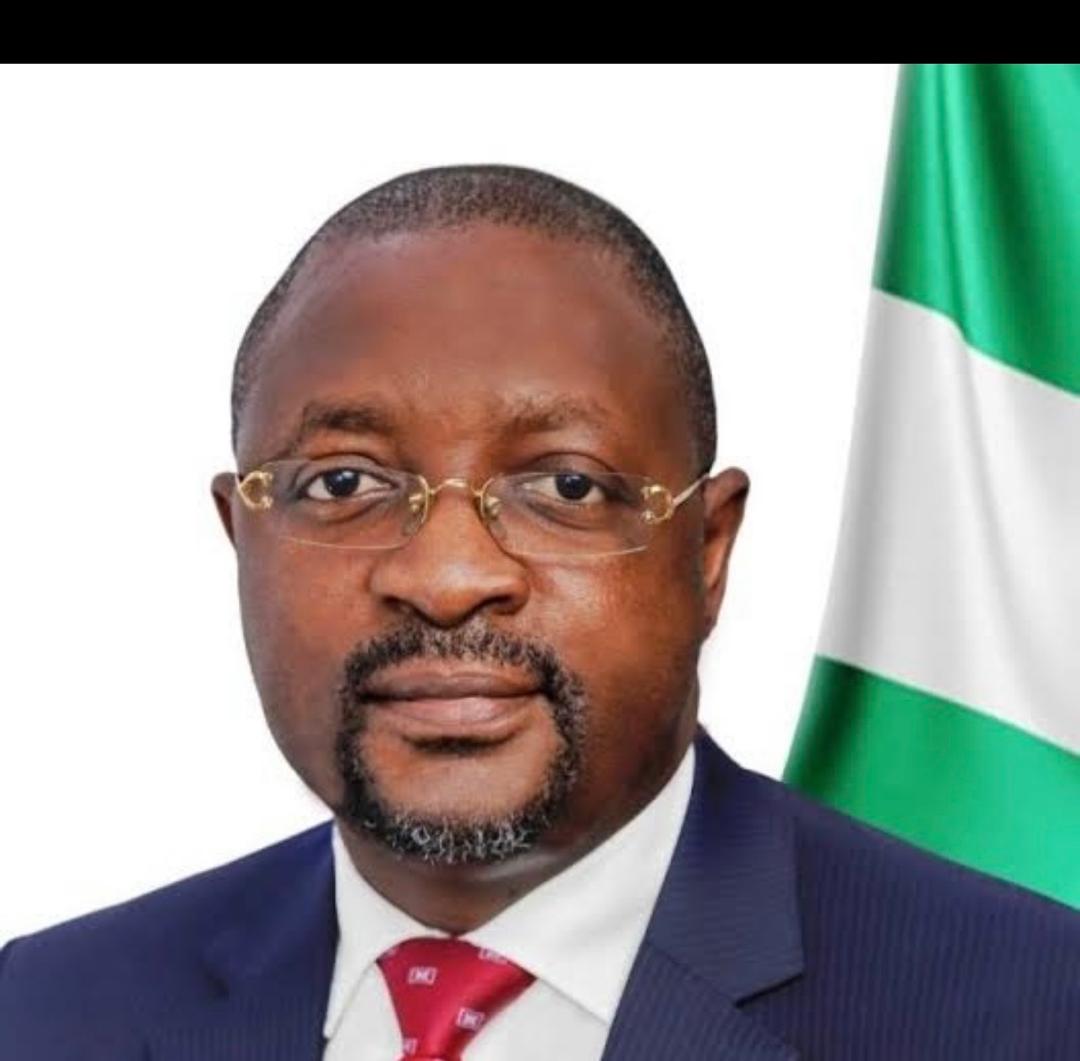
The Presidency has rejected an assessment by The Economist suggesting that President Bola Ahmed Tinubu faces widespread public dissatisfaction ahead of the 2027 general election, describing the publication’s portrayal of Nigeria as distorted and disconnected from the country’s economic realities.
Special Adviser to the President on Media and Public Communications, Dr Sunday Dare, made the position known in a response titled, “Beyond the Economist Condescension: Nigeria’s Re-engineering Under Tinubu Is Unstoppable.” Blueprint reports
Dare argued that the international publication’s assessment failed to sufficiently account for the economic and structural challenges inherited by the Tinubu administration when it assumed office in May 2023.
Presidency challenges Economist’s narrative
The Economist, in an October 1 assessment ahead of the 2027 election, argued that Tinubu could still secure re-election despite what it described as public dissatisfaction with his administration.
The publication pointed to Nigeria’s security challenges, the hardship associated with economic reforms and the emergence of political challengers as factors that could affect the president’s electoral prospects.
Responding, Dare accused some foreign commentators of reducing Nigeria’s complex political and economic circumstances to simplified narratives of hardship and public rejection.
He maintained that such assessments failed to adequately reflect the difficult conditions confronting the country before the Tinubu administration embarked on its reform programme.
Tinubu inherited difficult economic conditions, Presidency says
According to Dare, the administration did not inherit what he described as a stable and efficiently functioning economic system.
He cited the former fuel subsidy regime, distortions in the foreign exchange market and a high debt-service burden as some of the major challenges facing the country at the time.
He argued that addressing longstanding structural weaknesses would inevitably come with transitional difficulties, insisting that the government had chosen to confront problems that had been allowed to accumulate over several years.
“Structural cancers” could not, in his view, be removed overnight without imposing some degree of short-term pressure on citizens and businesses.
Dare said the administration’s decision to pursue reforms despite the associated difficulties reflected its determination to place the economy on what it considered a more sustainable footing.
Presidency highlights subsidy, forex reforms
Among the major policies cited by Dare was the removal of petrol subsidy, which President Tinubu announced immediately after assuming office in May 2023.
The presidential aide argued that ending the subsidy regime freed public resources that could be redirected towards infrastructure and other areas of national development.
He also pointed to the reform of the foreign exchange market, saying the administration had moved to address distortions and opportunities for arbitrage associated with the previous system.
Dare maintained that the reforms should not be assessed solely from the immediate hardship experienced by citizens, but also against the broader objective of correcting structural weaknesses within the economy.
NELFUND, wage reforms among cited interventions
The Presidency also highlighted interventions in education and social welfare as evidence that the administration’s policies were not limited to macroeconomic reforms.
Dare cited the Nigerian Education Loan Fund, NELFUND, which provides financial support to students in tertiary institutions, arguing that the scheme had helped many young Nigerians pursue higher education without facing the immediate burden of tuition costs.
He also referenced the increase in the national minimum wage, the deployment of Compressed Natural Gas buses and agricultural interventions, including fertiliser distribution, agricultural loans and support for mechanised farming.
According to him, such measures were intended to cushion the effects of the broader economic adjustments while laying the foundation for increased productivity and growth.
Presidency says reforms should be judged in context
Dare further argued that the impact of the administration’s policies should be evaluated against the conditions that existed before the reforms began.
He maintained that the government’s approach was focused on addressing longstanding structural problems rather than postponing difficult decisions for future administrations.
The presidential aide said the administration’s reform agenda was gradually reshaping the country’s fiscal and economic landscape, despite the challenges that have accompanied its implementation.
He also pointed to the financial position of universities, workers, farmers and local government authorities as areas where he said government interventions were beginning to have an impact.
Dare rejects claim of widespread rejection
On the political dimension of The Economist’s assessment, Dare rejected the suggestion that Nigerians broadly reject President Tinubu.
He argued that the experiences of citizens benefiting from government programmes presented a more complicated picture than the narrative of widespread hostility suggested.
According to him, students benefiting from NELFUND, workers affected by wage reforms and farmers receiving government support represent parts of the population whose experiences should also be considered when assessing the administration.
He therefore described the narrative of inevitable public rejection as an incomplete interpretation of developments in the country.
Presidency insists reforms remain on course
Dare acknowledged that Nigeria continues to face significant challenges, particularly in the areas of security and economic pressure, but maintained that the country’s circumstances could not be reduced to a single narrative of failure.
He argued that the Tinubu administration remained committed to its reform agenda and would continue pursuing policies aimed at strengthening the economy, improving fiscal sustainability and creating conditions for long-term growth.
The Presidency’s response comes as political activities intensify ahead of the 2027 general election, with the performance of the Tinubu administration expected to remain a major issue in the emerging electoral contest.
Dare maintained that Nigeria’s ongoing transformation should be judged within the context of the problems inherited by the administration and the measures being taken to address them.
He described President Tinubu’s reform programme as a long-term restructuring exercise and argued that its ultimate impact should be assessed beyond the immediate difficulties associated with implementation.



HK boss denies maltreating man, explains why he sold his phone for ₦90,000
Iran president says talks with US is ‘meaningless’

500 women groups endorse Tinubu’s re-election as First Lady assures better Nigeria

AMAC, Carter center team up to tackle gender-based violence

Court orders NDLEA boss appearance in Kyari alleged cocaine trial

US firm files $57m lawsuit against Tinubu, Fani-Kayode, others

ADC accuses APC of worsening teachers’ conditions

Why we can’t probe Ondo NAF crash – NSIB
-

 Special Reports3 days ago
HK boss denies maltreating man, explains why he sold his phone for ₦90,000
-

 Special Reports3 days ago
Iran president says talks with US is ‘meaningless’
- News3 days ago
500 women groups endorse Tinubu’s re-election as First Lady assures better Nigeria
- News2 days ago
AMAC, Carter center team up to tackle gender-based violence