Special Reports
Insecurity threatens 2027 election – INEC

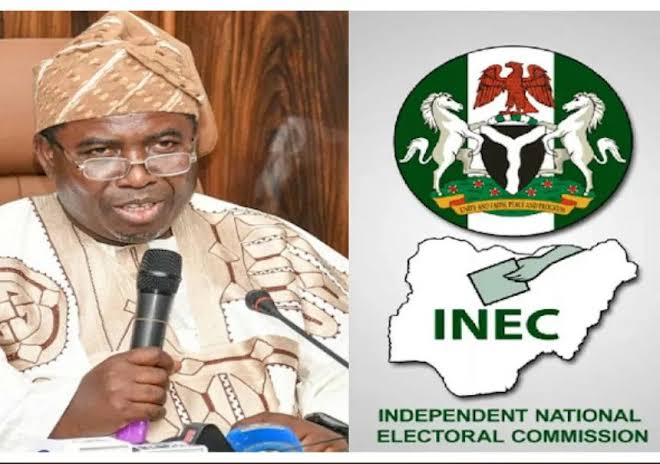

The Independent National Electoral Commission has identified insecurity as a major challenge ahead of Nigeria’s 2027 general elections, warning that violence in some parts of the country could prevent eligible voters from participating.
INEC Chairman, Prof. Joash Amupitan, raised the concerns in Owerri, Imo State, during the sixth Conference and Retreat for Senior Police Officers, where election security and preparations for the 2027 polls were discussed. Recent reports of the event also identified funding, logistics and coordination among security agencies as key issues ahead of the elections.
Amupitan said the commission did not want insecurity to disenfranchise Nigerians and was working with the Nigeria Police Force, the Office of the National Security Adviser and other security agencies to develop strategies for conducting elections in volatile areas. “It’s a major source of concern for us. That can be a source of disenfranchisement of Nigerians, and we don’t want any Nigerian to be disenfranchised,” he said.
The commission has scheduled the presidential and National Assembly elections for January 16, 2027, while the governorship and State Houses of Assembly elections are set for February 6. INEC has previously confirmed those dates in its preparations for the general election.
Amupitan said lessons from recent off-cycle and legislative elections would help the commission strengthen preparations for 2027. He also stressed the importance of professional neutrality among police officers, improved intelligence gathering and stronger inter-agency cooperation.
He said INEC would convene the Inter-Agency Consultative Committee on Election Security to address security challenges ahead of the polls. The committee brings together INEC, security agencies and other government institutions to coordinate election security at the federal, state and local government levels.
Amupitan also raised concerns about vote-buying, saying the practice was increasingly taking place away from polling units and would therefore require stronger intelligence gathering to detect and prevent it. He said INEC was working towards a broader task force involving the Office of the Attorney-General of the Federation, ICCES and law enforcement agencies to tackle electoral offences.
“We don’t have powers to arrest them. We don’t have powers to investigate,” Amupitan said, noting that enforcement remained the responsibility of security agencies. The INEC chairman said the commission would continue improving election logistics and result management while cooperating with law enforcement agencies to ensure offences under the Electoral Act are investigated and prosecuted.
Amupitan also addressed disputes arising from political party primaries, saying cases that fall within the courts’ jurisdiction would have to be resolved through litigation. He said such disputes would not necessarily stop INEC from conducting the elections because political parties, rather than individual candidates, contest elections. “Whatever decision that comes out at the end of the day, INEC will abide by it,” he said.
Funding was another major issue raised by the commission. Amupitan said adequate financial resources were essential to provide the personnel, logistics and security required for credible elections. Although INEC’s funding is provided as a first-line charge on the Consolidated Revenue Fund, he said the scale of the commission’s responsibilities required sustained financial support.
He noted that INEC’s responsibilities include conducting presidential, National Assembly, governorship and State House of Assembly elections, as well as voter registration and the registration and monitoring of political parties.
Amupitan urged relevant authorities to ensure that both INEC and security agencies receive the resources required to carry out their responsibilities effectively, while calling on security personnel to remain neutral and protect the integrity of the electoral process.
President of the Nigerian Bar Association, Oyinkansola Badejo-Okusanya, also called on the police to support INEC, saying effective policing would be vital to safeguarding the electoral process and delivering free, fair, credible and transparent elections.



JAMB lifts SIM, email change ban, gives candidates fresh directives

Lagos Govt debunks report of one functional dialysis machine at Alimosho Hospital

Court grants ex-minister Uche Nnaji permission to travel abroad for treatment

Tinubu misses UNGA for third consecutive year

AGF Urges Court to Throw Out El-Rufai’s ₦1bn Rights Suit
âHe is fine. Most of the girls are lying and bitter because he didnât end up with themâ â Audrey Cyrilâs fiancéâs brother speaks on infidelity saga

Osun APC rejects Accord claim of violent motor park take over

Nigeria DRE Fund reaches commercial launch milestone, sets model for Africa
-

 Breaking3 days ago
JAMB lifts SIM, email change ban, gives candidates fresh directives
- Breaking3 days ago
Lagos Govt debunks report of one functional dialysis machine at Alimosho Hospital
- Breaking3 days ago
Court grants ex-minister Uche Nnaji permission to travel abroad for treatment
- Special Reports3 days ago
Tinubu misses UNGA for third consecutive year