News
El-Rufai speaks on ‘being abandoned’ by associates amid trial

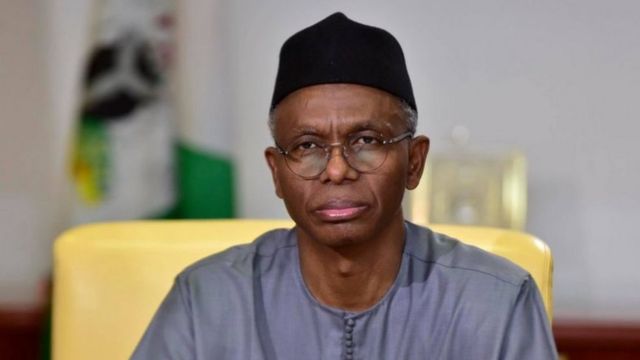

Former Kaduna state governor Nasir Ahmad El-Rufai has opened up on the apparent silence of some of his former colleagues, friends and family members amid his current legal challenges, saying adversity has given him a clearer perspective on some of his relationships.
El-Rufai spoke in a personal statement titled “My Relationships and the Aftermath”, dated September 23, 2026, in which he addressed concerns over the silence of people he had previously supported or publicly associated with.
Rather than directly condemning those who have chosen not to speak for him, the former governor said they were free to make their own choices in the changed circumstances. Blueprint reports
The statement comes as El-Rufai faces ongoing legal proceedings, including a Federal High Court case in Abuja over alleged unlawful interception of telephone communications.
The court on Tuesday reserved ruling on his no-case submission and fixed October 26, 2026, for the ruling. El-Rufai has pleaded not guilty to the charge.
‘I did not stand by people for reciprocity’
Reflecting on his past relationships, El-Rufai said his conduct towards colleagues, friends, family members and causes he believed in had largely been guided by his Islamic faith, his Arewa upbringing, personal values and conscience.
He said he had stood by people during difficult moments and sometimes paid a considerable personal price for doing so, but insisted that he never offered such support with the expectation that those individuals would later repay him.
“Over the years, I have stood by people and for causes I believed in, sometimes in difficult circumstances and at considerable personal cost,” he said.
According to him, his interventions were based on his conviction that they were the right things to do rather than an investment in future loyalty.
“I did so not in expectation of praise, gratitude or reciprocity, but because I believed it was right,” he added.
El-Rufai said those decisions were freely made and that he remained personally responsible for them.
‘Those I have supported are free to make their own choices’
The former governor acknowledged that some of the people he had previously supported might respond differently now that circumstances had changed.
He said some might choose to speak publicly, others could remain silent, while some might even distance themselves from previous relationships or seek to present those relationships differently.
“By the same token, those I have supported are free to make their own choices now that circumstances are reversed,” El-Rufai said.
He added that he did not intend to judge people merely because their response to his current situation differed from what he or others might have expected.
“Their reasons are their own, and I do not wish to judge them merely because their response differs from what others—or even I—might have expected,” he said.
The former governor did not name the individuals he had in mind, leaving his comments as a broader reflection on relationships, loyalty and personal choices during difficult periods.
‘Adversity has a way of illuminating relationships’
El-Rufai, however, acknowledged that his current circumstances had changed the way he viewed some relationships.
“Adversity has a way of illuminating relationships,” he said, explaining that what he had learnt during the difficult months could lead him to quietly reconsider the nature of certain relationships.
He said such reconsideration would also extend to the expectations placed on people who look up to him.
According to him, the process should not be interpreted as a condemnation of those involved, but rather as part of gaining a clearer understanding of people and life.
“That is neither reproach nor condemnation; it is simply part of seeing people, and life, more clearly,” he stated.
‘I have no regrets’
Despite the apparent withdrawal or silence of some people around him, El-Rufai said he had no regrets about the support he had offered in the past.
He maintained that whenever he stood by an individual or a cause, he did so because he genuinely believed it was the right thing to do at the time.
“I have no regrets about standing by people or for causes when I believed it was right to do so,” he said.
At the same time, he said he bore no resentment towards those who had chosen not to extend similar support to him in his present circumstances.
“I bear no resentment towards anyone who chooses not to do the same for me,” he added.
For El-Rufai, maintaining fidelity to his own principles was more important than allowing the actions of others to determine his conduct.
“I would rather remain true to the principles that have guided my own conduct than allow the conduct of others to redefine them,” he said.
El-Rufai rules out revenge
The former governor also addressed the possibility of having suffered injustice, ingratitude or personal injury as a result of the actions or inaction of others.
He said he was not interested in retaliation, stressing that he would leave questions of ultimate accountability to God.
“As for any injustice, ingratitude or injury done to me, I seek neither revenge nor retribution,” El-Rufai said.
He added that he believed ultimate accountability belonged to Almighty Allah, both in this world and in the Hereafter.
The position reinforces the tone of the statement, which, despite its references to silence and changing relationships, does not directly accuse any named individual of wrongdoing.
‘Posterity will render whatever verdict it sees fit’
El-Rufai concluded his reflection by shifting attention from the immediate reactions of his associates to the longer judgment of history and personal conscience.
He said everyone would ultimately have to live with the choices they made, while posterity would determine how those choices were remembered.
“In the end, each of us must live with the choices we make, and posterity will render whatever verdict it sees fit,” he said.
The former governor added that his principal concern was to remain at peace with his conscience and, above all, with Almighty Allah.
His comments came shortly after the Federal High Court in Abuja adjourned his alleged wiretapping case to October 26 for ruling on his no-case submission. The case followed an amended five-count charge filed by the Department of State Services over allegations relating to unlawful interception of telephone communications. El-Rufai has denied wrongdoing through his legal defence.
While his latest statement has generated discussion about political loyalty and personal relationships, El-Rufai himself stopped short of identifying those he believes have abandoned him. Instead, he presented the experience as an opportunity for personal reflection, insisting that neither silence from associates nor his present legal circumstances would make him abandon the principles that guided his previous decisions.



Lagos Govt debunks report of one functional dialysis machine at Alimosho Hospital

JAMB lifts SIM, email change ban, gives candidates fresh directives

Court grants ex-minister Uche Nnaji permission to travel abroad for treatment

AGF Urges Court to Throw Out El-Rufai’s ₦1bn Rights Suit
âHe is fine. Most of the girls are lying and bitter because he didnât end up with themâ â Audrey Cyrilâs fiancéâs brother speaks on infidelity saga

Osun APC rejects Accord claim of violent motor park take over

Nigeria DRE Fund reaches commercial launch milestone, sets model for Africa

Bitcoin jumps above $85,000 to 8-month high
-

 Breaking3 days ago
Lagos Govt debunks report of one functional dialysis machine at Alimosho Hospital
- Breaking3 days ago
JAMB lifts SIM, email change ban, gives candidates fresh directives
- Breaking3 days ago
Court grants ex-minister Uche Nnaji permission to travel abroad for treatment
- Breaking2 days ago
AGF Urges Court to Throw Out El-Rufai’s ₦1bn Rights Suit