News
2027: Nigeria’s registered voters now 103m – INEC

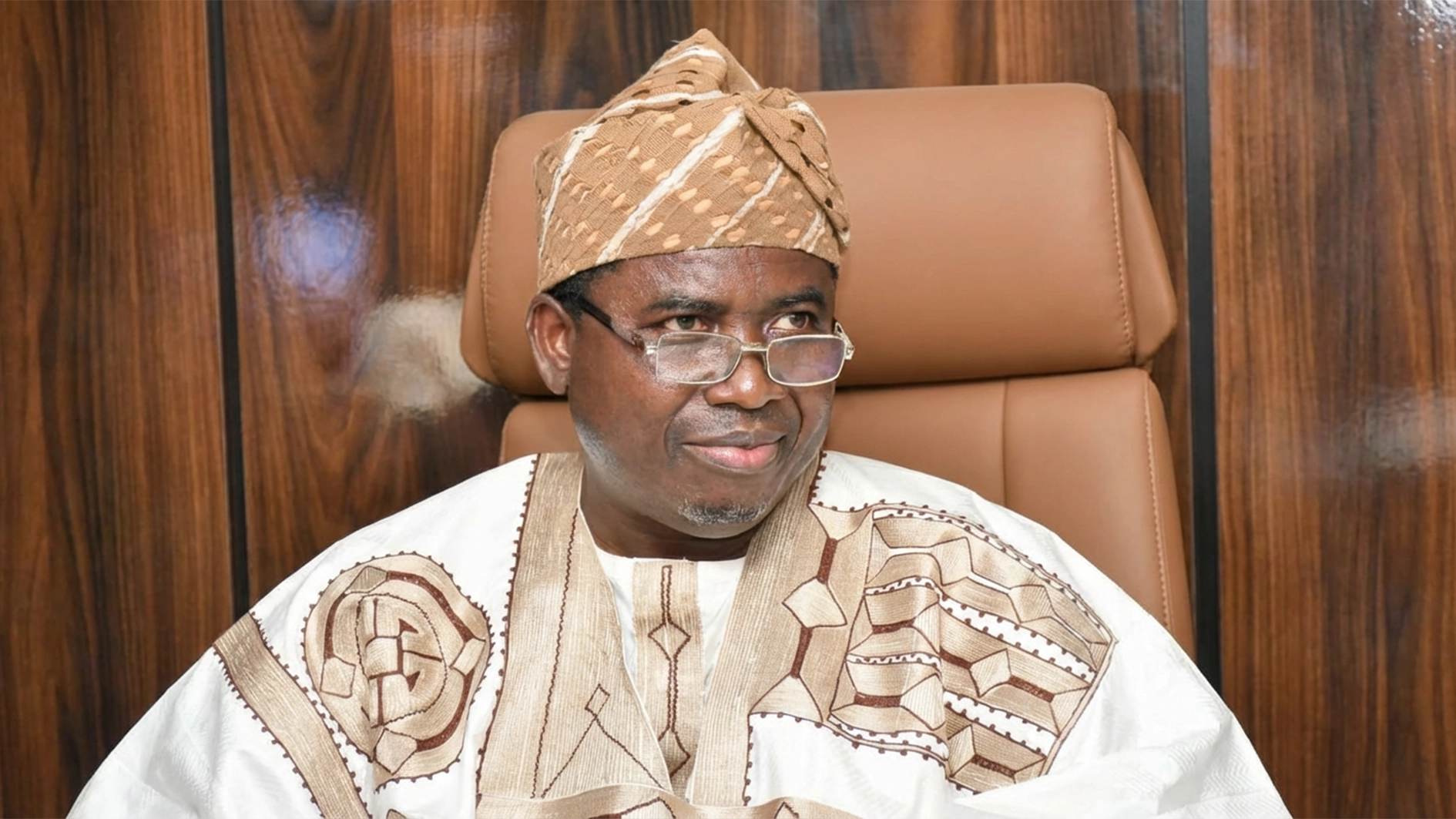
Chairman of the Independent National Electoral Commission (INEC), Professor Joash Amupitan, SAN, has declared that the number of registered voters ahead of the 2027 general elections has risen to more than 103 million, following the completion of the Continuous Voter Registration (CVR) exercise.
Amupitan, who reaffirmed the firm commitment of the Commission to the Constitution, the law, with a sole obligation to the Nigerian electorate, also said INEC had procured 57,000 additional Bimodal Voter Accreditation System (BVAS) among others.
According to Amupitan, the Commission has no preferred candidate, no preferred political party, and no agenda other than guaranteeing a free, fair, transparent, and credible election.
In a keynote address Monday in Abuja at a strategic workshop for editors, organised by the Nigerian Guild of Editors, in collaboration with INEC, Amupitan told the editors to work together with INEC to build a public space powered by verified facts, civic responsibility, and unassailable institutional trust.
The theme of the workshop – ‘Strengthening Democracy Through Partnership Among Editors, Civil Society and Electoral Institutions’– he said, “captures the precise tripartite alliance required to safeguard the ballot box and defend the sovereignty of the Nigerian voter.”
Amupitan said: “On 26th February 2026, the Commission issued the Revised Timetable and Schedule of Activities for the 2027 General Election, establishing 14 critical statutory activities. I am pleased to inform you that we have successfully executed eight of these major activities and are currently advancing toward the conclusion of the ninth milestone.
“This statutory timetable has been converted into an operational execution plan synchronised across our 23 Headquarters Directorates, 36 State Offices, the Federal Capital Territory (FCT), and all 774 Local Government Area (LGA) offices.
“As you are aware, and in line with Section 10 of the Electoral Act 2026, the first Phase of the Continuous Voter Registration (CVR) commenced on 25th August 2025 and ended on 10th December 2025, registering a total of 2,611,266 voters; Phase II commenced on 5th January 2026 and ended on 17th April 2026, registering 4,121,835 voters; and Phase III commenced on 11th May 2026 and ended on 26th July 2026, registering 3,867,997 voters.
“The total new registration stands at 10,772,421, subject to the Automated Biometric Identification System (ABIS) verification currently being concluded.
“In the third phase, we introduced the Online Registration Portal technology to eliminate barriers of distance and time. Furthermore, we introduced Printable PVC technology in line with Section 18(1) of the Electoral Act 2026 to ensure that waiting months for a card becomes a relic of the past.
“Following the conclusion of our three-phase Continuous Voter Registration (CVR) exercise—which captured over 10.6 million new applicants—and the completion of the public display of the Preliminary Register for claims and objections, our Voter Register Department has completed the final Automated Biometric Identification System (ABIS) cleanup. Nigeria’s National Register of Voters is now over 103 million.
“More importantly, I am using this high-level forum of editors to officially remind the Nigerian public that the nationwide collection of Permanent Voters’ Cards (PVCs) will commence in exactly four days, on Friday, 9th October 2026.
“We have completed the processing and distribution of Phase 1 PVCs to all local government centres. We appeal to the Nigerian Guild of Editors and all media executives present to leverage your platforms to inform citizens, explain collection locations, and encourage registered voters to collect their cards promptly.”
“To ensure that operational strategy translates into seamless field execution, the Commission initiated a comprehensive nationwide Zonal Readiness Assessment programme across all six geopolitical zones.
“We have successfully completed physical readiness audits and staff engagements in the South-West and North-West zones, auditing state office facilities, safe storage facilities, security command protocols, and logistics deployment networks,” he added.
…Technical readiness
On the Commission’s technical readiness, Amupitan said it was leaving anything to chances.
“Technology remains our most potent weapon for guaranteeing that every valid vote counts and that electoral outcomes reflect the true choice of the electorate.
“We have instituted hardware, software, and cybersecurity enhancements across our technological architecture: Upgraded BVAS Infrastructure: The Bimodal Voter Accreditation System (BVAS) devices have undergone extensive software hardening, battery optimisation, and biometric calibration to prevent accreditation bypass and eliminate manual manipulation. We have acquired 57,000 new BVAS for optimal performance.
“EC8A System and Result Transparency: Building on successful deployments in recent off-cycle elections, our enhanced eEC8A system ensures that polling unit result sheets are digitised, cryptographically authenticated, and uploaded directly from polling units to the public view portal, IReV.
“Online Voter Registration: This was introduced in the Third Phase of the Voters Registration to make registration seamless and the rigour associated with manual registration.
“Downloadable PVC: This technology was introduced pursuant to section 18(1) of the Electoral Act. It was tested during the Osun election and also used to enable voters whose PVC were stolen before the election to exercise their voting right.
“AI Data Auditing & Cybersecurity: In partnership with international technology leaders, we are integrating AI-driven anomaly detection tools to monitor database traffic and shield our public portals against cyber intrusions or unauthorised alterations.
“However, as technology strengthens our operational integrity, the information ecosystem faces unprecedented threats. As our expert resource persons—Dr. Tony Onyima, Professor Lai Olurode, Mr. Lanre Idowu, Mr. Lanre Arogundade, and Dr. Akin Akingbulu—will unpack during this workshop, elections in the digital age are vulnerable to sophisticated information disorder.
“Deepfakes, manipulated audio-visual content, coordinated fake news campaigns, and premature declaration of unverified results are capable of inciting public unrest, threatening election officials, and delegitimizing valid elections.
“When fake news spreads, it does not merely damage INEC’s reputation; it attacks the democratic fabric of our nation. Combatting this danger requires editorial vigilance. Editors must insist on rigorous fact-checking, reject sensationalised clickbait, and cross-check unverified field rumours with our official channels before hitting the publish button.
“As electioneering intensifies across the country, I must sound a clear note of warning to all political parties, candidates, and campaign managers: INEC will not stand by and allow political competition to devolve into violence, intimidation, or inflammatory rhetoric. Democracy thrives on the clash of ideas, not the clash of weapons or the proliferation of hate speech.”
…Ensuring electoral integrity
The Commission also reiterated its determination to ensure the integrity of the election, promising to use every legitimate weapon at its disposal to frustrate vote-trading.
“The integrity of the ballot box is fatally compromised when a citizen’s vote is treated as a commodity for sale. The Commission is taking an uncompromising stance against vote-buying in all its forms ahead of the 2027 General Election.
“Working through a strengthened coalition with the Federal ministry of Justice, Economic and Financial Crimes Commission (EFCC), the Independent Corrupt Practices and Other Related Offences Commission (ICPC), and the Nigerian Financial Intelligence Unit (NFIU), joint financial monitoring teams will be deployed to track illegal campaign spending and conduct undercover surveillance at polling units nationwide.
“To the political actors and their agents: attempt to trade cash or material gifts for votes, and you will face immediate arrest and prosecution under the Electoral Act 2026. Elections must be decided by the conviction of the voter, not the depth of a candidate’s pocket.”
…Tasks editors CSOs, seeks support
He said: “Distinguished Editors, Ladies and Gentlemen, democratic governance is a continuous journey that requires constant care, vigilance, and institutional courage. Democracy is a journey, not a destination. The strength of that journey depends on the quality of the partnership between those who manage the vote, those who monitor the vote, and those who report the vote.
“If we stand together—Editors, CSOs, and INEC—we create a fortress that no amount of electoral malpractice or political mischief can breach. Let this workshop be the starting point for a revamped roadmap toward a transparent and peaceful 2027.
“As the Chairman of the Independent National Electoral Commission, my commitment to Nigeria is firm: our allegiance is to the Constitution and the law, and our sole obligation is to the Nigerian electorate. We have no preferred candidate, no preferred political party, and no agenda other than guaranteeing a free, fair, transparent, and credible election.
“To the Nigerian Guild of Editors: you are the guardians of public truth. As the nation prepares for the 2027 general elections, let us work together to build a public space powered by verified facts, civic responsibility, and unassailable institutional trust.”
Speaking further, the INEC boss said: “This workshop is convened at a defining threshold in our national journey. Today, Monday, 5th October 2026, stands exactly 101 days away from the Presidential and National Assembly Elections scheduled for Saturday, 16th January 2027, and Governorship and State Houses of Assembly Elections on Saturday, 6th February 2027.
“The timing of this strategic workshop is intentional. It reflects our shared recognition that a credible election is not an event that happens on a single Saturday; it is a rigorous process that requires constant collaboration, transparency, and a unified front against threats to our democratic stability.
“As the countdown accelerates, the administrative, technical, and operational machinery of the Commission is operating at peak capacity. However, history and experience have taught us a fundamental lesson: operational perfection on the part of an electoral management body, while necessary, is insufficient on its own to guarantee democratic stability.
“The ultimate arbiter of electoral integrity is public trust. That trust cannot be constructed in isolation; it requires an active, transparent, and unshakeable partnership between the electoral umpire, civil society, and the free press.”



“I wonder how Nigerians survive on a ₦100,000 monthly salary” — Nigerian man serving in US Army asks

SERAP Urges Tinubu To Order Probe Into Alleged ₦94.4bn Oil Fund Irregularities

TikTok influencer Kholegrams faces backlash after asking fans to pay ₦100,000 to hang out with her

Kidnappers give 24-hour ultimatum for abducted NYSC members, others

Lady narrates how man gave her a lift, collected her phone under the guise of saving his number and drove off with it

Couple and three children who d!ed mysteriously in Abia laid to rest

Poor pay, welfare package: Enugu law officers begin 7-day warning strike

NGO applauds Benue Assembly for rights-based TB bill
-

 Special Reports1 day ago
“I wonder how Nigerians survive on a ₦100,000 monthly salary” — Nigerian man serving in US Army asks
- News21 hours ago
SERAP Urges Tinubu To Order Probe Into Alleged ₦94.4bn Oil Fund Irregularities
- Special Reports18 hours ago
TikTok influencer Kholegrams faces backlash after asking fans to pay ₦100,000 to hang out with her
- Politics3 days ago
Kidnappers give 24-hour ultimatum for abducted NYSC members, others