News
Will increased solar patronage address Nigeria’s electricity challenges?

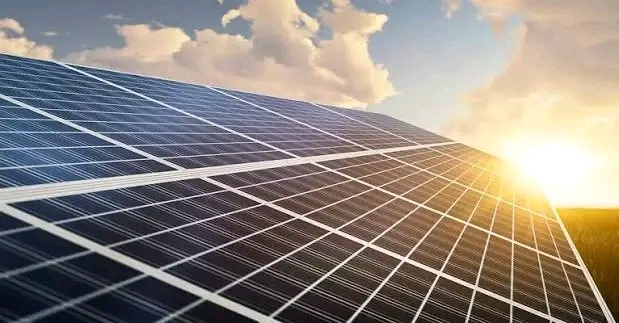
Nigeria’s electricity crisis is structural, rooted in low generation, weak transmission, and poor cost recovery – a situation experts say solar patronage alone cannot solve. However, it can substantially reduce the pain for millions if financing, regulation, and grid integration improve; BENJAMIN UMUTEME writes.
Nigerians will not wait for the national grid to be fixed. Nigeria installed 803 megawatts of new solar capacity in 2025, up 141 per cent on the previous year, and cumulative capacity reached nearly 1.19 gigawatts.
Data have shown that Nigeria has overtaken Egypt as Africa’s second-largest importer of solar panels, behind only South Africa.
The question for policymakers is whether this private rush to rooftop panels can solve a power crisis that is mostly public in origin.
The evidence so far indicates that solar can restore reliability for those who can pay and bring first-time access to some rural communities. It cannot, alone, repair a grid that is failing for financial and fuel reasons.
Scale of Nigeria’s electricity challenges
Nigeria’s power sector is defined by a wide gap between installed capacity and what actually reaches sockets. The country has about 13,625 MW of installed grid-connected generation capacity, yet in early 2026 it was averaging just over 4,100 MW hourly as less than a third of what would be needed to serve 200+ million people adequately.
Transmission constraints compound the problem. While the grid is technically capable of wheeling up to 8,700 MW, in practice it has carried just over 5,800 MW on its best day, with daily operations often far below that.
Access remains low by global standards. As of 2022, only 61% of Nigerians had electricity access, leaving more than 86 million without; by 2024, access had improved only modestly to around 62.5%, meaning over 80 million were still un-served.
Even among those “connected,” reliability is poor: many households and businesses receive only five to six hours of grid supply daily, forcing heavy reliance on petrol and diesel generators.
The financial backbone of the sector is also weak. Over N10 trillion in public interventions over 13 years have failed to lift supply sustainably, with liquidity shortfalls, tariff distortions, and collection problems trapping capital across the value-chain.
In this context, solar especially off-grid and mini-grid solutions has become both a coping mechanism and a policy priority.
What the experts are saying
Energy experts broadly agree that solar patronage is now a central feature of Nigeria’s energy landscape, but they stress that it is not a silver bullet for the systemic issues plaguing the sector.
Israel Izuchukwu, who deals in solar accessories in Jikwoyi, Abuja, noted that, “The spike in imports shows that Nigerians are increasingly taking power generation into their own hands. Persistent blackouts, diesel costs, and erratic grid supply are accelerating private solar adoption faster than government-led electrification programmes.”
This underscores a key reality: much of Nigeria’s solar growth is privately driven, a response to grid failure rather than a coordinated national transition.
However, cost and financing remain binding constraints. Capital costs for solar projects in Nigeria can be up to seven times higher than in developed economies, while commercial bank interest rates are prohibitive and naira devaluation has made imported equipment and spares “astronomically expensive.”
Stakeholders in renewable energy highlight the mismatch between finance and project economics. They stated that “Traditional bank lending is ill-suited for mini-grids. Short loan tenors, elevated interest rates, and stringent collateral requirements prevent developers from aligning debt service with long-term cost-recovery cycles.”
Policy experts also warn against blunt instruments like import bans at this stage. Dr. Ayodele Oni, an energy policy expert, argues that “with most components still heavily import-dependent, stabilising FX access is more impactful than import restrictions,” adding that “an import ban now would be premature.”
The implication is that solar patronage can expand only if the macro-financial environment, especially FX availability and credit terms improve.
On the technical side, analysts point to institutional bottlenecks. They opine that decentralised energy in urban Nigeria finds that expansion is constrained by “fragmented regulation, weak institutional coordination, limited access to affordable finance, and fossil-fuel subsidies that distort energy prices and discourage renewable investment.”
In other words, solar can grow, but not at the speed or scale required unless regulatory coherence and subsidy reforms catch up.
Some analysts frame solar as a pragmatic bridge rather than a full substitute for grid reform.
“Nigeria can build mini-grids; financing them at scale remains difficult amid FX risk, high interest rates, and limited commercial capital. The fundamental challenge is no longer technical viability; it is securing sustainable, scalable financing.”
This aligns with broader assessments that Nigeria’s crisis “comes down to four numbers”: generation availability, gas supply, tariffs, and sector liquidity – variables that solar alone cannot fix.
Relief, frustration, and affordability concerns
For many Nigerians, solar is less a policy choice than a survival strategy. “Blackouts drive more Nigerians off-grid as solar demand booms” is not just a headline; it reflects lived experience. Households and SMEs that can afford upfront costs are installing rooftop systems and inverters to escape daily outages, while those who cannot remain trapped in the “generator economy,” burning expensive fuel for basic lighting and cooling.
The affordability squeeze is real. Installation costs for solar systems have risen sharply by over 40 per cent year-on-year in some periods, and in some categories by as much as 208 per cent, driven by FX volatility and surging demand.
Industry players admit reluctantly that the growing numbers of households turning to solar power are grappling with a year-on-year increase of over 40 per cent in installation costs, dampening demand even as the grid worsens.
Many praise solar for bringing “light that stays on” and cutting generator noise and fuel bills, but complain that “the price has gone beyond what the common man can bear.”
For small traders and rural households, even pay-as-you-go (PAYG) models face hurdles: studies find that “many projects have insufficient capacity due to high costs and inadequate technical designs, failing to meet local energy needs,” while affordability and weak financing structures limit scale-up beyond individual homes.
There is also a geographic divide. In cities like Lagos and Abuja, middle-class households and businesses are rapidly adopting solar as a backup or primary source, whereas in remote agrarian communities, reliance remains on REA-led mini-grids and donor-supported projects.
Residents in newly electrified villages welcome mini-grids for powering mills, cold rooms, and clinics, but worry about tariff levels and long-term sustainability if subsidies or grants taper off.
Can solar patronage address the challenge?
Increased solar patronage will materially improve Nigeria’s electricity situation, but it will not, by itself, resolve the core structural deficits.
Where solar excels is in closing the access gap and improving reliability for specific segments: Rural and peri-urban communities un-served by the grid can be electrified faster and more cheaply via mini-grids than by waiting for grid extension.
Analysts say agro-processing, cold chains, small manufacturing gain from stable, predictable power, boosting incomes and local economies.
Urban and semi-urban SMEs and households can reduce generator dependence, lowering operating costs and emissions.
But several limits remain. To address this, experts say there is a need to scale relative to national demand: Even with 1,350 mini-grids serving 17.5 million people, a large share of Nigeria’s population would still depend on an underperforming national grid or remain unserved.
Cost and finance: High capital costs, FX risk, and expensive debt constrain both household uptake and developer bankability, capping how fast solar can scale.
Grid integration: Without stronger transmission, dispatch, and storage, large-scale solar cannot be fully leveraged to stabilise the national system; grid instability remains a bottleneck for utility-scale renewable.
Policy coherence: Fragmented regulation and fossil-fuel subsidies distort incentives, slowing the transition and keeping grid tariffs artificially low relative to cost-reflective levels needed to attract investment.
In practical terms, solar patronage is best understood as a critical complement to, not a substitute for, deep power-sector reform: improved gas supply and plant availability, tariff and subsidy rationalization, stronger transmission, and better revenue collection.
REA’s mini-grid and solarisation programmes are moving the needle on access and reliability, especially in rural areas, but their impact will be maximized only within a broader strategy that addresses financing, regulation, and grid performance.
For Nigeria’s policymakers, the question is not “solar or grid?” but how to orchestrate both: using solar to deliver immediate relief and expand access, while simultaneously fixing the fundamentals that keep the national system weak.
But “Nigeria’s electricity challenge” has two parts. The access and reliability gap is being narrowed by solar, unevenly and mostly for people who can pay. The system gap, meaning gas supply, unpaid debts, transmission weakness and collapses, is untouched by rooftop panels and may be aggravated by customer exit.
The policy lesson is that solar should complement grid reform, not replace it. Clearing sector debt, securing gas supply and making mini-grids and service-based models affordable are the conditions under which solar patronage becomes a national solution rather than a private escape route.



“She wants me to stop talking against husband snatchers” — Rita Edochie speaks as she appears in court over the ₦1bn lawsuit filed against her by Judy Austin

Explainer: Duty-free does not mean tax-free for airport shops

“I started listening to Fela Kuti when I first got Spider-Man role” — Andrew Garfield reveals how Nigerian music legend inspired his role

ARISE News anchor Somtochukwu Maduagwu was pushed to d3ath by robber, police officer tells Abuja court

Lower tax interest to ease burden of business arrears

Centre to 10th NASS: Don’t close shop without passage of reserved seats bill

Dangote Breaks Ground on $16bn Kenya Refinery, Targets 700,000 Bpd

Adamawa governorship candidates sign peace accord ahead of 2027
-

 Special Reports3 days ago
“She wants me to stop talking against husband snatchers” — Rita Edochie speaks as she appears in court over the ₦1bn lawsuit filed against her by Judy Austin
- Business3 days ago
Explainer: Duty-free does not mean tax-free for airport shops
- Special Reports2 days ago
“I started listening to Fela Kuti when I first got Spider-Man role” — Andrew Garfield reveals how Nigerian music legend inspired his role
- Special Reports3 days ago
ARISE News anchor Somtochukwu Maduagwu was pushed to d3ath by robber, police officer tells Abuja court