News
Tshisekedi’s third term bid: Protest rocks DR Congo over constitutional amendments

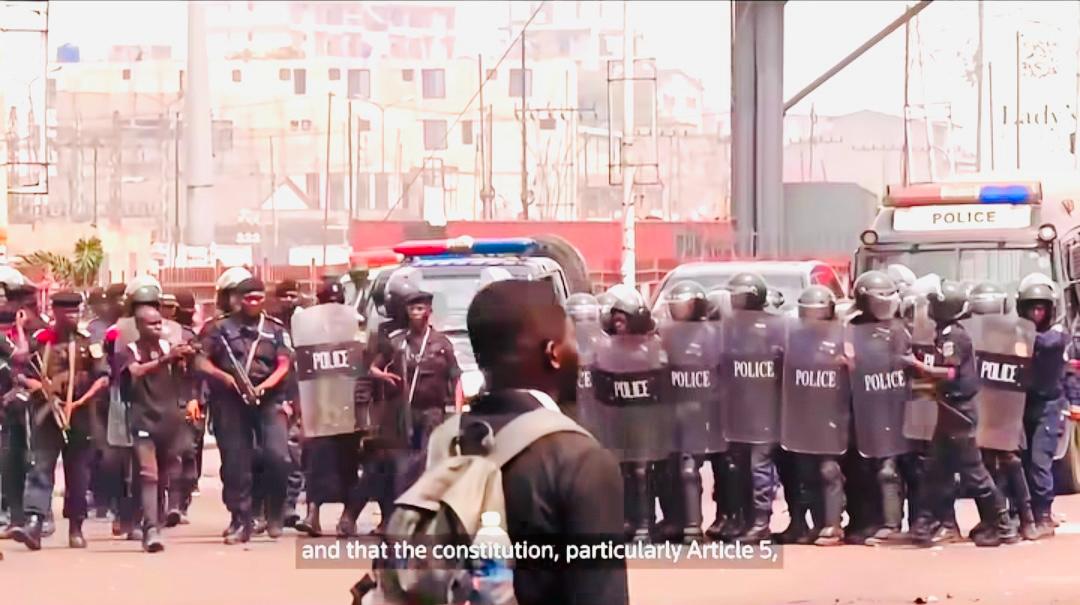

Fresh protests have erupted across the Democratic Republic of Congo (DRC) over proposed constitutional changes that opponents say could open the way for President Félix Tshisekedi to seek a third term in office.
The demonstrations, organised by the opposition coalition known as C64, took place on Tuesday, September 15, in the capital, Kinshasa, as well as in other major cities including Lubumbashi and Uvira.
In Kinshasa, where the protest was authorised, several hundred people reportedly took part before the demonstration degenerated into clashes between protesters and supporters of the government. Police deployed tear gas and fired warning shots to disperse the crowd. Reuters witnesses also reported that stones were thrown and machetes were brandished during the confrontation. Blueprint reports
At least 10 people were reported arrested during the confrontation, although accounts differed over the circumstances surrounding the arrests. Opposition representatives accused security forces of arbitrarily detaining activists, while a provincial police commander disputed the claim that peaceful protesters had been arrested.
Opposition mobilises against constitutional changes
The protests are the latest escalation in an increasingly tense political dispute over the future of the DRC’s constitutional order.
The C64 coalition brings together several opposition forces and prominent political figures, including former presidential candidates Martin Fayulu and Moïse Katumbi, as well as Delly Sesanga. The coalition has been campaigning against efforts to amend or replace constitutional provisions that currently limit presidential tenure.
The September 15 mobilisation followed earlier demonstrations and political actions against the proposed reforms. Opposition groups have argued that changing the constitutional framework at this stage could be used to extend Tshisekedi’s stay in office beyond the two-term limit.
The coalition had announced the nationwide mobilisation as part of its campaign to resist any constitutional process that could facilitate a third presidential mandate. Thousands had also demonstrated in Goma and Bukavu in July against the proposed constitutional changes and any attempt to extend Tshisekedi’s tenure.
The latest confrontation has further widened the political divide between the government and opposition groups at a time when the country is already dealing with armed conflict in the east and other national challenges.
Tshisekedi’s third-term question
Tshisekedi has been president since 2019 and is currently serving his second term. Under the existing DRC Constitution, a president can serve a maximum of two five-year terms.
The controversy intensified after Tshisekedi indicated in May that he would be willing to seek another term if Congolese voters approved the move through a referendum. Reuters reported that the president’s comments immediately triggered criticism from opposition politicians, who accused him of seeking to circumvent the existing presidential term limits.
The issue gained further momentum after parliament advanced legislation providing a framework for constitutional changes to be submitted to voters.
In June, the Senate adopted a bill that could pave the way for a referendum on a new constitution. Reuters reported that the proposed framework could potentially allow Tshisekedi to seek a third term under a new constitutional arrangement.
Members of the president’s ruling coalition have supported constitutional changes, while opposition parties and the Catholic Church have criticised the initiative.
The government has maintained that constitutional reform and a referendum can be pursued through legal and democratic procedures. The central dispute, however, is whether the proposed process represents a legitimate constitutional review or could ultimately be used to alter presidential term limits.
Government, opposition positions clash
For the opposition, the constitutional debate is fundamentally about preserving the existing limits on executive power.
Opposition groups have characterised the proposed reforms as an attempt to manipulate the Constitution to keep Tshisekedi in power beyond 2028. C64 has therefore sought to mobilise public opposition and place pressure on parliament and the government.
The administration and its supporters, however, have presented constitutional reform as a broader institutional process rather than simply an effort to extend the president’s tenure.
The disagreement has become particularly sensitive because the DRC has never experienced an easy political transition between elected presidents. Any major constitutional alteration ahead of the 2028 election is therefore attracting considerable attention from political actors, civil society organisations and international observers.
US-DRC minerals partnership enters debate
The constitutional controversy has also become connected to the DRC’s growing strategic relationship with the United States.
The two countries signed a strategic economic partnership in December 2025 covering critical minerals, investment, economic cooperation and security. The agreement is particularly significant because the DRC is one of the world’s major producers of copper and cobalt, resources considered strategically important to global industries.
The Congolese government has said the partnership is intended to attract investment, strengthen mineral supply chains and support infrastructure and economic development. The agreement also provides for reforms to the country’s fiscal and regulatory framework.
Tshisekedi has linked constitutional reform to the agreement. In a May 6 press conference, according to the Carnegie Endowment for International Peace, the president said constitutional reform was among conditions allegedly requested by Washington under the strategic partnership, although he did not provide evidence for that assertion.
The interpretation has subsequently become contested.
Carnegie’s analysis notes that Article XII of the agreement contains provisions requiring legislative and constitutional reforms to align the DRC’s legal framework with the partnership. However, the analysis also points out that the agreement does not specifically state that constitutional changes must be made to alter presidential term limits or permit Tshisekedi to seek another term.
The distinction is important because it separates the documented contents of the agreement from the political interpretation being placed on it by actors in the DRC.
Political tension ahead of 2028
The latest protests come as the DRC faces several other major challenges.
The country continues to contend with armed conflict in its eastern provinces, particularly involving the M23 rebel group. Kinshasa has accused neighbouring Rwanda of supporting M23, an allegation Kigali has repeatedly denied.
Tshisekedi also recently announced plans for a national dialogue involving opposition parties, civil society organisations and religious leaders. The proposed dialogue is intended to address the country’s political challenges, although opposition groups remain deeply critical of the government’s constitutional initiative.
The political crisis is unfolding alongside a serious Ebola outbreak and continuing security pressures in eastern Congo, adding to the challenges confronting the government.
With the 2028 presidential election on the horizon, the constitutional question is expected to remain central to political debate in the DRC.
For now, the country faces a widening disagreement over whether its constitutional framework should be revised and, if so, what those changes should contain. The September 15 demonstrations demonstrate that the issue has moved beyond parliament and political negotiations into the streets, with opposition groups signalling that they intend to continue challenging any reform they believe could facilitate a third presidential term for Tshisekedi.



Dangote Refinery Opens N2.15tn Share Offer Today at N525 Per Share

Oju-Ore Bridge Safe,Structurally Sound,Says Works Ministry

Minister of Power secures commitment for establishment of industrial park

Caucasian woman reveals shocking experiences in Nigeria on 5th anniversary of her stay

Lagos: Desmond Elliot prostrates before Gbajabiamila, seeks forgiveness

2027: Presidential candidate urges youth, women to take charge of political future

Production rises by 0.4% in August as Nigeria meets OPEC quota

APC chieftain urges Tinubu to sustain Wike alliance ahead of 2027
-

 Finance2 days ago
Dangote Refinery Opens N2.15tn Share Offer Today at N525 Per Share
- News2 days ago
Oju-Ore Bridge Safe,Structurally Sound,Says Works Ministry
- News3 days ago
Minister of Power secures commitment for establishment of industrial park
- Special Reports3 days ago
Caucasian woman reveals shocking experiences in Nigeria on 5th anniversary of her stay