News
Tinubu demands two permanent UN Security Council seats for Africa

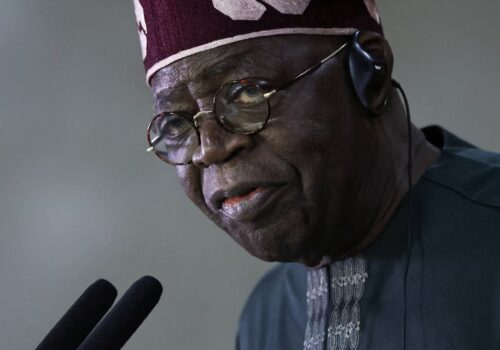

President Bola Ahmed Tinubu has renewed Nigeria’s demand for the reform of the United Nations Security Council, insisting that Africa must be allocated at least two permanent seats with full rights and responsibilities, including veto power for as long as the privilege remains in operation.
The President made the call in Nigeria’s national statement delivered by Vice President Kashim Shettima during the General Debate of the 81st Session of the United Nations General Assembly in New York.
The President said the composition of the Security Council no longer represented contemporary geopolitical realities, declaring that the world of 2026 could not continue to be governed by a power arrangement created in 1945.
He said Africa should also receive five non-permanent seats in accordance with the Ezulwini Consensus and the Sirte Declaration, which articulate the continent’s common position on the reform of the global body.
The President maintained that the continued exclusion of Africa from permanent membership weakened the credibility, fairness and effectiveness of the council, particularly when many of the matters before it directly affected the continent.
He affirmed Nigeria’s readiness to undertake greater responsibilities in global affairs, pointing to the country’s longstanding contributions to peacekeeping, conflict mediation and security operations across Africa.
The President cited Nigeria’s interventions in Liberia, Sierra Leone, Darfur, Mali and The Gambia as evidence of its commitment to peace, stability and democratic order on the continent.
He also restated Nigeria’s commitment to multilateralism, saying diplomacy, cooperation and international law must prevail over coercion, isolation and the arbitrary exercise of power.
According to him, the United Nations remains indispensable to international peace, justice and sustainable development, but must become more inclusive, representative and responsive to present-day challenges.
On the economy, the President linked Nigeria’s foreign policy objectives to the reforms being implemented at home.
He said sound macroeconomic management, stronger institutions, focused investment and private-sector expansion were essential to sustainable growth and national prosperity.
The President also called for a fundamental reform of the international financial architecture to give developing countries wider access to concessional funding and fairer debt arrangements.
He said that existing debt frameworks should enable developing nations to invest in education, healthcare and infrastructure instead of forcing them to choose between servicing debts and meeting the basic needs of their citizens.
The President identified the African Continental Free Trade Area as a powerful instrument for the continent’s economic transformation.
He urged African countries to reduce their dependence on raw-material exports and embrace value addition, manufacturing, innovation and knowledge-based production.
On climate change, the President rejected what he described as a false choice between development and climate action.
He said developing countries must be permitted to industrialise, create employment, reduce poverty and expand access to energy while pursuing lower-carbon development.
He called for predictable climate financing, technology transfer and capacity building, stressing that global climate responsibility should be founded on equity and collective obligation, rather than treated as an act of charity.
The President reaffirmed Nigeria’s Energy Transition Plan and its target of attaining net-zero emissions by 2060 through renewable energy, clean cooking, gas as a transition fuel, climate-smart agriculture and nature-based solutions.
On technological advancement, the President urged world leaders not to surrender the future of Artificial Intelligence to fear.
He said AI should be responsibly deployed to improve healthcare, education, agriculture, governance and economic productivity.
He invited global partners to invest in Nigeria’s youthful population and growing technology sector, noting that the country was expanding digital public infrastructure, broadband access, research and technology entrepreneurship.
On international security, the Nigerian leader called for stronger intelligence sharing, stricter controls on terrorist financing and decisive action against the illicit movement of arms.
He said military victories against terrorism and violent extremism must be supported by education, economic opportunity, accountable governance and social inclusion to address the conditions that allow insecurity to thrive.
The President also demanded renewed diplomatic action to end the conflict in Sudan and other troubled regions.
He said that civilians must be protected, humanitarian organisations granted unhindered access and international law respected by all parties.
The President pledged that Nigeria would continue to choose cooperation over confrontation, dialogue over division and partnership over isolation.
He maintained that an inclusive, effective and properly reformed United Nations remained humanity’s best platform for confronting war, poverty, inequality, climate change and other threats that no country could defeat alone.



AGF Urges Court to Throw Out El-Rufai’s ₦1bn Rights Suit

âThe money was for the artistesâ â Peter Okoye admits receiving about $800k in royalties, says Jude got nothing

AFC supports ₦729 billion series 2 bonds to advance Nigeria’s power sector reforms

I can’s see this quote on your report – ‘I left billions, not debt’ – Peter Obi releases further evidence [PHOTO]
âIf I were Audrey, I would go ahead with the wedding as long as heâs not g@yâ â Actress Sarah Martins

US TV networks suspend Trump coverage after White House’s ban on three media outlets

Anambra debt: You’re unfit for leadership, APC-PCC tells Peter Obi

FOX News, ABC, CBS, NBC Suspend Pooled Coverage of Trump after President’s Ban on CNN, MS NOW, Politico
-

 Breaking3 days ago
AGF Urges Court to Throw Out El-Rufai’s ₦1bn Rights Suit
- Special Reports3 days ago
âThe money was for the artistesâ â Peter Okoye admits receiving about $800k in royalties, says Jude got nothing
- News16 hours ago
AFC supports ₦729 billion series 2 bonds to advance Nigeria’s power sector reforms
- Breaking3 days ago
I can’s see this quote on your report – ‘I left billions, not debt’ – Peter Obi releases further evidence [PHOTO]