News
Shettima returns from India after BRICS Summit

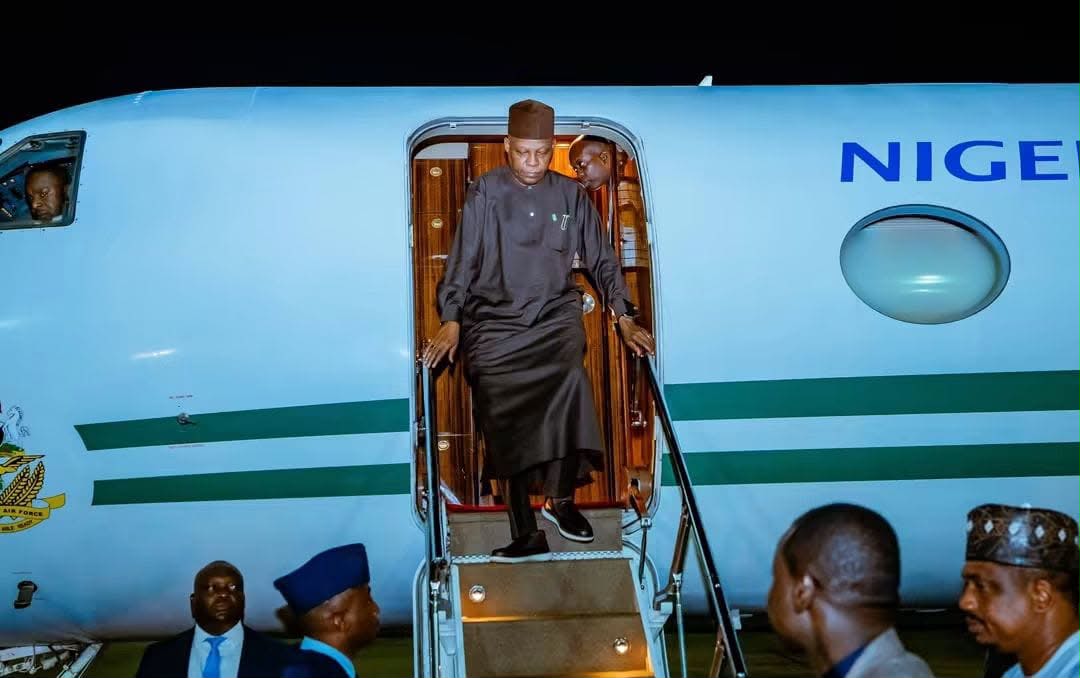
Vice President Kashim Shettima has returned to Nigeria after representing President Bola Ahmed Tinubu at the 18th BRICS Leaders’ Summit in New Delhi, India, where he led high-level engagements focused on trade, investment, technology and the strengthening of Nigeria’s strategic relationship with India and other emerging global economies.
The Vice President’s return followed a series of bilateral and multilateral meetings during the visit, which the Presidency said provided an opportunity for Nigeria to advance its economic interests, attract investments and deepen cooperation in areas considered critical to the country’s development agenda.
Shettima, Modi Discuss Strategic Economic Ties
One of the major engagements during the visit was Shettima’s meeting with Indian Prime Minister Narendra Modi.
The discussions centred on strengthening economic and diplomatic relations between Nigeria and India, with particular attention to sectors capable of generating investment, employment and technological opportunities for both countries.
Among the areas discussed were crude oil trade, pharmaceuticals, defence, digital technology, financial technology, renewable energy and other strategic sectors.
The engagement is expected to reinforce the longstanding economic relationship between Nigeria and India while opening opportunities for greater private-sector participation and investment in both countries.
For Nigeria, India remains an important partner in trade, healthcare, technology, manufacturing and other areas of economic cooperation.
The discussions therefore provided an opportunity for the Nigerian delegation to highlight investment opportunities within the country while exploring areas where Indian expertise, technology and capital could support Nigeria’s development objectives.
Meeting with Okonjo-Iweala
The Vice President also held discussions with the Director-General of the World Trade Organisation, Dr Ngozi Okonjo-Iweala, as Nigeria sought to reinforce its position within the global multilateral economic system.
The meeting provided an avenue to discuss issues concerning international trade, economic inclusion and the need for developing countries to have a stronger voice in the institutions shaping the global economy.
Nigeria has continued to advocate reforms that would make global economic governance more representative and responsive to the interests of developing countries.
Shettima’s engagement with Okonjo-Iweala therefore formed part of the country’s broader diplomatic effort to promote a more balanced international economic order.
Nigeria pushes global governance reform
At the BRICS summit, Shettima delivered President Tinubu’s message on the need for reforms to global governance structures and international financial institutions.
The Vice President used Nigeria’s participation to emphasise the country’s readiness to play a more active role in shaping discussions around the future of the global economy.
He also presented Nigeria as a strategic gateway to Africa’s rapidly expanding market, particularly within the framework of the African Continental Free Trade Area.
The AfCFTA offers opportunities for countries with large consumer markets and productive capacity to expand trade across the continent.
With Nigeria being Africa’s most populous country and one of its largest economies, the Federal Government has continued to position the country as an important destination for investors seeking access to the wider African market.
Focus on investment and technology
Beyond the summit’s main sessions, Nigeria used the BRICS platform to strengthen conversations with member and partner countries on sectors considered central to its economic transformation.
The engagements covered agriculture, artificial intelligence, digital infrastructure, manufacturing, healthcare, energy and human-capital development.
These areas are increasingly important to Nigeria’s efforts to diversify its economy, improve productivity and create more opportunities for its growing youthful population.
The focus on artificial intelligence and digital infrastructure is particularly significant as countries across the world race to build competitive digital economies and develop the skills needed for emerging technologies.
For Nigeria, stronger partnerships in these areas could support innovation, improve digital services and expand opportunities for young people and businesses.
Deepening Nigeria-India relations
The Vice President’s visit also underscored the strategic importance of Nigeria-India relations.
Both countries have maintained longstanding diplomatic and economic ties, with cooperation extending across energy, healthcare, education, pharmaceuticals, telecommunications, agriculture and other sectors.
The renewed discussions at the political level are expected to provide additional momentum for private-sector engagement and institutional cooperation.
The emphasis on crude oil trade also comes against the backdrop of the importance of energy to the economic relationship between the two countries.
Nigeria, as a major oil-producing country, has continued to seek stronger and more diversified markets for its energy resources, while India remains one of the world’s major energy consumers.
Positioning Nigeria in emerging global alliances
Nigeria’s participation in the BRICS summit also reflects Abuja’s interest in maintaining meaningful engagement with emerging economic powers at a time of shifting global economic and geopolitical relationships.
The BRICS grouping has become an increasingly important platform for discussions on trade, development, investment and reforms to the international financial architecture.
By participating in the summit, Nigeria had an opportunity to articulate its economic priorities while engaging countries with significant financial, technological and industrial capacities.
The Presidency said the engagements were aimed at advancing Nigeria’s national interests and strengthening partnerships that could contribute to economic growth and development.
Renewed economic diplomacy
The return of the Vice President marks the conclusion of a diplomatic mission in which economic engagement featured prominently.
The Tinubu administration has repeatedly emphasised investment attraction, economic diversification, technology, trade expansion and stronger international partnerships as important components of its development strategy.
Shettima’s participation at the BRICS summit provided another platform for the administration to communicate those priorities while seeking partnerships capable of supporting Nigeria’s economic ambitions.
The Presidency said the engagements reaffirmed Nigeria’s commitment to constructive multilateralism and its determination to secure a stronger position for the country in the evolving global economic order.
The Federal Government is expected to build on the contacts and discussions generated during the visit as it continues efforts to translate international partnerships into concrete investment, trade and development opportunities for Nigerians.



Security operatives arrest three suspected kidnappers, rescue victims in Edo

2027: Tinubu’ll defeat Atiku, Peter Obi – Fayose

₦1,470 Petrol: ADC Says Tinubu Pushing Nigerians To Breaking Point

Ogun 2027: Yayi, Hunye clash over Ekiti origin claim

2027: InterSociety threatens int’l sanctions against Soludo, Alia, four other govs

NNPCL increases Petrol Price by up to â¦85 per litre
âHe kept throwing pÂ¥nches at meâ â Babcock University lecturer Seun Ebiesuwaâs wife accuses him of ass@ult

Veteran Nollywood Actor, Olu Jacobs, Is Dead
-

 Politics3 days ago
Security operatives arrest three suspected kidnappers, rescue victims in Edo
- News2 days ago
₦1,470 Petrol: ADC Says Tinubu Pushing Nigerians To Breaking Point
- Politics3 days ago
2027: Tinubu’ll defeat Atiku, Peter Obi – Fayose
- Politics3 days ago
Ogun 2027: Yayi, Hunye clash over Ekiti origin claim