News
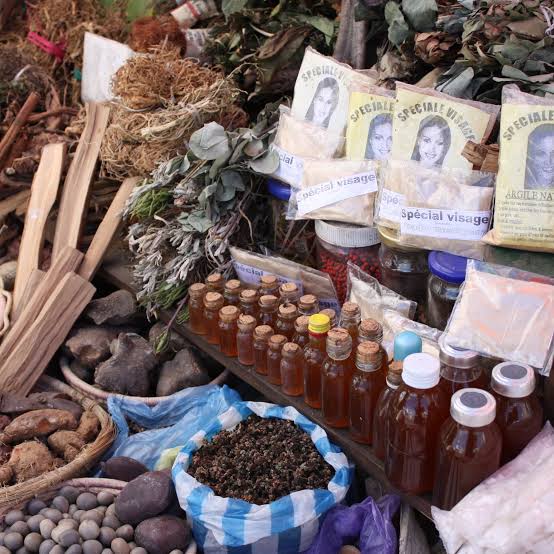
Nigerians in awe as herbal concoctions turn killers

…Over 17m Nigerians living with kidney disease ‘caused’ by agbo – Ministry
…We’re troubled by the scale of casualties – Ondo govt
…Stakeholders blame concerned authorities for non-regulation
…NMA, NAFDAC warn citizens, proffer solution
Recently, no fewer than 48 people lost their lives in Ondo state after consuming a particular herbal concoction, popularly known as agbo. KEHINDE OSASONA, in this report, revisits the incident against the backdrop of frequent warnings by medical experts on the danger of consuming herbal mixtures unadvisedly.
Lately, in Nigeria, it is common to hear or read about mass deaths after the consumption of local herbal concoction commonly referred to as agbo. Interestingly, that hasn’t scarred people enough to stop its consumption.
From North to South, there have been wailing over the loss of loved ones and neighbours resulting from the intake of herbals.
Despite reported deaths and fears that the occurrences had triggered across the country over the years, many Nigerians refuse to ensure moderation, or even stop the consumption in its entirety, just as they do not pay attention to medical admonitions.
Blueprint Weekend has severally published reports highlighting the views of health experts and regulators, cautioning against the consumption of unregulated herbal concoctions, citing public health concerns and chronic conditions like liver cirrhosis and kidney damage which often result in death.
A recent example is the reported mass poisoning occasioned by herbal intake in Ondo state that claimed, at least, 48 lives in the Odigbo local government area.
According to the National Agency for Food and Drug Administration and Control (NAFDAC) and local health officials who tracked the incident, over 170 individuals also fell critically ill, while the toxic substance heavily impacted multiple communities in Araromi-Obu, New Town, Odole, Okele, Orita Odigbo, and Oniparaga, after consuming it.
The state Ministry of Health, while confirming the incident in a statement released in Akure, expressed concerns, saying the number of the casualties was troubling.
“We have recorded over 40 fatalities linked to the consumption of a locally brewed herbal concoction, with several others still hospitalised at the Federal Medical Centre, Owo, and the State Specialist Hospital, Ondo,” the statement read in part.
Following the development, the chairman of Odigbo LGA, Taiwo Adegoroye, imposed a one-month ban on the sale and consumption of all locally distilled alcoholic beverages and sachet herbal concoctions across the local government.
Board vows action
In a swift reaction, the Traditional Medicine Practitioners Board of Ondo state responded to the incident, stating that it would begin compulsory training. The Board added that it would also publish a list of approved agbo sellers with registration numbers similar to chemists.
The Ondo tragedy was not the first. In 2023, National Agency for Foods, Drug Administration and Control (NAFDAC) linked similar deaths in Kano to an herbal mixture laced with high ethanol. In 2024, six children died in Sokoto after taking agbo for measles.
But the lesson never sticks because the trust in agbo by consumers, according to an Abuja-based sociologist, runs deeper than the fear of death.
Why many still consume it
For many observers, the deaths recorded in the past years were no news, but a waiting tragedy. They hinged their arguments on the age-long belief that a herbal substance made of bitter leaves, roots, and barks could heal or cure ailments such as typhoid, malaria, pile, low sperm count and others rather than deliver death.
Thus, agbo has become a daily ritual as both old and young individuals are often seen patronising vendors. From Mushin to Mubi, from motor parks to Instagram and Tiktok pages, hawkers advertise the numerous herbal ‘curative’ as ‘original African medicine,’ stronger than any ‘white man’s tablet.’
“One dose will flush your system,” sellers often tell their customers. However, what they don’t shout about is the unmeasured alcohol, high doses of heavy metals, rotten barks, and sometimes, rat poison used as preservatives.
In the streets, consumers neither heed warnings nor listen to experts’ admonitions.
Mama Halima, 47, who sells bean cake (akara) in the Life Camp area of Abuja, and who has taken agbo for 20 years, told this reporter that she could not stop taking herbal mixtures despite death reports.
She said, “I don’t have money to go to hospital for treatment and I must take care of myself. To see doctor one has to pay between N5, 000 and N10, 000 for a card, while malaria drugs cost N14, 500. Where do you want me to get that money from?
“But agbo costs between N200 and N500, depending on the nature of your ailment and its effective. My own agbo woman is very neat; she doesn’t use bad substances to prepare them. The ones that cause death are the fake concoctions,” she said.
For commercial drivers like Niyi Adetola, 38, who plies Jabi-Mpape, agbo it’s about manhood.
“Hospital drugs make you weak. Agbo is manpower which gives power to men in the other room,” he said smiling.
agbo gradually replacing pharmacies?
A sociologist and public commentator, Aduragba Aminulahi, in an exclusive chat with Blueprint Weekend, attributed the problem to poverty, lack of awareness, regulation, and weak primary healthcare in the country.
According to him, one primary health centre in a particular state in serves 20, 000 people.
He said, “That’s why many people patronise agbo sellers; therefore, it appears that it’s replacing the pharmaceutical stores.
“So, when drugs are out of stock and nurses are absent, agbo, gradually becomes the only pharmacy that never closes.”
A resident of Mpape in Abuja, Mr. John Nansal, said he remains a strong believer in herbal potencies, despite the concerns surrounding some preparations.
“Herbal medicines are good and I have never heard of any side effects about them. But it depends on your belief. For me, it works perfectly,” he said.
FG, NAFDAC’s disclosures
According to the Ministry of Health, Nigeria has over 17 million people living with kidney disease, many undiagnosed, with herbal concoctions as the leading preventable cause. They warned that the consequences could be dialysis which costs almost N100, 000 per session in public hospitals.
Reacting to the issue, the Director-General of NAFDAC, Prof. Mojisola Adeyeye, said, “No herbal concoction in Nigeria today is approved by NAFDAC as cure for multiple ailments.
“What killed those in Ondo was an unregulated, unmeasured, unhygienic mix of unknown plants fermented with industrial ethanol. Nigerians must stop consuming death in the name of herbs.”
Adeyeye added that the Agency had commenced the mop-up of the killer batch in Ondo markets and that laboratory analysis showed the mixture contained dangerously high levels of methanol and paracetamol.
“We found up to 400 per cent above the safe limit of ethanol. This is not medicine, it is poison,” she added.
NAFDAC also warned that under the NAFDAC Act 2023, hawking herbal mixtures without registration number, manufacturing date, dosage, and list of ingredients is a criminal offence punishable by up to five years in prison. But enforcement remains almost impossible.
Experts’ concerns
Doctors said they see the damage every day; only it does not always make the news. Dr. Olufemi Ogundele, a nephrologist at the University College Hospital, Ibadan, reportedly confirmed that, “About 60 per cent of acute kidney injuries treated in the hospital are linked to herbal concoctions.”
It was learnt that most agbo sellers mix diuretic plants like pawpaw leaves with nephrotoxic roots like aristolochia in high doses, a situation that could shut down kidneys and liver within a few days.
In another exclusive interview with this medium, a health professional and a clinical pharmacologist, Dr. Abubakar Saliu, warned that, “Excessive intake of herbal preparations could have harmful effects on the body,” noting that some complications might not become apparent immediately.
According to him, some patients return to the clinic after prolonged use of herbal remedies with complaints such as stomach pains, while excessive consumption could also affect vital organs such as the kidneys.
Dr. Saliu also noted that excessive herbal intake could cause “changes in blood pressure and blood sugar levels,” urging users to be cautious about the quantity and frequency with which they consume such preparations.
The delayed nature of some complications, he said, could make excessive consumption particularly concerning; this is because individuals might continue to consume the preparations without realising that their health could be affected.
‘Herbal medicines worked for our forefathers’
Another medical practitioner in Calabar Teaching Hospital, Mrs. Love Okafor, said although herbal medicines had been used for generations, they could have serious implications when they are not regulated.
“Yes, herbal medicines are good and they have been working for our forefathers right from time, but it has shown in recent years that they have great implications when they are not regulated,” she said.
Okafor added that some unregulated herbal preparations could contain undisclosed ingredients or contaminants, adding that consumers might not know the exact composition, strength, or appropriate dosage of what they consume.
She further warned that some herbal mixtures could be associated with adverse reactions and organ damage. According to her, they include kidney and liver problems, and allergic reactions, while some could also interact with orthodox medicines used to manage conditions such as hypertension and diabetes.
She noted that some unregistered herbal products are advertised as treatments for serious conditions such as cancer, HIV, infertility, and diabetes without sufficient scientific evidence.
She warned that reliance on such claims could delay patients from seeking appropriate medical care and potentially worsen health outcomes.
In his contribution, a pharmacist, Patrick Chimobi, said people sometimes prefer herbal preparations to orthodox medicines because they believe that prescribed medicines take longer time to produce results.
He said some patients seek products that appear to provide quick relief, only for their symptoms to return later.
Chimobi said the preference for herbal medicines isn’t necessarily limited to people with little formal education, adding that some educated and exposed individuals also patronise herbal preparations because of their environment, beliefs, and personal experiences.
According to him, some patients who take unregistered herbal medicines eventually return for prescribed treatment after their symptoms recur. He added that some cases could involve kidney or liver disease, particularly where preparations were poorly made or contaminated.
Chimobi, therefore, advised patients who do not improve after taking prescribed medications to seek further medical attention rather than simply switching to another medication without professional guidance.
Some respondents also attributed the continued preference for local herbs to upbringing and accessibility. For instance, Mr. Stephen Okoko said many people had been exposed to herbal remedies from childhood and, therefore, regard them as a normal form of treatment.
He added that some people consider herbal remedies safer because they were natural, while their accessibility made them attractive to those seeking quick relief.
Actions being taken by authorities
Meanwhile, the Nigeria Medical Association (NMA), Ondo state chapter, has urged residents to seek immediate medical help if they take suspicious herbs. But while fostering a way forward, stakeholders and the agency have started pushing for a middle ground.
NAFDAC, according to Adeyeye, is not against herbal medicines, but against “concoction of death.” The agency, therefore, proposed herbal clinics where sellers are trained, tested, and certified like patent medicine vendors.



Makinde appoints veteran journalist Dunia as public affairs adviser

NNPC Launches ₦66 Fuel Discount Promo Nationwide

Unilever Nigeria Sheds N9.40 as Stock Falls 8.6% to N100.50

Dangote Breaks Ground on $16bn Kenya Refinery, Targets 700,000 Bpd

Nigeria: Energy consortium targets 100 CNG stations in 24 months

NNPC Halts Further Refinery Spending Without Clear Path to Profitability

2027 elections: Yari’s campaign strategy loaded with sense of purpose – Democracy Today

TRENDING VIDEO: Gunmen attack two buses, abduct passengers on Owerri-Onitsha expressway
-

 News10 hours ago
Makinde appoints veteran journalist Dunia as public affairs adviser
- Breaking11 hours ago
NNPC Launches ₦66 Fuel Discount Promo Nationwide
- Finance3 days ago
Unilever Nigeria Sheds N9.40 as Stock Falls 8.6% to N100.50
- Finance3 days ago
Dangote Breaks Ground on $16bn Kenya Refinery, Targets 700,000 Bpd