News
Nigeria Aviation @ 66, the milestones and unfinished dreams

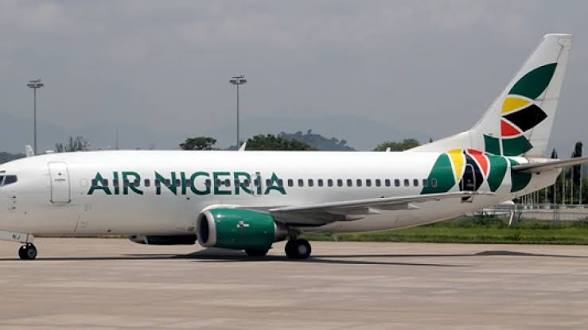
From the golden epoch of the country’s flag carrier, the Nigeria Airways, to the present day breathtaking private-sector expansion, modern airports and the struggle for sustainable airlines, Nigeria’s aviation story is not only one of remarkable achievements, but also many yet to be fulfilled dreams. Blueprint.ng correspondent write.
The vision the Nigeria aviation was presented with sixty-six years ago was unmistakably that of prosperity in the different segments of the industry but, six decades after those visions were penned down, the sector presents one of the most fascinating contradictions in the country’s economic history.
Experts affirmed that it is an industry that has achieved much, survived enormous adversity and produced professionals of international standing, yet remains some distance from the aviation powerhouse Nigeria’s size, population, geography and economic potential suggest it should be many years after gaining self-rule.
They added that also that the story of Nigerian aviation at 66 is neither one of failure nor unqualified success, but also one of remarkable institutional growth, significant safety and infrastructure gains, but also missed opportunities, policy inconsistency, high operating costs and an airline industry that has never quite matched Nigeria’s economic potential.
The answer from a cross-section of aviation experts is complicated as they posited that from Nigeria Airways’ golden age to the struggle for sustainable airlines, modern airports and global competitiveness, the industry has travelled far, but the destination remains elusive.
According to them, the industry has travelled a long distance, yet many of the problems confronting it today are remarkably similar to those that have haunted the sector for decades. In their opinions, Nigeria has built airports, developed a sophisticated regulatory framework, produced thousands of aviation professionals and created a vibrant private airline market. Its airspace is substantially more sophisticated than it was at independence. Nigerian pilots, engineers, air traffic controllers and other specialists have earned international recognition.
Yet the country has also watched its once-proud national carrier disappear, its airlines struggle with foreign exchange and fuel costs, its airports battle ageing infrastructure and its ambitious plans for a globally competitive aviation hub repeatedly delayed by policy reversals, inadequate financing and institutional uncertainty.
The question, therefore, is not simply whether Nigerian aviation has developed since independence. It clearly has. The more uncomfortable question experts unanimously asked is whether the sector has developed at the pace expected of a country with Nigeria’s population, economy, geography and enormous aviation potential?
At independence, Nigeria inherited an aviation system that was modest by today’s standards but strategically important. The country quickly began building institutions around it. The country joined the International Civil Aviation Organisation (ICAO) in 1962, while the government progressively assumed greater responsibility for aviation infrastructure and regulation. The 1964 Civil Aviation Act established a stronger legal framework, while the Nigerian Airports Authority was established in 1976 to manage federal airports.
Nigeria Airways, meanwhile, became the country’s principal flag carrier and an important symbol of the new nation’s international identity. For many Nigerians of that era, Nigeria Airways represented something more than transportation. It represented national pride as the
airline connected Nigeria to major cities across Africa, Europe and North America and, at its peak, operated a fleet and international network that today’s domestic carriers can only aspire to replicate.
The former ADC Airlines Chief Executive Officer and veteran pilot, Augustine Okon, recalled that era with a mixture of pride and frustration, saying Nigerian pilots and engineers once operated Boeing 707s, Boeing 747s and DC-10s on long-haul routes and Nigerian maintenance personnel performed major checks on aircraft locally. “Yet today, Nigeria has no national carrier and no meaningful in-country maintenance capacity.”
Captain Okon’s observation captures one of the central contradictions of Nigeria’s 66-year aviation journey. The country once possessed capabilities that it is still trying to rebuild.
Nigeria Airways’ eventual collapse remains perhaps the most consequential failure in the history of Nigerian aviation as financial problems, management weaknesses, political interference and changing government policies gradually undermined its commercial viability before it was eventually liquidated in 2003.
The private sector revolution
The death of Nigeria Airways however did not kill the aviation industry, instead, it opened the door to a new era dominated increasingly by private operators. The private sector has demonstrated that Nigerians want to fly but the problem has been making the business of flying financially sustainable. Airlines such as Aero Contractors, Arik Air, Air Peace, Overland Airways, Azman Air, Ibom Air, United Nigeria Airlines and others have continued to build sustainable businesses in an environment that remains among the most challenging in global aviation.
Aviation is an extremely capital-intensive business. Aircraft are generally purchased or leased in foreign currency. Aviation fuel prices are influenced by international markets. Spare parts, insurance, maintenance and many technical services are dollar-denominated while most domestic airline revenues are generated in naira. That mismatch has become one of the industry’s biggest structural weaknesses.
United Nigeria Airlines’ Chief Commercial Officer, Adedayo Olawuyi, described the situation bluntly. According to him, airlines were facing enormous pressure because their revenues were largely earned in naira while substantial expenses were denominated in foreign currency. That is why the price of an airline ticket in Nigeria cannot be understood simply by looking at what an airline charges.
Olawuyi explained that behind the ticket price are fuel, aircraft leasing, maintenance, insurance, navigation, airport charges, taxes, foreign exchange and regulatory costs affirming that the passenger ultimately bears much of that burden.
The infrastructure revolution
Perhaps, nowhere is Nigeria’s aviation progress more visible than in airport infrastructure. From the relatively basic facilities inherited at independence, Nigeria has developed a network of airports serving major commercial centres across the country. The Federal airports Authority of Nigeria’s (FAAN) history records a major airport development programme beginning in the 1970s, following the appointment of Netherlands Airport Consultants to prepare a master plan for Lagos and 13 other airports. Today, Nigeria has international gateways in Lagos, Abuja, Kano, Port Harcourt and other locations, as well as a network of domestic airports.
But stakeholders say the industry has often suffered from a recurring cycle of those structures being underfunded, deterioration, rehabilitation and repeated neglect. However many said it is one reason the current transformation of Murtala Muhammed International Airport in Lagos and many others under the President Bola Tinubu’s aviation master plan is so significant.
The country’s airports are undergoing major rehabilitation and expansion as authorities attempt to bring ageing facilities into line with contemporary passenger and operational requirements.
The woman at the driving seat is FAAN Managing Director, Olubunmi Kuku, she affirmed that Nigeria needs sustained investment rather than sporadic intervention. She said Nigeria was still “playing catch-up” after years of underinvestment and that the government alone could not finance the scale of infrastructure development required across the sector.
While also pointing to Nigeria’s growing strategic importance, she affirmed that the country can boost the fact Nigeria is now Africa’s second-largest domestic aviation market, while traffic movements at Murtala Muhammed International Airport increased by 11.8 per cent in 2025. She described the figures as evidence of Nigeria’s growing importance as an aviation, logistics and commercial hub.
The biggest achievement: Safety regulation
Perhaps the most important achievement of Nigerian aviation since independence is the development of a regulatory and safety framework capable of engaging with international aviation standards. Modern aviation cannot function without a credible safety regulator capable of certifying airlines, licensing personnel, enforcing standards and investigating non-compliance.
Aside the many successes recorded domestically, especially in consumer protections and passengers right advocacy, and mandating the RFID technology at Nigerian airports spearheaded by NCAA Director of Public Affairs and Consumer Protection, Michael Achimugu, the NCAA Director-General Captain Chris Najomo, said Nigeria was preparing for another FAA Category 1 reassessment, particularly as Air Peace works toward proposed direct operations between Nigeria and New York. For industry stakeholders, it is potentially more than a regulatory exercise as they applauded the development describing it as a testament that Nigeria can reconnect its aviation industry with the highest level of international commercial aviation.
The Air navigation success story
One part of the industry that receives less public attention is airspace management. The Nigerian Airspace Management Agency (NAMA) under the leadership of Engr. Farouk Ahmed Umar, has progressively invested in navigation infrastructure, surveillance systems, communications and air traffic management. This is critical because an airport can have a beautiful terminal and an airline can possess modern aircraft, but the system cannot function safely without competent air traffic management.
Other areas experts opined that the industry has fared well is accident investigation as the country now has an agency, the Nigerian Safety Investigation Bureau (NSIB) that is competing with the very best in world, as well as institutions for its manpower development including the Nigerian College of Aviation Technology (NCAT) in Zaria and the Africa Aviation and Aerospace University (AAAU) in Abuja.



“She wants me to stop talking against husband snatchers” — Rita Edochie speaks as she appears in court over the ₦1bn lawsuit filed against her by Judy Austin

“If a man h!ts you once, he will do it again. Value your life and leave” — Rick Ross’ ex-girlfriend Jazzma Kendrick accuses him of ph¥sical ass@ult

Blaqbonez better than most Nigerian rappers but lacks personality – CDQ

Ugochinyere hails APP victory in Yobe LGA poll, says party steadily expanding

“A man can sleep with 30–40 women and still marry, but a woman can sleep with 7–10 men and be rejected” — Veteran actor Chiwetalu Agu

CBN probes banksâ restriction of customersâ access to forex accounts

FCMB Group Flags Potential 60-Day Q3 Results Delay as Bank Undergoes Interim Audit
âA man can sleep with 30â40 women and still marry, but a woman can sleep with 7â10 men and be rejectedâ â Veteran actor Chiwetalu Agu
-

 Special Reports1 day ago
“She wants me to stop talking against husband snatchers” — Rita Edochie speaks as she appears in court over the ₦1bn lawsuit filed against her by Judy Austin
- Special Reports2 days ago
“If a man h!ts you once, he will do it again. Value your life and leave” — Rick Ross’ ex-girlfriend Jazzma Kendrick accuses him of ph¥sical ass@ult
- Breaking3 days ago
Blaqbonez better than most Nigerian rappers but lacks personality – CDQ
- News2 days ago
Ugochinyere hails APP victory in Yobe LGA poll, says party steadily expanding