News
Jama-at-ul Islamiyya Demands Practical, Justice-Driven Approach to Nigeria’s Insecurity, Socio-Political Crises

● Why Taqwa, God-consciousness, remained the foundation for national stability, details of the Communique at the group’s 12th annual conference at Magodo, Lagos
The Jama-at-ul Islamiyya of Nigeria and Overseas has called for a practical, justice-driven approach to Nigeria’s insecurity and socio-political crises, declaring that Taqwa, God-consciousness, remains the foundation for national stability.
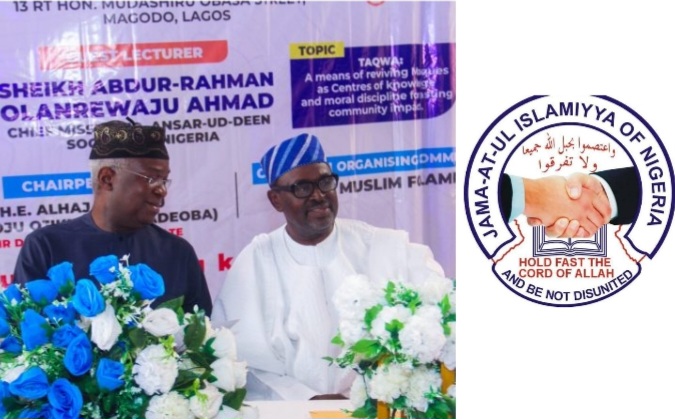
This was contained in a communique issued at the end of its 12th Triennial National Conference held from August 21 to August 23, 2026 at the Jama-at-ul Islamiyya Mosque Complex, Magodo, Lagos.
The conference, themed “Taqwa: A Means of Reviving Mosques as Centres of Knowledge and Moral Discipline for Lasting Community Impact,” brought together Islamic scholars, state officials, delegates and youth representatives from Nigeria and overseas.
The high-level assembly featured a welcome address by National President Engr. Hashim Oyekan, a keynote address by former Lagos State Governor Babatunde Raji Fashola, SAN, and a guest lecture by Sheikh Abdur Rahman O. Ahmad, National Missioner of Ansar-ud-Deen.
In his welcome address, Engr. Oyekan said Nigeria’s political adventure and rising insecurity demand actionable solutions, not rhetoric, stressing that stability requires unyielding justice and collective commitment from leaders and citizens.
After exhaustive deliberations, the Jamaat demanded that national leaders immediately adopt actionable, justice-driven solutions anchored on institutional integrity and righteousness.
On security, the conference advocated for a completely revamped national security framework that integrates grassroots intelligence and religious institutions to create lasting local stability.
The Jamaat declared full support for the Federal Government’s initiative to establish state police, noting that prevailing insecurity can be effectively addressed through it. It urged government to put in place necessary legal, institutional and operational frameworks for effective and professional functioning.
In a major spiritual resolution, the conference resolved that mosques must break away from being isolated centres for ritual prayers alone and be repurposed as dynamic neighbourhood centres for foundational education, dispute resolution and community administration.
Caller To Prayer At Muslims’ Holliest Mosque in Makkah, Sheikh Al-Madani, Is Dead
Prophet Muhammed Planted 300 Date Palms Here To Free Salman Al-Farsi From Slavery + PHOTOS
‘200 Gunmen, 2 Weeks’ Deadly Siege,’ Tale of 1979 Attack On Mecca’s Grand Mosque
NAHCON Sets September 26 Deadline For 2027 Hajj Registration
Decrying moral decay, the Jamaat urged neighbourhoods to reinstate collective vigilance and community parenting, with elders taking active responsibility for monitoring youth behaviour and providing moral discipline.
The conference also prioritised youth empowerment, resolving to modernise educational models and establish reliable funding networks, while also launching the Jamaat’s Centenary School Project to provide accessible, quality education grounded in Islamic values.
The triennial gathering, which also marked a leadership transition, ended with gratitude to delegates and a commitment to spearhead moral revival through Taqwa as baseline for restoring peace, security and progress, as signed by President Engr. Hashim Adebowale Oyekan and General Secretary Dr. Ibrahim Abayomi Adeigbe.
NOP NIGERIA












APC presidential campaign council to Atiku: Explain legal basis, ₦21 trillion cost of petrol subsidy plan

Nigeria’s envoy to Jamaica presents credentials, seeks deeper bilateral ties

Ebonyi governor sacks works commissioner

What Jonathan’s airport use means for Ebonyi aviation facility – State government

I rejected N250m bribe to support Obasanjo’s third term bid – Farouq Aliyu

Ogun 2027: Collect APC money, vote PDP – Sowunmi-Kolapo

Properties worth millons of naira destroyed as fire ravages residential building in Ibadan

2027: Remo group warns sons against breaking Ogun zoning pact
-

 News2 days ago
APC presidential campaign council to Atiku: Explain legal basis, ₦21 trillion cost of petrol subsidy plan
- News3 days ago
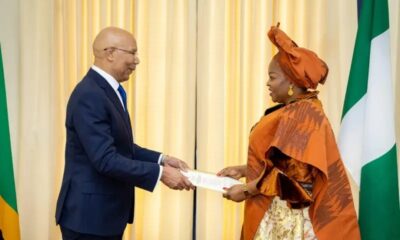
Nigeria’s envoy to Jamaica presents credentials, seeks deeper bilateral ties
- Breaking3 days ago
Ebonyi governor sacks works commissioner
- News3 days ago
What Jonathan’s airport use means for Ebonyi aviation facility – State government