News
In Kaduna state, hope is being renewed – Maiyaki

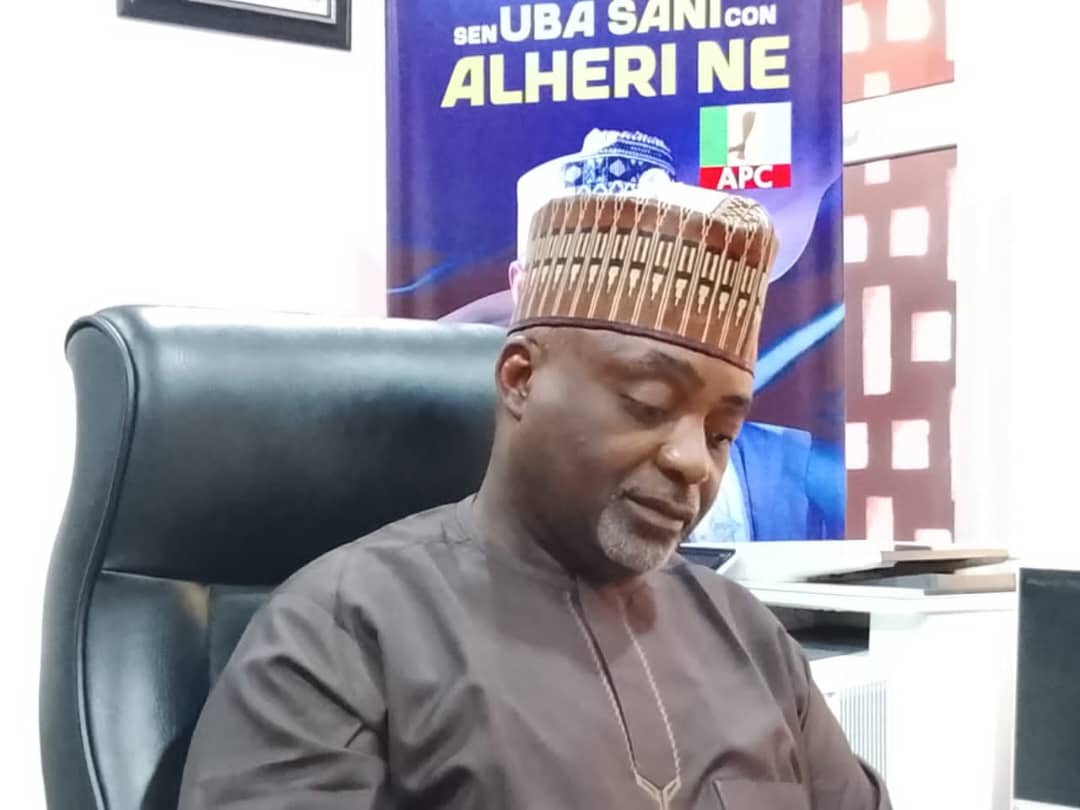

Ahmad Maiyaki is the commissioner for information and culture in Kaduna state. In this interview with Blueprint.ng correspondent, he talks about a new Kaduna under Gov Sani Uba.
Kindly enumerate on the achievements of the Kaduna state government on the agric sector earlier affected by insecurity.
So far under the leadership of His Excellency the governor of Kaduna state Sen Uba Sani, Kaduna state government through its none-kinetic strategy of the Kaduna Peace Model, has been able to recover over 500,000 hectares of farmland that was previously held by bandits and criminals that prevented a lot of farmers from the farms and has led to closure of schools and also healthcare centres. Today with this huge success we have been able to return our farmers back to the farms. We have also reopened the schools as well as the hospitals which has impacted on our food security drive.
In what way can you describe this impact on the food security drive of the state?
You will recall that in the Gross Domestic Product, GDP of Kaduna state, agriculture contributes about 42% and about 60% of our farmers now engaged in farming activities, and of course you know that it is one of the major agrarian states. Insecurity is a major threat to that particular sector of our economy. So with these successes our farmers have returned to the farm and our yields have more than tripled. Farming activities that were done in the last two years have never been done in the last nine to 10 years because most of the farmers deserted the farms because of the criminal activities of the bandits. So for us, it is a success story. If you check communities in Giwa, Burnin Gwari, Chukun, Kajuru and Kachia, farmers are now back to their farms.
Can you give us a statistical breakdown of how much has been achieved in the sector so far?
You will recall that when we came in 2023, we met a budgetary provision of N1.48 billion for the entire agriculture sector. Governor Uba Sani felt that this is not acceptable. That was the reason in 2024, the first budget that was initiated and passed by the administration left from N1.48 billion to about N22 billion and in 2025 it grew from N22 billion to N74 billion. Finally in 2026, the current year, we have over N100 billion allocated to the agricultural sector and this has enabled the the state government to provide a lot of intervention in the sector. These include the distribution of 400 trucks of NPT and urea fertiliser to small holder farmers at no cost. In 2025, it rose from the 400 trucks to 500 trucks targeting our small holder farmers with that support. In this current year, this administration has distributed about 500 trucks again to 150,000 small holder farmers. The whole idea is to see how we support our farmers. My simple baseline here is that if you farm a hectare of land without fertiliser, you will get an output of 2-3 bags with that space of land. But with the two bags we have given to you, at no cost, you will be able to farm about 20-22 bags of maize. This is just an example to show you how impactful this intervention has been supporting our farmers to farm in their farms. Not only the small scale farmers, this administration has decided to support the big boys, the bigger farmers by distributing a minimum of 10 bags at 50% loss which has also given a boost to the agric sector. There is no greater threat to peace and security than food insecurity. When people are hungry, you are bound to have challenges of insecurity. That is why this admin has focused on that.
More so, the focus is not just on a season of farming, the state government has intervened by distributing irrigation pumps, solar powered irrigation pumps and tractors. Kaduna today is the second leading in mechanised agriculture after Kano state. This is to ensure that we have all year farming season. The state government has continued to invest to ensure that threat to agriculture, which usully drived our farmers away from their farms is addressed.
Can we say then that you are declaring victory over insecurity?
Though we have not declared victory over insecurity, but I want to assure you that we have secured our communities. From the time we came in 2023 by a huge success, 90% of our farmers and our communities today are safe and back into their farms and we have retained our position as the highest producer of maize in Nigeria, the highest producer of tomatoes in Nigeria, as the highest producer of Soya beans in Nigeria, the highest producer of ginger with the best form of ginger in Africa over the last few years. We are very happy to report that this recovery of over 500,000 hectares of farmland has aided our goal of revitalising the agricultural sector and ensuring that our people are safe.
How has this affected the level of poverty among communities?
Yes, you have poverty among our people but, what we are used to measuring is the economic poverty, but when you are threatened by food insecurity, you are threatened by closure of schools, closure of hospitals, then you have multidimensional poverty. Most of our challenges are that over 80% of our rural dwellers are multi dimensionally poor. So this is a deliberate strategy of ensuring that we secure our people, particularly people in the rural areas that are farming
When we came, we identified 12 local government areas that have not seen half a kilometre of road in the last decade and a half. For that reason, we focused and ensured that every of the 23 local government areas are targeted by embarking on a road project numbering 150 roads and spanning about 1400 kilometres and most of those projects are done in their communities. One of the projects is the 35 kilometres road that connects Gadan Gayan in Igabi local government area to Gwaraji in Kajuru local government and Kujama in Chukun local government area. By carrying out that project, you are not only providing road access, but you are also enhancing security forces. When there is distress call, they find it difficult to respond to those emergencies because there are no road access. So this road project also provide access to enhancing security in our communities. It is connecting our farmers to the market. Even when they farm, they need to take these products to the market after, and when there is no road access it becomes a challenge. So this road access that connects the these communities is also helping our farmers to get connected to the markets. It is also connecting our children to school because lack of access is also a major challenge for children that go to schools.
It also strengthen healthcare by improving maternal health. The major challenge is maternal health that leads to the death of women during pregnancy is largely due to major delays. The first delay is the ability to have the decision to seek for health services, going for anti natal. Secondly is access because when a woman is pregnant she is on emergency and needs healthcare. So these road projects are also connecting our people to the hospitals to seek for better healthcare and have safe delivery during pregnancy.
Today in Kaduna, in the last three years with these interventions we have reduced maternal deaths by 19.5%, which is a great success to the state.
Kindly talk about the Kaduna Peace Model.
The Kaduna peace model is a none-kinetic approach that engages community members. First the traditional institutions, religious leaders, youth groups and other key non state actors involved in community vigilance. That is why, if you remember, Kaduna just recruited and trained about 1000 forest guards. They live in those communities. Security is not achieved by government officials sitting in government offices in state capitals and dishing out directives. It involves community people, it is a participatory process to where community members are involved, where, with our early warning signs and early signals, identify a threat, respond to the threat, even before any form of insecurity. So, we are doing this with community members ensuring that these communities are safer. We have the Ministry of Agriculture working in liaison with farmers; we have details of how these farmers are engaging in communities. Let me give you one example, in Birnin Gwari local government, that market holds every Thursday within the week and that has really helped. Today if you go to Birnin Gwari, about 50 trucks of cows are being transported to Lagos and other parts of southern Nigeria because security has returned. But before now, that market was closed down for over a decade. Since the market was reopened, everyday you go to Birnin Gwari on Thursday, you have the cattle market running a weekly business and you have people from different parts of the world, from Togo, Niger, Cameroon, Chad and some parts of South West and South South go to Birnin Gwari everyday because the roads are safe. Before now, it was difficult to go to Birnin Gwari from Kaduna. You have to travel through Niger and Kontagora to go to Birnin Gwari, that is about nine hours, but today, we are able to have our farmers travel to Birnin Gwari at any time of the day.
At some point, it was very difficult to go to Abuja from Kaduna because the roads were shot down for challenges of insecurity, but today, you can go to Abuja at any time of the day without any fear. You can go to Giwa, Kajuru and to the Southern parts of Kaduna without any fear of insecurity.
Has there been any details about the bumper harvest since the recovery of the 500,000 hectares of farmland?
We have had bumper harvest even last year. That is why you will notice the price of food items have reduced drastically. You remember at some point, the cost of a bag of maize was around N100,000. Today, go to our markets in Giwa, Saminaka and others, the cost of a big bag of maize is about N28,000 to N29,000, and this is because of bumper harvest. The cost of food items has reduced. At some points, the cost of rice was so high that it costs people over N100,000 to buy 50kg of rice. Today, go to the markets, it costs just around N50,000 because our farmers are back into the farms. The main process of rice may not even require you to buy foreign rice. Our local rice today is one of the best nutritious rice that is produced locally. Go to soya beans, the cost of soya beans has also reduced because our farmers are back into the farms. The cost of yam has also reduced, at one point it was so exorbitant that a tuber of yam costs about N5000, but today with N5000 you can buy a good number of yam tubers in this country.
In our 2026 Hajj operations, the greater number of pilgrims from Kaduna were farmers because they have more money to save and were able to travel to perform the Hajj pilgrimage, which is an obligatory spiritual right for Muslims. These are indicators that show that we have achieved great bumper harvest by our farmers.



FCT police commissioner presents ₦74.4m life assurance cheques to 143 fallen officers next of kin
Man who r@ped two 14-year-old girls at his flat after gro0ming them on Snapchat is jailed for 14 years

Son conspires with two others to rob his mother and siblings in Adamawa

Agro experts target 15,000 local diary farmers through ALDDN initiative

Iran war has cost $45.1 billion, Pentagon tells Congress

Appeal Court upholds NDC registration, overturns Lokoja ruling

How festivals, heritage, and faith touch the soul of Ilorin Emirate

We are coming together to reclaim our lost heritage – Kwararafa forum
-

 News3 days ago
FCT police commissioner presents ₦74.4m life assurance cheques to 143 fallen officers next of kin
-

 Special Reports3 days ago
Man who r@ped two 14-year-old girls at his flat after gro0ming them on Snapchat is jailed for 14 years
- Special Reports3 days ago
Son conspires with two others to rob his mother and siblings in Adamawa
- News2 days ago
Agro experts target 15,000 local diary farmers through ALDDN initiative