News
How festivals, heritage, and faith touch the soul of Ilorin Emirate

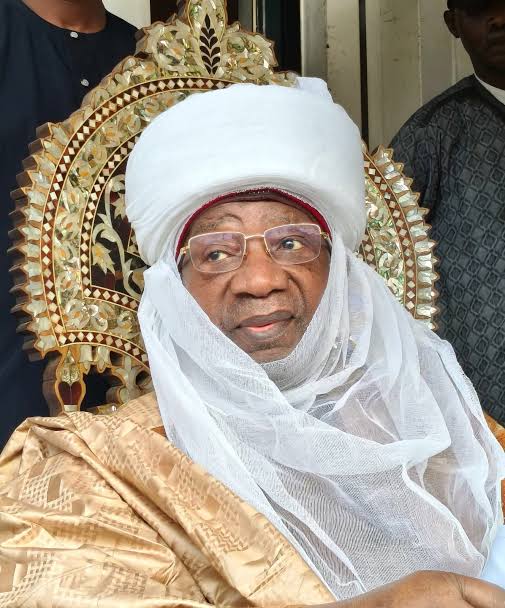

From the hoofs of horses at the Grand Durbar to the solemnity of Eid and the spiritual remembrance of Maulud, Ilorin’s festivals tell the story of an emirate shaped by faith, migration, scholarship, royalty and remarkable cultural co-existence. UMAR BAYO ABDULWAHAB, in this Special Report, narrates what these mean to the people of Ilorin Emirate.
On any festive day in Ilorin, the capital city of Kwara State, the ancient town does not simply wake up; it transforms as every familiar street suddenly acquires a different rhythm and outlook due to the spirit of that festival.
On such a day, horses, decorated in colourful regalia, move through the streets with their riders dressed in flowing robes and elaborate turbans. The air carries the sound of celebration, while residents stand by roadsides, particularly in front of their houses to catch a glimpse of the royal procession. At the centre of this spectacle is the Emir of Ilorin.
For a few hours, the city becomes a moving theatre of history. The palace guards, traditional title holders (Alanguas, Daudus and Magajis), horsemen, Islamic scholars, families and visitors would all converge for a celebration that is at once religious, cultural and communal.
The robes, turbans, embroidery, colours and accessories displayed during these festivals are visual statements of status and identity. They demonstrate the continued relevance of indigenous craftsmanship at a time when Western-styled clothing dominates everyday life. This is the Ilorin Emirate Grand Durbar.
The Emirate on horseback
If there is one festival that has come to symbolise the public cultural identity of contemporary Ilorin, it is the Grand Durbar.
During its celebration, hundreds of horses and riders can transform the streets around the Emir’s palace and designated celebration grounds into a sea of colour, with riders appearing in elaborate traditional attire, while the horses are carefully prepared for the occasion. Trumpeters, Kakai drummers, praise singers, traditional officials and spectators form part of the atmosphere.
Recent editions have featured more than 600 horses, demonstrating the scale to which the festival has grown in modern times. In the 2026 edition of the Grand Durbar, thousands of residents and visitors gathered at the Kwara Baseball Park in Adewole to watch the celebration, with cultural envoys and tourists from several countries in attendance.
The modern Grand Durbar was revived and well-organised under the Emir of Ilorin, Dr. Ibrahim Sulu-Gambari, with the large-scale celebration becoming an annual feature from 2018 till now. The revival was intended to restore and strengthen a tradition that had existed in different forms within the emirate. This tradition that once reflected military preparedness has become a peaceful celebration of cultural identity.
The royal procession
Beyond the horses and colourful parade is the royal procession, which reinforces the traditional relationship between the Emir and the people. The movement of the Emir through historic quarters of the city is more than a ceremonial tour; it symbolically brings the traditional institution closer to the people. The crowds, in turn, express loyalty, respect and communal belonging.
Traditional title holders occupy another important place in the ceremony. Their participation demonstrates the hierarchical structure of the emirate while also reminding the public that traditional institutions remain part of the social fabric of contemporary Ilorin. However, to reduce Ilorin’s festive culture to mere horses and pageantry would not be correct. Therefore, to understand the festivals of Ilorin, one must first understand the city itself.
Ilorin as the new Mecca
Ilorin’s history is inseparable from the expansion of Islam and political transformations that reshaped the region in the 19th Century. The emirate developed into an important centre of Islamic scholarship and administration while its geographical position enabled interaction among communities from different cultural backgrounds.
The Iconic Central Juma’at Mosque
Depicting the status of this ancient Islamic city is the iconic remodelled Ilorin Central Juma’at Mosque. The mosque, located in the heart of Ilorin, is one of the most significant Islamic landmarks in Nigeria. It occupies a prominent position near the Emir’s Palace and reflects Ilorin’s long-standing reputation as a major centre of Islamic learning, worship and culture.
The present Central Mosque was conceived in the seventies during the reign of the 9th Emir, Alhaji Zulukarnaini Gambari. Its foundation was laid on April 30, 1977 and completed/commissioned in 1981. It replaced the older Idi-Ape Central Mosque, which had become inadequate due to the rapidly growing Muslim population in and around Ilorin.
After decades of use, a few years ago, the mosque underwent an extensive remodelling, rehabilitation, refurbishment and redecoration from 2007 and completed between 2012 and 2013. Specialists from several countries, including Saudi Arabia and the United Arab Emirates, contributed to the architectural, decorative and technical aspects of the project. The renovated mosque was formally recommissioned in December 2012 even though minor finishing touches continued into 2013.
Architecturally, the remodelled mosque is distinguished by its large domes, prominent minarets, marble finishing, Islamic inscriptions and elaborate geometric decoration. Its design combines influences from different Islamic architectural traditions, particularly Ottoman and North African styles, while occupying a distinctive place within the architectural history of Ilorin.
The remodelling also expanded the mosque’s facilities beyond the main prayer space. The complex includes facilities for female worshippers, ablution areas, a library and research space, multipurpose and administrative halls and parking facilities.
It can be said that the complex is capable of accommodating approximately 20,000 worshippers within the mosque and its surrounding areas per time.
Today, the remodelled mosque serves not only as a major place of congregational worship, but also as architectural and cultural landmarks. Its distinctive appearance has attracted visitors, scholars and tourists, while its location and history continue to connect it closely with the religious heritage of Ilorin Emirate.
Festivals in Ilorin
The festivals of Ilorin Emirate are woven into the history of a community that occupies a distinctive position in Nigeria’s cultural landscape. Ilorin stands at a meeting point between the cultural worlds of northern and south-western Nigeria. Its history has brought together Yoruba, Fulani, Hausa, Nupe, Bariba, Kanuri, Gobir and other influences, while Islam has remained a powerful force in shaping the city’s social and political identity.
Consequently, festivals in Ilorin are not merely occasions for entertainment, but they are moments when history is remembered, relationships are renewed, authority is reaffirmed, faith is expressed, and younger generations are introduced to traditions inherited from their ancestors.
Among the most important festivities are the Eid celebrations, particularly Eid al-Adha, popularly known as Ileya, around which the Grand Durbar has become the Emirate’s most spectacular public cultural event. Eid al-Fitr, which marks the end of Ramadan, is another major religious celebration. Maulud an-Nabiyy, commemorating the birth of Prophet Muhammad, is also observed by Muslim communities in Ilorin and provides an important occasion for religious instruction, prayer and reflection.
Ileya festival
Eid al-Adha (Ileya) is fundamentally a religious occasion associated with sacrifice, obedience to God, charity and devotion. At such moments, families gather for prayers, sacrifice animals according to Islamic practice and share food with relatives, neighbours and those in need.
Usually, the Emir would lead the community in religious observances while homage visits to important places also take place. Families gather, visitors return home, streets become busier, then comes the Durbar.
The Ilorin Durbar cannot be completely separated from Islam. Its contemporary celebration is closely associated with Eid al-Adha, popularly known in Nigeria as Eid-el-Kabir or Sallah. In recent years, the Grand Durbar has generally been staged shortly after the Eid celebration, providing a cultural continuation of the religious festivities.
This connection is significant because it explains why the festival has such strong emotional resonance among residents.
The relationship between the religious and cultural dimensions is therefore not accidental. Faith provides the foundation while culture supplies the public perception. This is why the Durbar is often described by its organisers and participants alike as both a spiritual and cultural celebration. Recent organisers have presented it as a symbol of harmony, heritage, Islamic values and unity.
Sacrifice, family and community reunion
For Muslims in Ilorin, Eid al-Adha is one of the most important religious occasions of the year. The day begins with the Eid prayer, bringing together large numbers of worshippers. The Emir and the wider traditional institutions participate in the religious and ceremonial activities surrounding the celebration.
The lessons
The sacrifice that follows the Eid prayer is not simply a family ritual. At its heart is the principle of obedience and submission to the will of God, commemorating the willingness of Prophet Ibrahim to obey God’s command. The distribution of meat also carries a strong social message that religious celebration should extend beyond the individual to family, neighbours and people who may be less privileged.
Homecoming for all
In Ilorin, the Ileya festival produces an atmosphere of reunion. Despite the hike in transportation fare that usually characterises the period, people who have travelled away from the city usually return home. Families that may not have seen one another for months are seen together. Children receive gifts, neighbours exchange greetings.
Moment of thriving markets, booming businesses
Ileya festival comes with a lot of benefits. Apart from its spiritual rejuvenation, the festival is always a major catalyst that boosts the economy of the city, usually driven by small businesses, trade, and commerce. Also, during this period, markets are busier, tailors work overtime, food sellers benefit from increased demand, while transport operators experience greater patronage. The festival consequently has both spiritual and economic dimensions.
Eid al-Fitr: The joy after Ramadan
Eid al-Adha is associated with sacrifice, while Eid al-Fitr carries a different emotional tone. It marks the completion of Ramadan, the Islamic month of fasting, prayer, and spiritual discipline.
Across Ilorin, families prepare for the celebration by buying new clothes, preparing special meals and visiting relatives and friends. Children occupy a particularly visible place in the festivities, dressed in new clothes and moving from one home to another, but beneath the celebration is the spiritual significance of Ramadan.
For an entire month, Muslims are been encouraged to practise self-control, charity, prayer and compassion. Eid al-Fitr therefore becomes a celebration of spiritual cleansing, endurance and gratitude. In Ilorin, where Islam is deeply woven into public life, the festival reinforces the relationship between religious practice and community identity.
Mosques become centres of gathering, family circles become centres of fellowship, the emirate’s traditional institution becomes a point of public unity, while the city itself becomes a space of celebration.
Maulud: Remembering the Prophet
Another important occasion in the religious calendar of Ilorin is Maulud an-Nabiyy, the commemoration of the birth of Prophet Muhammad. Unlike the Durbar, Maulud is not primarily an equestrian spectacle; its essence is religious remembrance.
Gatherings typically provide opportunities for sermons, prayers, recitation, praise and reflection on the life and teachings of Prophet Muhammad. The 2026 Maulud celebration in Ilorin, for example, brought thousands of Muslim faithful together and featured sermons focused on the exemplary life of the Prophet, alongside participation by children from Arabic and Islamic schools. This reveals another important dimension of Ilorin’s festive culture: education.
The emirate has historically been associated with Islamic scholarship and religious festivals where it provided occasions for knowledge to be passed from scholars to younger generations. The message of Maulud is, therefore, not limited to remembering a historical personality; it asks participants to consider character, how should someone treat neighbours, how the society should protect the vulnerable, what leadership demands, etc. In essence, Maulud functions as a moral festival that connects history to contemporary life.
The legacies of Sheikh Alimi
No serious discussion about Ilorin’s cultural and religious identity can ignore the influence of Sheikh Alimi.
The history of the emirate is deeply associated with Islamic scholarship and the establishment of political and religious structures that shaped Ilorin’s development.
Consequently, remembrance of the emirate’s religious heritage is often embedded in contemporary ceremonial life.
Just like every royal ceremony is a reminder to younger generations that the present did not appear from nowhere, the Grand Durbar, for example, has been described by community leaders as an occasion that honours Sheikh Alimi and projects the historical valour and identity of the people.
For Ilorin, therefore, Sheikh Alimi’s legacies form part of that historical consciousness.
The Tik Tok generation
Perhaps, the most important question facing Ilorin’s festival/culture is whether young people would carry the traditions forward. Obviously, the answer cannot be assumed.
Nigeria’s younger population lives in a world of TikTok, Instagram, Afrobeats, streaming platforms, international fashion and global cultural influences.
A young Ilorin resident may be more familiar with international celebrities than with the history of the emirate.
Expressing concern about this at the 2026 Quaranic memorisation competion held in Ilorin, a scholar and national missioner Ansaru-deen Society of Nigeria, Sheikh Abdulrahman Ahmad raised the alarm over these negative impacts of digital noise and social media influence on the youths of Ilorin.
He said daily exposure of youths, including Quran memorisers, to what he called ‘digital noise’ is fast eroding memorisers’ awareness of the benefits of memorising the Quran.
Ahmad stated this while delivering a lecture at the 1448/2026 final of the Kwara State National Qur’an recitation competition held at the stadium complex in Ilorin.
He admonished Muslims to ensure those memorising the Qur’an are well tutored both in learning and character to prevent them from the distractions of the modern digital age.
Sheikh Ahmad advised Muslims to resist the temptation of getting addicted to the digital noise in the use of phones and other digital devices
He urged Muslims to put in place concrete steps to prevent the extinction of those who memorise the Qur’an to maintain the standard.
For observers and those present at the occasion, it was clear that Sheik Ahmad was not referring to Qur’an memorisation alone but the values and cultural heritage of Ilorin Emirate, which the late Sheik Alimi was reputed for.



Traders urge FCTA to halt development along railway corridor

38-year-old South African woman jailed 25 years for sm¥ggling 5.75kg of her%in into Nigeria

Curfew in Taraba community as DSS officer, others k!lled

Stop public attacks on Wike, prominent lawmaker Jibrin tells APC governors
Actor Adekanla Desalu and comedian MC Monica allegedly lose over â¦4m combined to scammers posing as FRSC officials

We won’t tolerate Wike calling our govs lazy 419 – APC chieftain, Farouk Aliyu

Niger State: Suspected illegal miners d!e in NSCDC custody as disease breaks out

Three vigilantes and farmer k!lled in fresh Plateau attack
-

 News2 days ago
Traders urge FCTA to halt development along railway corridor
-
 Special Reports3 days ago
38-year-old South African woman jailed 25 years for sm¥ggling 5.75kg of her%in into Nigeria
- Special Reports3 days ago
Curfew in Taraba community as DSS officer, others k!lled
- News3 days ago
Stop public attacks on Wike, prominent lawmaker Jibrin tells APC governors