World News
From France To China, Trump's New Tariffs Draw Sharp Protests Worldwide: List Of 60 Countries Hit, Why India Pays Less

The US imposed new tariffs on 60 trading partners over alleged forced labour-linked imports, drawing global protests. India faces a lower 10% duty, while China and several others were hit with 12.5% tariffs.
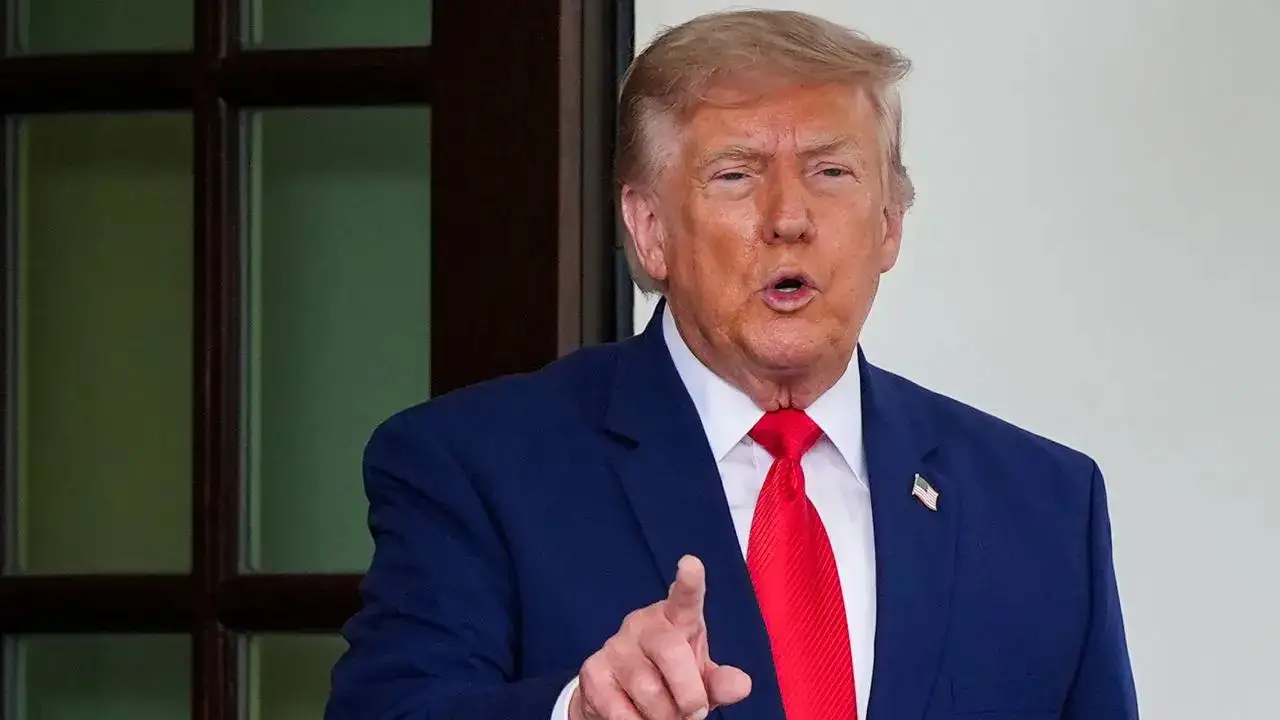
New Delhi: President Donald Trump’s administration on Friday imposed fresh tariffs of 10% and 12.5% on imports from 60 trading partners, including the European Union (EU), China, India and Japan, triggering strong reactions from governments across the world. Washington justified the move by alleging that the affected countries had failed to curb imports of goods made with forced labour – a charge several of them rejected.
The new duties replaced the temporary 10% global tariff that expired at 12:01 a.m. EDT on Friday, allowing the White House to rebuild much of Trump’s global tariff wall after the US Supreme Court in February struck down his earlier “reciprocal” tariffs imposed under emergency powers.
The tariffs, announced under Section 301 of the US Trade Act of 1974, cover about 99.4% of US imports but exempt several products, including oil and gas, fertilisers, certain food items, aircraft and parts, critical minerals, and goods already subject to Section 232 national security tariffs such as steel, aluminium, copper and automobiles.
US Trade Representative Jamieson Greer defended the move, saying: “The United States has had a forced labor import ban for nearly a century, and rigorously enforces it. It’s well past time for our trading partners to do the same.”
(Note: For the European Union, Japan, South Korea, Switzerland and Taiwan, the effective tariff reflects the combined rate after accounting for existing US most-favoured-nation (MFN) tariff rates, as specified by the US administration.)
He added: “Today’s action will begin to correct what is both a human rights abuse and distortive trade practice to improve the welfare of workers everywhere.”
The US imposed a 10% tariff on imports from Argentina, Bangladesh, Britain, Cambodia, Canada, Ecuador, El Salvador, Guatemala, Honduras, India, Indonesia, Jordan, Malaysia, Mexico, Pakistan, Sri Lanka and Trinidad and Tobago, saying these countries either have bans or plans to ban forced labour imports but are not effectively enforcing them.
The European Union, Taiwan, Japan, South Korea and Switzerland were assigned rates which, after factoring in existing most-favoured-nation tariffs, total 10% or 12.5%.
The remaining 38 countries, including China and Vietnam, were assigned a 12.5% tariff. According to the US, these countries have either failed to act sufficiently against forced labour-linked imports or remain under greater scrutiny. China has repeatedly denied US allegations over the treatment of Uyghur minorities.
India’s placement in the 10% category effectively means it faces a lower levy than countries in the 12.5% bracket, although Washington maintained that New Delhi still needs stronger enforcement of its existing restrictions on forced labour imports.
The announcement drew immediate protests from several trading partners.
China said it opposed all unilateral tariffs, arguing that trade wars benefit no one. Australia and Brazil called the tariffs “unjustified” and said they would seek their removal, while Norway said there was “no basis” for the duties.
Canada, which was separately hit earlier this week with fresh US tariffs on $20 billion worth of goods, adopted a more measured tone.
“We will continue engaging constructively with the United States on this matter, as well as other outstanding issues, over the coming weeks to the mutual benefit of our citizens,” Canada’s trade minister Dominic LeBlanc said.
The European Commission, however, struck a relatively conciliatory note, saying the latest duties remained within tariff commitments agreed under the EU-US Joint Statement.
The European Commission, however, struck a relatively conciliatory note, saying the latest duties remained within tariff commitments agreed under the EU-US Joint Statement.
“The EU notes positively the fact that this outcome is in line with the US tariff commitments agreed under the EU-US Joint Statement,” a European Commission spokesperson told Reuters, adding that it provided “positive momentum” for further tariff discussions.
French Trade Minister Nicolas Forissier questioned the legal basis of the tariffs but said the move nevertheless offered businesses greater certainty. Switzerland also noted that Washington had adhered to previously agreed tariff ceilings.
Britain, meanwhile, said the latest measures would not negatively affect its trade deal with the US.
“Our agreement with the US remains in place, and today we see an improvement to our trading terms with zero tariffs on whisky and medical technology,” a UK government spokesperson said.
The latest duties are the Trump administration’s first major effort to restore broad-based tariffs after the US Supreme Court struck down last year’s reciprocal tariff regime.








Enugu Monarch Faces ₦2bn Lawsuit Over Alleged Unlawful Detention

Explainer: Nigeria is getting its second chance with global investors after hard reset

Tears as Information Minister Idris honours late Chedi

Security forces neutralize scores of bandits in Sokoto

2027 polls: Kolawole leads APC rally, backs Tinubu, Ododo for second term

2027: I’ll implement Oronsaye Committee Report – Atiku

Edo youths hold journalists hostage, disrupt power restoration bid

Taraba @35: Nguroje preaches peace, unity, hails Kefas, Nyame, Darius, others for growth
-

 Breaking2 days ago
Enugu Monarch Faces ₦2bn Lawsuit Over Alleged Unlawful Detention
- Business3 days ago
Explainer: Nigeria is getting its second chance with global investors after hard reset
- News3 days ago
Tears as Information Minister Idris honours late Chedi
- Politics3 days ago
Security forces neutralize scores of bandits in Sokoto