News
Despite Tinubu’s assurance on cost of living, Labour begins 3-day warning strike

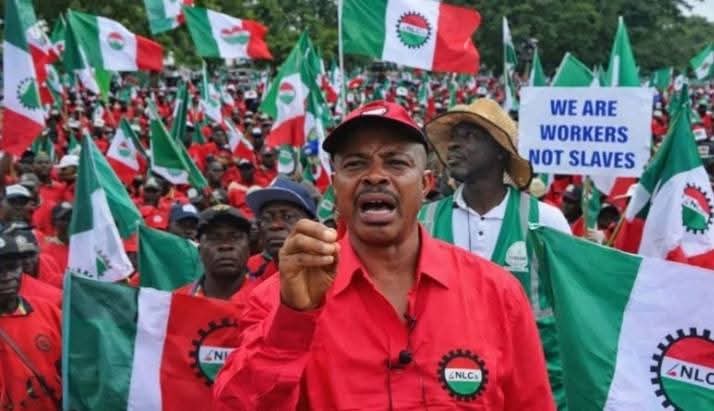

The Joint National Public Service Negotiating Council (JNPSNC) Thursday directed all federal, states and local governments’ employees, including staff of ministries, departments and agencies (MDAs) nationwide, to commence a three-day warning strike from midnight of Friday to protest the current economic challenges.
Specifically, the body directed union officials at the three tiers of government to ensure total compliance with the industrial action.
The JNPSNC is an umbrella body of workers comprising the Nigerian Civil Service Union (NCSU), Medical and Health Workers Union (M&HWU), Association of Senior Civil Servants of Nigeria (ASCSN), National Association of Nigerian Nurses and Midwives (NANNM), Amalgamated Union of Public Corporations, Civil Service Technical and Recreational Employees (AUPCTRE), and Nigeria Union of Public Service, Reportorial, Secretarial, Data Processors and Allied Workers (NUPSRAW).
The rest are the National Union of Printing, Publishing and Paper Products Workers (NUPPPPROW); and National Union of Agriculture and Allied Employees (NUAEE).
The warning, according to the unions, was consequent upon the alleged failure of the federal government to address demands contained in a letter dated September 21, 2026, forwarded to President Bola Ahmed Tinubu by the national leadership of the JNPSNC.
It said the action became necessary to drive home its concerns and grievances over the hardship facing workers and vulnerable Nigerians.
Blueprint recalls that the JNPSNC, had on September 29, threatened a three-day warning strike if its demands for the crashing of petrol price to N500 a litre (from the N1, 400 to N2, 000 per litre it presently sells), a wage award and other measures aimed at ameliorating the hardship were not addressed by President Tinubu in his Independence Anniversary Address to the nation on October 1.
Tinubu’s anniversary message of assurances
But in his independence anniversary speech, President Tinubu acknowledged the pains occasioned by the reforms and highlighted measures towards reducing cost of living.
He said: “When this Administration assumed office, we resolved to do things differently. We chose to excise the cancer. The reforms that followed were difficult. The side effects were real. Yet, we must never confuse the medicine with the disease.
“Our reforms did not create the weaknesses in our economy. They confronted them. Now, as certain influential but regressive voices would have us abandon the treatment and return ourselves to the abuse of addictive subsidies, we must resist their siren song. We must remember why we began this journey and how far we have already come.
“Three and a half years later, the evidence that Nigeria’s economic outlook has improved is undeniable. Our economy has grown by over 4 per cent this year. Both oil and non-oil sectors have contributed to the renewed period of stable growth.”
Continuing, Tinubu declared: “The emergency treatment is over. The foundation has been repaired. The central economic task before us has changed. For three years, our overriding purpose was to correct our nation’s course.
“Now, our purpose is simple: shared and widespread prosperity. When I speak of prosperity, I do not speak merely of a larger economy, abstract numbers or better statistics. I mean something much more personal.
“I mean a Nigeria in which the farmer can cultivate his land safely, produce more at lower cost, and earn a decent return for his labour. A Nigeria in which factories have reliable power, businesses can obtain credit, and young people can find productive work. A Nigeria in which food and transportation are affordable, education is within reach, and hard-working families can look towards the future with confidence. This is the promise we must now fulfil.
“Our priority is to bring down the cost of living. We will achieve this by lowering the cost of producing and moving the things Nigerians consume. We have the land and people to feed ourselves. My government is therefore focused on expanding mechanised irrigation and dry-season farming, improving access to seeds and fertiliser, holistically increasing mechanisation, and investing in storage and transportation. We are building and completing the roads, railways and ports that connect farms and factories to markets.”
Labour explains action
Notwithstanding President Tinubu’s plans, the workers insisted on a three-day warning strike as contained in a circular by JNPSNC’s National Secretary (Trade Union side), Olowoyo Gbenga, dated October 1, 2026.
The document was sent to the national presidents and general secretaries, state chairmen and secretaries of affiliate unions to the JNPSNC, titled “Declaration of three (3) day Warning Strike; action with immediate effect.”
“Please, recall the position of the National leadership of Joint National Public Service Negotiating Council that if Mr President of the Federal Republic of Nigeria, Bola Ahmed Tinubu refuses to address our requests as contained in the letter to his exalted office (dated 21st September, 2026), the three-day warning strike earlier scheduled shall commence immediately.
“Consequent upon the above, the strike shall start with effect from midnight of Friday 2nd October, 2026 to Sunday October 4th, 2026.
“In the same vein, all Public Servants in the services of Federal, State and Local Governments are to join the warning strike because an injury to one is an injury to all, most especially all workers, their dependants, vulnerable and hapless Nigerians are groaning terribly under the present economic hardship.
“The economic and mental hardships are becoming unbearable and frustrating.
“The time to act and mobilise workers for the three days warning strike is now!!! Please, disseminate the information!!! Surely, there is victory for us!!!” the circular read.
…Prior notice by the JNPSNC
The JNPSNC, had, in a communication to President Tinubu, and dated September 21, demanded that the price of petrol be slashed to N500, the immediate announcement of a wage award and the commencement of negotiations for a minimum wage of not less than N500,000 from 2027, among several others.
The workers, in a statement Tuesday, September 29, 2026, warned that is the issues of fuel pump prices and the wage award were left unaddressed by September 30, especially during the Independence Anniversary Address by President Tinubu, public servants nationwide would commence a three-day warning strike beginning October 2, 2026.
According to the statement, the September 30 deadline remained sacrosanct, stressing that the concerns of Nigerian workers could no longer be ignored.
The statement, issued by Gbenga, who is the scribe of both the JNPSNC and the NCSU said “the three critical issues requiring urgent attention are as follows: Reduction of Fuel Price to N500 per Litre. The Federal Government should take urgent steps to bring down the price of Premium Motor Spirit (PMS) to N500 per litre.
“This can be achieved through the provision of an intervention fund to address landing costs and support oil and gas operators.
“It is equally important for the Federal Government to ensure the sale of crude oil to the Dangote Refinery and operators of modular refineries at appropriate terms, in order to facilitate increased domestic refining and help bring down the price of petroleum products.
“The current price of PMS, ranging from N1, 450 to N2, 000 and, in some locations outside major communities and cities, as high as N2, 500 per litre, is unacceptable to Nigerian workers.
“The Council maintains that the economic hardship occasioned by the high cost of fuel is placing the survival of Nigerian workers, their dependants and the general populace under severe pressure, making it increasingly difficult for Nigerians to live normal and dignified lives.”
“The Federal Government should urgently approve a Wage Award for Nigerian workers to cushion the effects of the prevailing harsh economic conditions being experienced by workers, their dependants, and vulnerable Nigerians.
“The Council believes that urgent action on this demand will further enable public servants to consolidate their loyalty, commitment and productivity within the public service ecosystem.
“The Federal Government should urgently establish a Tripartite Committee to commence and facilitate negotiations for the new National Minimum Wage expected to become due in 2027.
“The Nigerian workers’ demand for the immediate constitution of the committee is informed by the need to avoid any administrative or procedural delay that could affect the implementation of the new National Minimum Wage once it is eventually negotiated and passed into law by the National Assembly.
“Consequently, the Council states that failure by the Federal Government to take the necessary steps to address these issues on or before 30th September 2026 will leave Nigerian workers with no option but to commence a three-day warning strike, with effect from Friday, 2nd October 2026, to press home their demands.
“It is imperative to state clearly that the Independence Day address of the President of the Federal Republic of Nigeria should adequately address these critical issues.
“Failure to address the concerns raised, according to the Council, will attract the displeasure of Nigerian workers and their dependants, as well as other vulnerable Nigerians who continue to bear the brunt of the prevailing economic hardship,” the statement had said.



“She wants me to stop talking against husband snatchers” — Rita Edochie speaks as she appears in court over the ₦1bn lawsuit filed against her by Judy Austin

Explainer: Duty-free does not mean tax-free for airport shops

Ugochinyere hails APP victory in Yobe LGA poll, says party steadily expanding

“A man can sleep with 30–40 women and still marry, but a woman can sleep with 7–10 men and be rejected” — Veteran actor Chiwetalu Agu

Lower tax interest to ease burden of business arrears

Adamawa governorship candidates sign peace accord ahead of 2027

OPay Wins Two Consumer Awards, Reaffirms Nationwide Trust

Nigeria’s reform gains risk stalling without productivity push, CPPE warns
-

 Special Reports2 days ago
“She wants me to stop talking against husband snatchers” — Rita Edochie speaks as she appears in court over the ₦1bn lawsuit filed against her by Judy Austin
- Business3 days ago
Explainer: Duty-free does not mean tax-free for airport shops
- News3 days ago
Ugochinyere hails APP victory in Yobe LGA poll, says party steadily expanding
- Special Reports3 days ago
“A man can sleep with 30–40 women and still marry, but a woman can sleep with 7–10 men and be rejected” — Veteran actor Chiwetalu Agu