News
Breaking: Ex-PDP national chairman Bamanga Tukur is dead

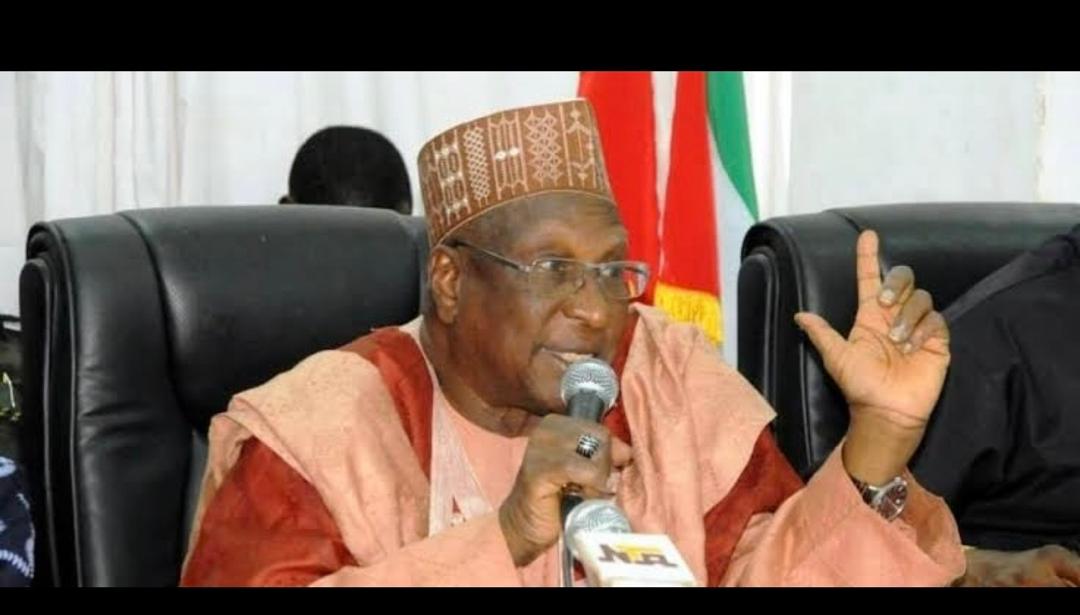

Former National Chairman of the Peoples Democratic Party (PDP), Bamanga Tukur, has died at the age of 90.
Tukur’s death was confirmed by family sources on Saturday, although the circumstances surrounding his passing were not immediately disclosed.
The death of the elder statesman comes just three days before his 91st birthday, which would have been celebrated on September 15. His passing brings to an end the life of a prominent public administrator, politician and businessman whose career spanned Nigeria’s Second Republic, years of military rule and the Fourth Republic. Blueprint reports
From public service to national prominence
Born on September 15, 1935, Tukur began his career in public service long before becoming a major figure in Nigerian partisan politics.
One of the notable positions he held was that of General Manager of the Nigerian Ports Authority (NPA), where he served from 1975 to 1982.
His tenure at the agency coincided with a significant period in Nigeria’s economic development, particularly as the country expanded its infrastructure and commercial activities following the oil boom of the 1970s.
Tukur’s experience in public administration and business subsequently provided the platform for his entry into mainstream politics, where he would eventually occupy prominent positions at both state and federal levels.
Governor of Gongola State
Tukur’s political career took a major turn in 1983 when he became Governor of the defunct Gongola State.
He assumed office during the final months of the Second Republic, a period characterised by intense political competition and economic challenges.
His tenure, however, was short-lived as the military coup of December 31, 1983, which overthrew the civilian government of President Shehu Shagari, brought the Second Republic to an abrupt end.
The development ended Tukur’s tenure as governor and ushered Nigeria into another prolonged period of military rule.
Return to federal cabinet
Tukur later returned to the national political scene under the military administration of former Head of State, General Sani Abacha.
He was appointed Minister of Industries in 1993 and served in the position until 1995.
His return to government demonstrated his continued relevance within Nigeria’s political and administrative establishment despite the changing nature of the country’s political system.
Beyond elective and appointive positions, Tukur also established himself as an influential voice in African business circles.
He served as Executive President of the African Business Roundtable and chairman of the NEPAD Business Group, positions through which he participated in discussions on African economic development, private-sector growth and regional business cooperation.
PDP national chairman
Tukur’s most prominent partisan political position came decades after his first major political appointment.
In March 2012, he was elected National Chairman of the PDP, then Nigeria’s ruling political party. His emergence came at a period when the PDP remained dominant nationally but was increasingly confronted by internal disagreements, competing interests and growing political tensions among its leaders.
As national chairman, Tukur was expected to provide leadership and strengthen the party ahead of crucial political contests. His tenure, however, became embroiled in internal disputes that exposed deep divisions within the party.
Resignation amid party crisis
Tukur eventually resigned as PDP national chairman in January 2014 after less than two years in office.
His resignation came amid escalating disagreements within the party and growing tensions involving senior party officials and political blocs.
The crisis would eventually contribute to a broader realignment within Nigerian politics, with a number of prominent PDP figures leaving the party ahead of the 2015 general elections.
Tukur’s tenure consequently remains an important chapter in the history of the PDP and the political developments that preceded the party’s loss of federal power in 2015.
Tafidan Adamawa
Beyond his political offices, Tukur retained a strong connection to his home state and traditional institutions. He was widely known by his traditional title, Tafidan Adamawa, reflecting his standing within Adamawa’s political and traditional circles.
His long public career earned him recognition across successive administrations and political dispensations.
The Federal Government also honoured him with the national award of Commander of the Order of the Niger (CON), one of Nigeria’s prominent national honours.
A career across different eras
Tukur’s career was notable for its longevity and breadth.
Few Nigerian public figures have moved through such diverse spheres, from the management of a major national economic institution to state governorship, federal ministerial office, international business leadership and national party leadership.
His public life also mirrored several important stages in Nigeria’s political history.
He began his career during the early post-independence era, served as NPA general manager during the 1970s, became governor during the Second Republic, returned as a federal minister under military rule and later became national chairman of one of the country’s most influential political parties during the Fourth Republic.
His death therefore represents the loss of a figure whose public career crossed political divides and successive administrations.
As tributes are expected from political leaders, former colleagues, business associates and members of the PDP, attention is likely to turn to his contributions to Nigeria’s public administration, politics and economic development.
Tukur is survived by his wives, children and grandchildren.
Further details concerning his funeral arrangements and burial are expected to be announced by his family.



Akpabio petitions DSS over alleged anti-Northern statement

2027 : There’ll be No New Buildings, Road Construction in Nigeria if I’m Elected — Obi

Prof. Badejo Olawunmi Is New LASU Vice-Chancellor

NCC strengthens Type Approval Compliance for SIM-enabled devices in Nigeria

Nigeria: Popular Political Commentator Assassinated At Home

Sanwo-Olu declares ‘state of emergency’ on waste management in Lagos

Champion Breweries, VFD Group Defy Broad Market Selloff

CSOs tasked on tackling illicit financial flows in Nigeria, Africa
-

 Breaking3 days ago
Akpabio petitions DSS over alleged anti-Northern statement
- Breaking2 days ago
2027 : There’ll be No New Buildings, Road Construction in Nigeria if I’m Elected — Obi
- News3 days ago
Prof. Badejo Olawunmi Is New LASU Vice-Chancellor
- Breaking3 days ago
NCC strengthens Type Approval Compliance for SIM-enabled devices in Nigeria