News
ADC 2027: Atiku-Amaechi and the South-South development agenda

ADC outlines its economic priorities, leadership experience and commitment to regional inclusion as Nigeria prepares for the January presidential election.
September 2026
With less than four months until Nigeria’s presidential election, the African Democratic Congress (ADC) has entered a new phase of its campaign, placing economic recovery, national development and political inclusion at the centre of its agenda.
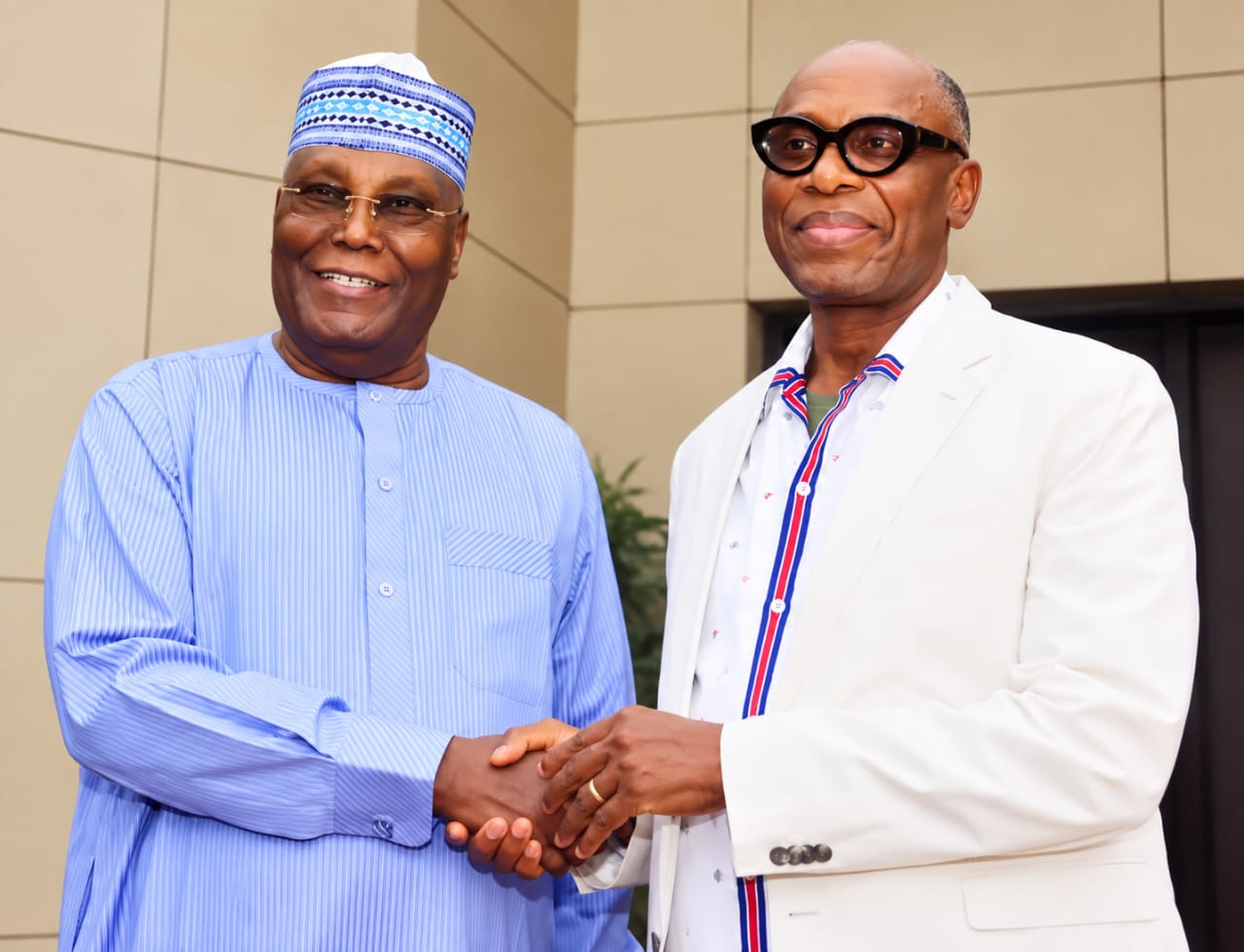
Presidential candidate Atiku Abubakar has approved the party’s National Campaign Council, chaired by Kashim Ibrahim-Imam, with Nasir El-Rufai as deputy chairman and Senator Austin Akobundu as campaign manager. The announcement follows the publication of the final presidential candidate list, confirming former Rivers State Governor Rotimi Amaechi as Atiku’s running mate for the 16 January 2027 election.
Attention is increasingly turning to the South-South, whose petroleum resources remain central to Nigeria’s economy despite persistent concerns about environmental degradation, unemployment and inadequate infrastructure.
Mabel Oboh, ADC South-South Zonal Publicity Secretary, said economic development and meaningful regional representation were key considerations in the party’s presidential campaign.
The ADC presents the Atiku-Amaechi partnership as combining Atiku’s experience in national economic administration with Amaechi’s legislative, gubernatorial and ministerial background.
According to the party, their combined experience provides a foundation for its proposed programme of economic recovery, improved security, employment creation and national development.
Oboh emphasised the importance of translating the party’s economic commitments into practical improvements in Nigerians’ living standards.
“The ADC’s commitment to economic recovery reflects in the practical programmes that expand employment, strengthen infrastructure, encourage investment and improve the living standards of ordinary Nigerians. These are the priorities that should define the national conversation ahead of 2027,” she said.
The party has identified national unity, economic revival and inclusive development among its campaign priorities. Its economic proposals will also face scrutiny over financing, implementation timelines and their measurable impact on Nigerian households.
Oboh emphasised that Amaechi’s political record had become a significant element of the ADC’s presentation of its presidential ticket.
During his tenure as Rivers State governor, Amaechi’s administration invested extensively in education, healthcare and road infrastructure. Historical reporting documented the construction of approximately 500 model primary schools, the equipping of more than 250 of those schools, the recruitment and retraining of approximately 13,000 teachers, and the construction of more than 110 healthcare centres.
During his tenure as Minister of Transportation, Amaechi supervised major federal railway initiatives, including the revival and completion of the long-delayed Itakpe-Warri railway, commissioned in September 2020.
Oboh highlighted the significance of his experience in both state and federal administration.
“Amaechi’s experience in state administration and federal transportation policy brings an important South-South perspective to discussions about national infrastructure. His background illustrates the potential contribution that experienced regional leaders can make to federal economic planning.”
The South-South’s economic significance extends beyond petroleum revenue. Its ports, waterways, agricultural resources and commercial centres offer opportunities for industrial expansion and economic diversification.
Nevertheless, communities throughout the Niger Delta continue to raise concerns about environmental restoration, employment and the distribution of development resources.
The ADC has highlighted Amaechi’s South-South background and national administrative experience as important characteristics of its presidential partnership.
“Meaningful South-South representation involves more than political appointments. It strengthens national attention to environmental protection, industrial investment, maritime development and employment opportunities for communities whose resources contribute substantially to Nigeria’s economy,” Oboh stated.
For the region, the potential responsibilities of a vice-president with previous gubernatorial and transportation experience warrant examination, particularly regarding infrastructure coordination and federal-state cooperation.
The ADC’s recently announced campaign structure reflects its preparations for the approaching election, with responsibilities distributed across campaign management and policy development.
Atiku’s campaign has emphasised organisational accountability, policy clarity and disciplined management. Its economic proposals will face scrutiny over implementation, funding and their anticipated consequences for households and businesses.
Further reaffirming the party’s stated priorities, Oboh said:
“Our party has placed economic recovery and inclusive development at the centre of its national agenda. For the South-South, the discussion also includes industrial diversification, environmental restoration and infrastructure that connects our communities to wider economic opportunities.”
As campaigning intensifies, the Atiku-Amaechi ticket’s economic commitments and administrative records will form part of a broader national debate about Nigeria’s future.
For the South-South, that debate encompasses both regional representation and the practical development policies that will shape its economic prospects beyond 2027.



Oil Marketers Slash Petrol Price to ₦1,350/Litre as Depot Rates Fall

Man City should be relegated to League Two, handed six-year transfer ban âFormer England footballer Darren Bent (Video)

SERAP Gives CBN 7 Days to Explain Missing $6.23m Election Funds, ₦1.63trn Loans

Police Arrest Two Suspected Kidnappers in Oyo

Can Nigeria’s 350bps rate cut finally unlock cheaper credit?

UEFA Nations League: Cristiano Ronaldo may no longer start every match â Portugal head coach Jorge Jesus

Rykardo Agbor survives ghastly car accident weeks after father’s burial [VIDEO]

2027: El-Rufai Political Prisoner, Release Him if He Poses No Threat – Phrank Shaibu
-

 Breaking3 days ago
Oil Marketers Slash Petrol Price to ₦1,350/Litre as Depot Rates Fall
- Special Reports2 days ago
Man City should be relegated to League Two, handed six-year transfer ban âFormer England footballer Darren Bent (Video)
- Breaking3 days ago
SERAP Gives CBN 7 Days to Explain Missing $6.23m Election Funds, ₦1.63trn Loans
- Breaking3 days ago
Police Arrest Two Suspected Kidnappers in Oyo