News
2027 elections: Ex-NPC boss Durunguwa, supporters rally support for Tinubu, Uba Sani

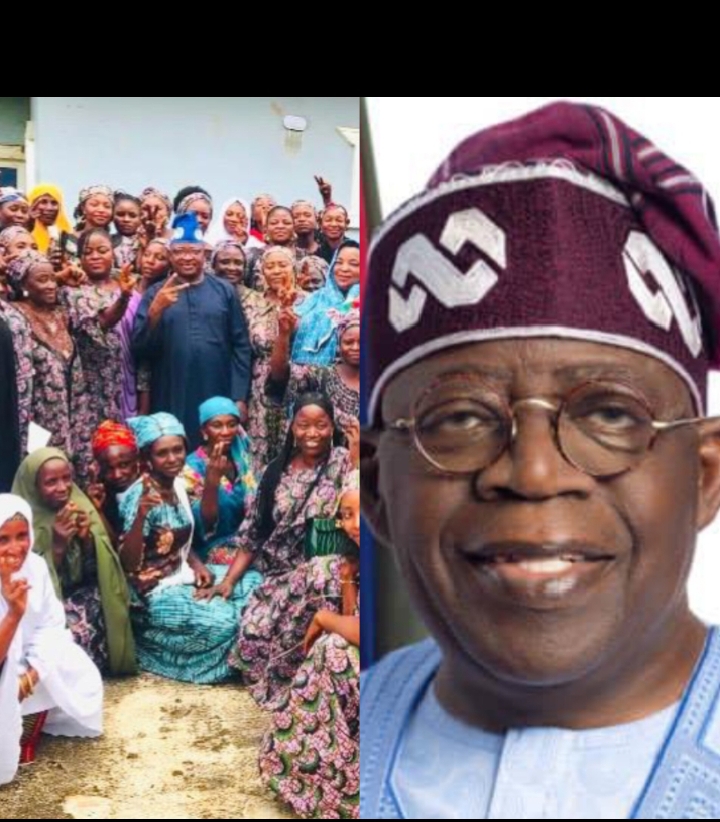

Former National Population Commission (NPC) Commissioner, Dr. Abdulmalik Mohammed Durunguwa, and his supporters have commenced grassroots mobilisation for President Bola Ahmed Tinubu and Kaduna State Governor Uba Sani ahead of the 2027 elections.
The development followed a recent engagement between Durunguwa and a large gathering of women involved in politics at his residence in Ladduga, Agunu Ward, Kachia Local Government Area of Kaduna State.
Durunguwa, in a post on his official Facebook page, said he received a “very large crowd” of politically active women who expressed readiness to mobilise women, their husbands and other eligible members of their families in support of Tinubu, Uba Sani and candidates of the All Progressives Congress (APC). Blueprint reports
The gathering is coming at a time political actors across Kaduna State are increasingly turning attention to grassroots structures ahead of the 2027 electoral cycle, with mobilisation, alliances and representation becoming more prominent in political discussions.
Grassroots mobilisation takes centre stage
Speaking on the Kachia engagement, Senior Special Assistant to Governor Uba Sani on Public Affairs, Hon. Victor Mathew Bobai, said the development highlighted the importance of sustained political organisation in Southern Kaduna.
Bobai said political participation should go beyond election-day activities and social media campaigns, stressing the need for community consultations, advocacy, negotiation and continued interaction with political institutions.
“Politics is an investment, and our people must come together to fight for what belongs to them,” he said.
He said the political future of Southern Kaduna required engagement across religious, ethnic and social lines, particularly if communities were to build stronger channels for expressing their interests and engaging government.
The emphasis on women is also significant in the context of grassroots politics, where family and community networks can provide avenues for political mobilisation. Durunguwa’s account of the Kachia meeting specifically placed women at the centre of the mobilisation effort.
Durunguwa’s political journey
Durunguwa’s involvement in the latest mobilisation comes against the background of a public-service and political career spanning several years.
The source material states that he previously served with the Kaduna state government, including as Executive Secretary of the State Emergency Management Agency (SEMA), and later worked with the Public Complaints Commission. It also records his involvement in ICT and agriculture.
His nomination as Federal Commissioner representing Kaduna State at the National Population Commission was confirmed by the Senate in 2018. The National Assembly’s official record confirms that the Senate approved his nomination after consideration of the relevant committee report.
His political activities have subsequently included engagements around Southern Kaduna and the APC. Bobai described him as one of the figures who contributed to the development of the party in the area and argued that political influence requires sustained organisation, relationships and participation.
From political contest to cooperation
Durunguwa was also among the aspirants involved in the APC governorship contest in Kaduna State in 2022.
Uba Sani emerged from the primary as the party’s candidate after polling 1,149 votes, ahead of Bashir Abubakar, who scored 37, and Sani Sha’aban, who scored 10. Contemporary reports confirmed the result, although Sha’aban subsequently challenged the conduct of the primary.
The source material says Durunguwa remained active in Kaduna’s political environment after the contest, while Bobai described his subsequent engagement as evidence of the possibility of moving from individual political contests towards broader political cooperation.
Bobai also described Durunguwa as one of the early voices involved in efforts around Uba Sani’s second-term bid, although that remains Bobai’s characterisation rather than an independently established fact.
Southern Kaduna and the question of unity
Beyond the immediate 2027 mobilisation, Bobai said political engagement in Southern Kaduna should address the divisions that have often shaped political discussions in the region.
He pointed to the area’s mix of Muslims and Christians, different ethnic communities, women, youths, professionals, farmers, entrepreneurs and supporters of different political parties.
According to him, those differences should not prevent communities from identifying areas of common interest and working together.
“It should be possible for a Southern Kaduna Muslim and a Southern Kaduna Christian to sit at the same political table, discuss their interests, disagree respectfully and still work together for the development of their communities,” he said.
Bobai said political conversations should therefore pay greater attention to infrastructure, agriculture, education, technology, employment, healthcare, youth participation, women’s involvement, political inclusion and economic opportunities rather than concentrating exclusively on insecurity, religion and ethnicity.
MTC 2031 adds another dimension
The Kachia engagement has also been linked to the emerging Make That Change, or MTC 2031, conversation associated with Durunguwa and his supporters.
According to the source material, proponents are presenting MTC 2031 as a framework for discussions around political participation, organisation, inclusion and the longer-term future of Southern Kaduna.
Its eventual political significance remains open, as its organisation, policy proposals, public engagement and ability to develop into a broader political structure will determine how the initiative evolves.
For Bobai, the immediate issue is the need for stakeholders to begin discussing the type of representation they want, the interests political leaders should pursue and how women and young people can participate more effectively in the political process.
“These are questions that deserve answers beyond campaign seasons,” he said.
‘We must begin asking for our share’
Bobai further urged Southern Kaduna stakeholders to think strategically about the region’s place within the political architecture of Kaduna State and Nigeria.
“If we don’t start asking for it now, it might be difficult to ask for it tomorrow,” he said.
He said the objective should be to develop a political constituency capable of articulating its interests through organisation, participation and constructive engagement, rather than waiting for campaign periods before raising issues of representation and development.
As the 2027 elections draw closer, the Kachia meeting provides a glimpse into how grassroots political networks are being activated in parts of Southern Kaduna. It also places women’s participation and family-based mobilisation alongside the wider debate over political representation in the region.
The gathering, however, should not be treated as evidence that everyone present will ultimately vote for the candidates mentioned. It establishes the participation of the women and the support they expressed at the meeting, but individual voting decisions will only become clear through the electoral process.
For now, the engagement has added another layer to the political conversation in Southern Kaduna, bringing together the immediate 2027 mobilisation around Tinubu, Uba Sani and APC candidates with a longer-term discussion about representation, inclusion and the emerging MTC 2031 initiative.


Man who r@ped two 14-year-old girls at his flat after gro0ming them on Snapchat is jailed for 14 years

FCT police commissioner presents ₦74.4m life assurance cheques to 143 fallen officers next of kin

Agro experts target 15,000 local diary farmers through ALDDN initiative

Iran war has cost $45.1 billion, Pentagon tells Congress

Son conspires with two others to rob his mother and siblings in Adamawa

Budget reporting lapses raise financing risks for Rivers, Osun

Sterling Bank Appoints Jaiyeola, Ikwudinma as Directors as Four Board Members Retire
âWho will give you â¦500 million?â â Comedian Deeone b@shes ex-BBNaija star Cross over claim that man offered him money to sl££p with him
-

 Special Reports2 days ago
Man who r@ped two 14-year-old girls at his flat after gro0ming them on Snapchat is jailed for 14 years
-

 News2 days ago
FCT police commissioner presents ₦74.4m life assurance cheques to 143 fallen officers next of kin
- News2 days ago
Agro experts target 15,000 local diary farmers through ALDDN initiative
- Special Reports2 days ago
Iran war has cost $45.1 billion, Pentagon tells Congress