News
What latest Nigeria voters’ list portend for 2027 elections

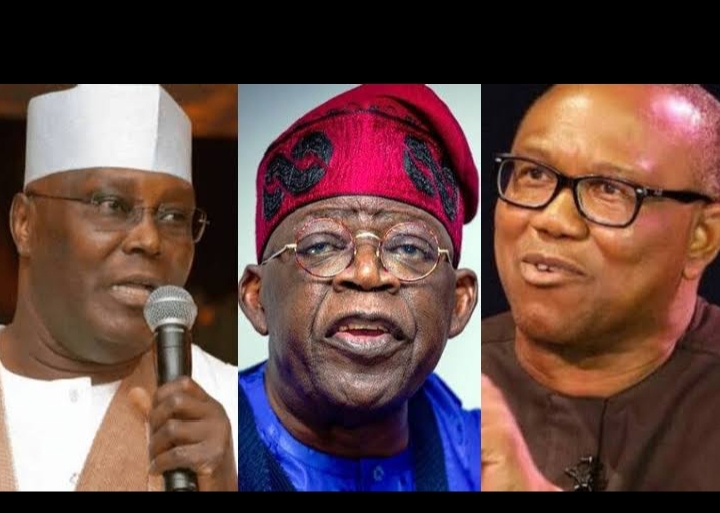
The distribution of registered voters across Nigeria’s 36 states and the Federal Capital Territory may provide an important indication of their potential influence in the 2027 general elections, but the voting pattern in the 2023 presidential election suggests that the size of a state’s voter register does not automatically translate into a corresponding number of votes for presidential candidates.
The latest figures from the Independent National Electoral Commission (INEC) show that Nigeria’s voter register has risen to 103,428,715 following the Continuous Voter Registration exercise and subsequent biometric verification and clean-up. Blueprint reports
Lagos leads the register with 7,488,633 voters, followed by Kano with 6,570,276 and Kaduna with 4,662,640. Katsina is fourth with 3,876,051, while Rivers occupies fifth position with 3,736,434 registered voters.
Oyo, Delta, Benue, Ogun and Bauchi complete the top 10, with each having more than three million registered voters.
On the surface, these figures place the states at the centre of the electoral calculations ahead of 2027. But the 2023 presidential election provides an important qualification: registered voters represent potential electoral strength, while votes actually cast determine realised electoral strength.
The distribution of those votes among the leading presidential candidates also shows why the 2027 contest cannot be assessed simply by looking at the size of the register.
Lagos: 7.49m registered voters, but 2023 votes were divided
Lagos provides perhaps the clearest illustration of the difference between voter registration and actual voting.
Although the state had the largest voter register in the country in the latest figures, only a fraction of its registered electorate voted in the 2023 presidential election.
In that election, Peter Obi of the Labour Party polled 582,454 votes in Lagos, narrowly ahead of Bola Tinubu of the All Progressives Congress, who scored 572,606. Atiku Abubakar of the Peoples Democratic Party received 75,750, while Rabiu Kwankwaso of the New Nigeria Peoples Party polled 8,442.
The result was significant because Lagos is historically associated with Tinubu, yet the 2023 figures showed a closely divided contest among the two leading candidates, with Obi edging Tinubu by fewer than 10,000 votes.
The state’s 2023 turnout was about 18.92 per cent, substantially below the national figure of approximately 27 per cent.
This means that Lagos’ 7.49 million registered voters should not be interpreted as 7.49 million votes available to presidential candidates.
If the 2023 turnout pattern were repeated, the number of actual voters would be considerably lower.
Kano demonstrates the importance of turnout
Kano presents a contrasting picture.
The state currently has 6,570,276 registered voters, making it the second-largest electoral register in the country. In 2023, however, the state’s importance was not only determined by the size of its electorate but also by the level of participation and the concentration of votes behind particular candidates.
Kwankwaso won Kano decisively for the NNPP, polling 997,279 votes. Tinubu received 517,341, while Atiku polled 131,716 and Obi received 28,513.
The figures show the concentration of the Kwankwaso vote in Kano. Indeed, Kano supplied more than half of his nationwide total of 1,496,687 votes in 2023.
Kano’s 2023 turnout was approximately 29.5 per cent.
Applying that historical turnout rate to the state’s latest register would produce roughly 1.94 million actual voters, if participation were to remain at a similar level.
The comparison with Lagos is instructive. Lagos has more registered voters, but Kano’s higher historical turnout means that a larger proportion of its electorate participated in the 2023 presidential election.
Kaduna: Atiku’s strongest showing among the major states
Kaduna offers another illustration of how a large electorate can translate into substantial presidential votes.
With 4,662,640 registered voters in the latest register, Kaduna is currently Nigeria’s third-largest electoral state by registration.
In 2023, Atiku Abubakar won the state with 554,360 votes, while Tinubu recorded 399,293. Obi polled 294,494, and Kwankwaso received 92,969.
The combined votes of the four leading candidates therefore demonstrate the competitiveness of the state, with no single candidate approaching an outright majority of the votes cast among those major contenders.
Kaduna also recorded a turnout of about 32.33 per cent, higher than Lagos and Kano.
If that rate were applied to its latest register, the state would produce approximately 1.51 million voters.
This is why turnout history is important in assessing the electoral weight of states. Kaduna has fewer registered voters than Lagos, but its higher participation rate produced a substantially larger proportion of actual voters in 2023.
Katsina shows the strength of a high-turnout electorate
Katsina, with 3,876,051 registered voters, is another state where historical participation deserves attention.
In 2023, Atiku polled 489,045 votes, narrowly ahead of Tinubu’s 482,283. Kwankwaso received 69,386, while Obi recorded just 6,376 votes.
The closeness between Tinubu and Atiku in the state demonstrates how a large electorate can become particularly consequential when major candidates are competing for comparable portions of the vote.
Katsina recorded approximately 31.03 per cent turnout in 2023. At a similar participation rate in 2027, its current register could translate into roughly 1.20 million actual voters.
Thus, although Katsina’s registered-voter population is only slightly more than half that of Lagos, its historical turnout points to a considerably larger pool of actual voters than its raw registration figure might initially suggest.
Jigawa: smaller register, substantial voting strength
Jigawa is particularly important to this analysis because it demonstrates why a top-10 registration ranking can be misleading.
The state does not have as many registered voters as Lagos, Kano, Kaduna or Katsina, but its historical turnout has been considerably higher.
In 2023, Jigawa recorded about 40.61 per cent turnout. The four leading presidential candidates shared the votes as follows: Tinubu 421,390, Atiku 386,587, Kwankwaso 98,234, and Obi 1,889.
The result shows not only the relatively high participation in the state but also the concentration of the presidential contest between Tinubu and Atiku.
With a historical turnout above 40 per cent, Jigawa’s electoral significance cannot be measured adequately by its position on the voter-register table alone.
If its historical participation pattern were maintained, a substantial proportion of its registered electorate could turn into actual votes in 2027.
Bauchi and Benue also show different voting patterns
Bauchi and Benue provide another useful comparison.
Bauchi has 3,012,547 registered voters in the latest figures. In 2023, Atiku won the state with 426,607 votes, followed by Tinubu with 316,694. Kwankwaso received 72,103, while Obi polled 27,373.
Benue, with 3,057,225 registered voters, produced a much closer contest between Tinubu and Obi.
Tinubu received 310,648 votes, while Obi scored 308,372. Atiku polled 130,081, and Kwankwaso received 4,740.
The near parity between Tinubu and Obi in Benue demonstrates another dimension of electoral strength: a state may have a substantial electorate, but the political significance of its votes can also depend on how closely contested the state is.
Bauchi, meanwhile, demonstrates the importance of combining register size with turnout. Its 2023 participation rate was around 32 per cent, meaning its more than three million registered voters represented a sizeable pool of actual voters.
Oyo and Delta add weight to the southern bloc
Oyo and Delta also feature prominently because of their large voter registers.
Oyo currently has 3,588,111 registered voters. In the 2023 presidential election, Tinubu received 449,884 votes, Atiku polled 182,977, Obi scored 99,110, while Kwankwaso received 4,095.
Delta, with 3,525,988 registered voters, produced a different voting pattern. Obi won the state with 341,866 votes, followed by Atiku with 161,600 and Tinubu with 90,183. Kwankwaso polled 3,122.
The two states therefore demonstrate that having similarly large voter registers does not necessarily produce similar presidential voting patterns.
The eventual electoral significance of their current registers will depend heavily on turnout and the ability of candidates and parties to mobilise voters across the states.
Ogun and Rivers underline the turnout question
Ogun has 3,037,981 registered voters in the latest register. Tinubu won the state in 2023 with 341,554 votes, while Atiku received 123,831 and Obi 85,829. Kwankwaso recorded 2,200 votes.
Rivers, meanwhile, has 3,736,434 registered voters, making it the fifth-largest state register.
But the state’s 2023 presidential votes were relatively modest compared with its registration strength. Tinubu received 231,591 votes, Obi 175,071, Atiku 88,468, and Kwankwaso 1,322.
Rivers’ turnout was estimated at only around 16 to 17 per cent in 2023.
The comparison between Rivers and states such as Kaduna, Katsina and Bauchi therefore reinforces the central argument: a large voter register does not automatically produce a correspondingly large voting population.
What the 2023 figures mean for 2027
The 2023 results also show that electoral strength has at least two separate dimensions.
The first is numerical strength — the number of registered voters in a state.
The second is participation strength — the number of those registered voters who actually turn out to vote.
There is also a third consideration: vote distribution.
A state may have a large electorate and high turnout, but if votes are divided relatively evenly among several candidates, the political effect will be different from a state where one candidate attracts a very large share of the votes cast.
The 2023 presidential results illustrate all three dynamics.
Kano’s nearly one million votes for Kwankwaso demonstrated strong concentration behind one candidate. Kaduna produced 554,360 votes for Atiku and 399,293 for Tinubu, while Lagos recorded a remarkably close contest between Obi and Tinubu.
In Benue, Tinubu and Obi were separated by only about 2,300 votes, while Delta gave Obi a substantial lead over the other major candidates.
These historical results do not determine what will happen in 2027. Voters, candidates, alliances, turnout and political circumstances can all change between elections.
Registration is potential, turnout makes it real
For the 2027 elections, a more useful assessment of state electoral strength should therefore combine the latest INEC voter-register figures with turnout in previous presidential elections and the actual distribution of votes among candidates.
The 2023 results show that Lagos, Kano, Kaduna, Katsina, Rivers, Oyo, Delta, Benue, Ogun and Bauchi all possess substantial electoral populations, but their contribution to the national vote has varied significantly.
Jigawa and other states with comparatively high historical turnout should also remain part of the analysis, even when their registration figures do not place them among the country’s 10 largest electorates.
Ultimately, Nigeria’s 103.4 million registered voters represent potential electoral strength, not 103.4 million guaranteed votes.
The experience of 2023 suggests that the eventual significance of each state in 2027 will depend on how many registered voters participate, how those votes are distributed among the presidential candidates and how effectively parties and candidates mobilise their supporters.
For that reason, the electoral map for 2027 cannot be fully understood by looking at voter registration alone. The more revealing picture emerges when registration, turnout and actual presidential votes are examined together.



SERAP Urges Tinubu To Order Probe Into Alleged ₦94.4bn Oil Fund Irregularities

TikTok influencer Kholegrams faces backlash after asking fans to pay ₦100,000 to hang out with her

Dollar to Naira: Naira holds steady as official rate trades at ₦1,327.08

HK boss denies maltreating man, explains why he sold his phone for ₦90,000

2027: Ondo APC constitutes presidential campaign council, nominates Aiyedatiwa chairman

NSCIA restructures, expands NEC

Helicopter Crashes In Nigeria, Many Feared Dead
Iran president says talks with US is ‘meaningless’
-

 News3 days ago
SERAP Urges Tinubu To Order Probe Into Alleged ₦94.4bn Oil Fund Irregularities
- Special Reports3 days ago
TikTok influencer Kholegrams faces backlash after asking fans to pay ₦100,000 to hang out with her
- Special Reports3 days ago
Dollar to Naira: Naira holds steady as official rate trades at ₦1,327.08
- Special Reports2 days ago
HK boss denies maltreating man, explains why he sold his phone for ₦90,000