News
Obasanjo, Osoba clash over 2003 election alignment


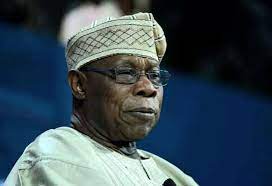
Former President Olusegun Obasanjo has dismissed allegations by former Ogun State Governor, Aremo Olusegun Osoba, that he deceived leaders of the Alliance for Democracy (AD) during the political realignments that preceded the 2003 general elections.
In a detailed letter dated July 23, 2026, Obasanjo insisted that he never misled anyone during the political negotiations that culminated in his re-election, maintaining that all his engagements were conducted openly and in the interest of national unity.
The former president’s response came after Osoba, in an article published in The Legal Observer on July 20, alleged that Obasanjo deceived Yoruba political leaders in the build-up to the 2003 elections.
Obasanjo described the claims as inaccurate and misleading, saying they failed to reflect the true sequence of political events before and after the 1999 transition to democracy.
Obasanjo rejects allegation of deception
The former president, in the letter titled “Reply to Your Inaccurate Posture: ‘How Obasanjo Deceived Us in 2003’,” strongly objected to Osoba’s characterisation of him as a deceiver.
According to him, he had always presented his position honestly, regardless of whose political interest was affected.
“I take strong and serious objection to your calling me a deceiver because I deceived nobody. I always presented my case and all issues as I had them and as I understood them, no matter whose ox is gored,” Obasanjo stated.
He argued that many of the political discussions and consultations that shaped the country’s democratic transition were handled by senior leaders of Afenifere and the Alliance for Democracy, leaving Osoba without full knowledge of several key developments.
Consultations before joining PDP
Obasanjo recalled that following his release from prison, influential political figures and groups from different parts of the country encouraged him to contest the presidency.
He named delegations led by Lawan Katsina, the late Chief S.M. Afolabi and Chief Martins Kuye among those that persuaded him to seek Nigeria’s highest office.
According to the former president, those consultations eventually influenced his decision to join the Peoples Democratic Party (PDP), after holding extensive discussions with political leaders across the South-West, North and South-East.
He maintained that his political decisions were guided by consultations rather than personal ambition or deception.
Relationship with Afenifere leaders
Reflecting on his interactions with the late Afenifere leader, Chief Abraham Adesanya, Obasanjo said political disagreements never affected the mutual respect they shared.
He recalled that Adesanya repeatedly informed him that the Yoruba people would not support his presidential ambition but noted that he continued to visit the elder statesman and maintained cordial relations throughout the period.
“There was no time I called on Papa Adesanya that I was not well entertained. Yet Papa stood on no vote for me, and I stood on my respect and what was due to him,” he said.
Obasanjo argued that the relationship demonstrated that political differences did not amount to deception or hostility.
National government and impeachment claims
The former president also defended his decision to invite the Alliance for Democracy into what he described as a broad-based national government after winning the 1999 presidential election.
He said the move was intended to strengthen national unity and ensure inclusive governance rather than reflect any political weakness on the part of the PDP administration.
“Bringing PDP and AD to join me for a sort of national government was not out of weakness; rather, it was out of strength and for the unity and progress of the country,” he explained.
Obasanjo further rejected Osoba’s account of the alleged impeachment plot against him during his first term in office.
He claimed that attempts to impeach him originated from within his own administration and alleged that his then vice-president encouraged the move while pursuing his own presidential ambition.
“The game continued to be played on with me treating it with contempt as I had committed no impeachable offence,” he wrote.
Defends 2003 election outcome
On the controversial 2003 general elections, Obasanjo disputed Osoba’s suggestion that the defeat of Alliance for Democracy governors was orchestrated by the Presidency.
According to him, the election results reflected the political realities across the South-West and were not products of manipulation by his administration.
He maintained that the defeats suffered by the AD in five of the six South-West states were genuine electoral outcomes.
“Your loss or defeat in 2003 was genuine in all the six states except the one where the figures were successfully and murderously changed,” Obasanjo stated.
The former president insisted that history should be accurately documented and warned against narratives that, in his view, distort the facts surrounding Nigeria’s democratic evolution.
His response marks the latest exchange between two prominent political figures whose relationship has spanned decades and whose differing accounts continue to shape public discourse on the events surrounding the 2003 general elections.



Niger abductions: AIG Olaiya leads tactical team for safe rescue operation

NBA President Vows Sanctions for Lawyers Over Abusive Social Media Posts

Explainer: Nigeria is getting its second chance with global investors after hard reset

Nigeria’s outlook lifted to ‘positive’ by Moody’s on reform gains

Gov. Adeleke Dissolves, Reconstitutes UNIOSUN Governing Council

REA’s past 2 years achievements surpass previous decade — Minister

We will entrench best global practices in our drug demand reduction efforts – Marwa

US to deport 10 Nigerians listed among suspected criminal offenders
-

 News3 days ago
Niger abductions: AIG Olaiya leads tactical team for safe rescue operation
-
 Breaking3 days ago
NBA President Vows Sanctions for Lawyers Over Abusive Social Media Posts
-
 Business2 days ago
Explainer: Nigeria is getting its second chance with global investors after hard reset
- Business3 days ago
Nigeria’s outlook lifted to ‘positive’ by Moody’s on reform gains