News
Nigerian Govt Unveils 30-Day Petrol Discount, Targets ₦1,350 Cost Ceiling

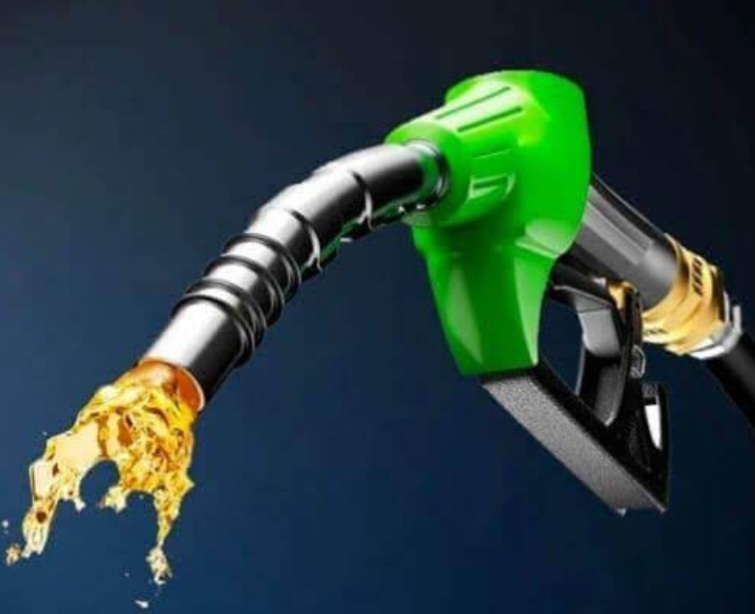
The Federal Government has announced a 30-day discount on petrol dispensed by the Nigerian National Petroleum Company Limited (NNPCL) as part of fresh measures to cushion the impact of high fuel prices on Nigerians.
The Minister of Finance and Coordinating Minister of the Economy, Taiwo Oyedele, disclosed this on Thursday at a press briefing on fuel prices and subsidy-related issues in Abuja.
Oyedele said the initiative, which will initially run for 30 days, would give priority to public transport operators nationwide, stressing that the arrangement should not be regarded as a return of petrol subsidy.
“We are offering a discount on petrol dispensed by NNPC Limited for the next 30 days in the first instance, with priority for public transporters nationwide. So, it’s not a subsidy; government is just saying we sell to you at cost,” the minister said.
The announcement comes amid sustained concerns over the impact of high petrol prices on transportation costs, food prices, household expenses and business operations across the country.
READ ALSO:
Ownership Without Capability Is Zero: Sahara Power Boss Warns As Indigenous Firms Grab Oil Assets
Nigerian Communication Icon, Prof Idowu Sobowale, Is Dead
NLC Declares Indefinite Strike In FCT Over Teachers’ Promotion Policy
‘He Killed His Uncle,’ Court Sentences Man To Life Imprisonment
Gen Z nurses: Madonna Varsity Expels Student, Suspends 14
As part of the broader intervention, the Federal Government is also negotiating a ₦1,350-per-litre ceiling on the ex-gantry or landing cost of petrol, subject to monthly reviews.
Oyedele, however, clarified that the proposed ₦1,350 ceiling would not translate into petrol being sold at ₦1,350 per litre at filling stations.
Rather, he said the arrangement was designed to shield consumers from sudden increases resulting from fluctuations in global crude oil prices and foreign exchange rates.
“Pump prices should not have to follow every swing in global crude or the exchange rate. The government is negotiating a ceiling of N1,350 a litre on the ex-gantry or landing cost of petrol to keep pump prices stable,” he said.
Under the proposed mechanism, where the actual cost of petrol rises above the agreed ceiling, refiners and importers would initially absorb the difference and recover it when market conditions become more favourable.
The minister maintained that the arrangement was neither a subsidy nor conventional price control, but a mechanism intended to moderate price volatility and provide greater predictability for consumers and businesses.
He argued that a stable price was preferable to frequent sharp increases and reductions, noting that sudden upward movements in petrol prices often translated into immediate increases in transportation and commodity prices, while subsequent reductions rarely occurred at the same pace.
Oyedele said the ceiling would be reviewed monthly, with the figures published to promote transparency and accountability.
But the announcement has drawn criticism from former Vice-President and African Democratic Congress (ADC) presidential candidate, Atiku Abubakar, who described the 30-day discount as a temporary political measure rather than a sustainable economic solution.
In a statement issued by the Director of Strategic Communication of the ADC Presidential Campaign Council, Phrank Shaibu, Atiku accused the Tinubu administration of offering temporary relief after years of hardship caused by high fuel prices.
He described the initiative as an “election-laced subsidy package” and questioned what would happen after the 30-day period expires.
“What happens on Day 31? Nigerians wake up to the same brutal prices, the same punishing transport fares and the same rising cost of food,” Atiku said.
The former vice-president also questioned the scope of the intervention, noting that the discount would be limited to NNPC stations, while the government had yet to disclose the precise amount motorists would save per litre.
He further demanded clarification on how the government would ensure that transport operators benefiting from the arrangement actually pass the savings on to commuters through reduced fares.
According to Atiku, the sudden intervention amounts to an admission that the government could have provided relief to Nigerians earlier.
He maintained that his proposal for capped and budgeted production support tied to petrol refined locally would provide a more sustainable solution while strengthening domestic refining.
“Nigerians need lasting relief, not a countdown to the return of hardship,” Atiku said.
The development comes as the Federal Government continues to grapple with the economic consequences of petrol price volatility following the removal of fuel subsidy, with transportation and living costs remaining major concerns for households and businesses.
While the government insists that the latest measures are designed to stabilise the market rather than restore subsidy, opposition voices argue that Nigerians require permanent measures capable of reducing fuel prices and easing the wider cost-of-living crisis.
CHANNELS













South-east group defends Orji Kalu over ₦14.286 billion constituency projects

Kayode Akinmade: ₦3.5bn Ogun LG severance: When leadership meets compassion

Woman found behaving strangely after allegedly being dumped by roadside in Abuja (video)

NAF plane crash, national loss – PDP Chieftain, Coffie

ICPC among Nigeria’s most transparent public institutions – Official

Nigerian Govt Unveils 30-Day Petrol Discount, Targets ₦1,350 Cost Ceiling

25-year-old remanded over alleged N15m cattle robbery in Benue

N@k£d Trump statue goes on display at European Parliament building in Strasbourg
-

 News2 days ago
South-east group defends Orji Kalu over ₦14.286 billion constituency projects
- Breaking2 days ago
Kayode Akinmade: ₦3.5bn Ogun LG severance: When leadership meets compassion
- Special Reports3 days ago
Woman found behaving strangely after allegedly being dumped by roadside in Abuja (video)
- Breaking3 days ago
NAF plane crash, national loss – PDP Chieftain, Coffie