News
Life and times of former Kogi governor Ibrahim Idris

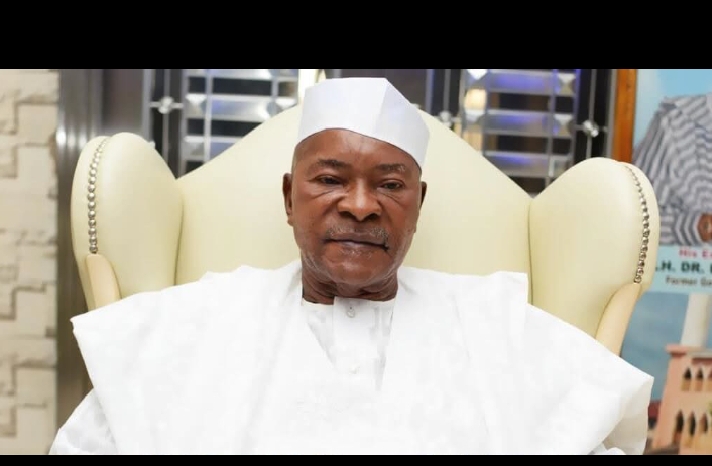

The death of former Kogi state governor, Alhaji Ibrahim Idris, has brought to a close the life of one of the most prominent political figures to emerge from the state since the return of Nigeria to democratic rule in 1999.
Idris, popularly known as “Ibro”, died in the United Kingdom at the age of 77. His death was confirmed by his nephew, Shehu Ahmed, on Sunday although the family had yet to disclose the cause of death or announce burial arrangements at the time of reporting.
His passing has prompted tributes across Kogi and beyond. Governor Ahmed Usman Ododo declared three days of mourning, ordered the national and Kogi State flags to be flown at half-mast during the period and announced that the former governor would receive a state burial. Blueprint reports
For nearly nine years, Idris occupied the centre of Kogi’s political and developmental story. His journey from business into politics, his emergence as governor in 2003, the legal battle that interrupted his second term, his return through a rerun election and the Supreme Court judgment that eventually ended his tenure all formed important chapters of his public life.
From humble beginnings to business success
Ibrahim Idris was born in 1949 in Idah, in present-day Kogi State. Available biographical accounts say he began his primary education in Onitsha, Anambra State, before moving to Kano, where he completed his primary education. He later attended King’s Commercial College in Buguma, Rivers State, and subsequently obtained a bachelor’s degree in Law from the University of Abuja.
His early years were not marked by political privilege. Before entering government, Idris established himself in business, founding Ibro Trading Company and building interests in areas including construction, furniture manufacturing, property and hospitality.
His business activities extended particularly to Sokoto, where he established a furniture factory and later developed the Ibro Hotel. Contemporary biographical accounts describe the hotel as the first three-star hotel in the old Sokoto State.
That background was significant to his later political career. Idris entered public life not primarily as a career politician but as a businessman whose activities had already earned him recognition in northern Nigeria.
The political journey to Lugard Beach
Idris eventually joined the Peoples Democratic Party and contested the 2003 Kogi State governorship election.
In that election, he defeated the incumbent governor, Prince Abubakar Audu, and was sworn in on May 29, 2003. His victory marked the beginning of what would eventually become almost nine years at the helm of the state.
His first tenure coincided with a period in which Kogi was still dealing with significant infrastructure and social development challenges. During his administration, projects associated with his government included the Greater Lokoja Water Scheme, Lokoja International Market, Confluence Stadium, housing projects and the Specialist Hospital in Lokoja. Retrospective accounts also credit his administration with interventions in education and road construction.
The Kogi state government, in its condolence statement following his death, similarly highlighted interventions during the Idris years in infrastructure, education, healthcare and other critical sectors.
The controversial 2007 election
The most defining political battle of Idris’s career came after the 2007 governorship election.
He was returned as governor, but the election was later nullified after the courts found that the electoral process had been affected by the exclusion of Abubakar Audu, the candidate of the All Nigeria Peoples Party, from the ballot.
The Court of Appeal upheld the annulment in February 2008 and ordered a fresh election. As a consequence, Clarence Olafemi, then Speaker of the Kogi State House of Assembly, became acting governor while the legal and electoral process unfolded.
A rerun was conducted on March 29, 2008, and Idris won the contest. He returned to office and continued his administration.
The election was subsequently challenged by Audu. The legal battle continued through the tribunal and Court of Appeal, but Idris retained the office after the challenges failed.
The episode had a lasting consequence for Kogi politics: because the 2007 election was annulled and the rerun was conducted in 2008, the state moved into the cycle of off-season governorship elections.
The Supreme Court and the end of his tenure
Idris’s final battle in office was not over the election result itself but the length of his tenure.
After the 2007 elections in several states were annulled and rerun elections conducted, some governors argued that their constitutional four-year tenure should begin afresh from the date they took the new oath of office.
The matter eventually reached the Supreme Court.
On January 27, 2012, the apex court ruled that the affected governors had overstayed their constitutionally permitted tenure. Ibrahim Idris was among five governors removed by the judgment. The court held that the earlier oaths could not be used to restart the tenure because the elections on which those oaths were based had been annulled.
Idris therefore left office in January 2012. His brother-in-law, Captain Idris Wada, who had won the December 2011 governorship election, subsequently succeeded him.
The judgment remains an important part of Nigeria’s constitutional and electoral history because it clarified how governors’ tenure should be calculated after an election is nullified and a fresh poll conducted.
The Ibro legacy
Assessments of Idris’s years in office have often centred on physical infrastructure and human development.
Supporters of his administration have pointed to the Greater Lokoja Water Scheme, the International Market, Confluence Stadium, the Specialist Hospital, housing projects, road construction and investments in education.
A 2018 retrospective published by The Nation credited his administration with the construction of primary school blocks, workers’ housing and the dualisation of major roads in Lokoja, while also highlighting the accreditation of academic programmes at Kogi State University, Anyigba.
The Greater Lokoja Water Scheme was particularly significant because water supply had remained a longstanding challenge in the state capital. A historical account of the project records that the Idris administration revisited the earlier proposal and, in 2008, awarded a contract for a major water supply scheme.
There were also claims about his administration’s handling of workers’ welfare. Supportive accounts said Idris inherited salary arrears and cleared them, while prioritising regular payment of workers during his tenure. These claims come principally from retrospective accounts sympathetic to his administration and should therefore be distinguished from independently audited assessments of government finances.
A life that also attracted scrutiny
Like many public figures who occupied political office in Nigeria, Idris’s tenure was not without controversy.
In 2012, former federal lawmaker Dino Melaye petitioned the Economic and Financial Crimes Commission, asking it to investigate alleged acquisition of several properties and hotels which he attributed to Idris. The petition alleged that the former governor’s assets were beyond what could be explained by his official earnings. The EFCC subsequently indicated that it intended to examine the allegations and Idris’s asset declarations.
Years later, in 2022, the Kogi State House of Assembly summoned Idris in connection with an investigation into the transfer of the state’s 10 per cent interest in Obajana Cement to Dangote Industries. The summons sought his explanation concerning the transaction.
These were allegations and investigative actions, rather than findings that should automatically be presented as established wrongdoing. They nevertheless form part of the public record surrounding Idris’s post-office years.
The plane crash that changed his family story
One of the most extraordinary episodes in Idris’s personal life occurred on October 29, 2006, when ADC Airlines Flight 53 crashed shortly after take-off from Abuja.
The flight carried 105 people, including the Sultan of Sokoto, Muhammadu Maccido. Only a small number of people survived the crash, among them three of Idris’s daughters.
In a 2018 interview with Punch, Idris recounted how he received the news while he was in Lokoja. He said his daughters had been travelling back to university in Sokoto and that he initially remained calm despite learning that the aircraft had crashed.
He and members of his family travelled to the crash site and later to the National Hospital in Abuja, where the injured survivors were treated. Idris said he donated blood for his daughters and also helped another female survivor who was not related to him receive further medical treatment in Germany.
For Idris, the survival of his daughters became one of the defining personal experiences of his life and something he repeatedly attributed to divine intervention.
Another painful family loss
Almost two decades after the aircraft tragedy, Idris experienced another devastating family loss.
His son, Mohammed Ibrahim Idris, a former member of the House of Representatives, died in Abuja in April 2024 at the age of 55.
Mohammed represented Ankpa/Olamaboro/Omala Federal Constituency in the House of Representatives between 2011 and 2015. According to reports at the time, he died shortly after observing Eid-el-Fitr prayers.
The death was another significant personal blow to the former governor, who had already spent decades in the public eye.
Life after the Government House
After leaving office, Idris remained active in the PDP and continued to maintain influence within Kogi’s political circles.
He was frequently described as an elder statesman in later years, while politicians from different camps continued to acknowledge his place in the state’s political history.
His name remained connected to Kogi’s political development, particularly because his administration occupied a lengthy period in the state’s Fourth Republic history. Premium Times described him as the state’s longest-serving governor, having governed for nearly nine years when the separate periods before and after the 2008 rerun are combined.
His influence was also reflected in the political relationships that survived his time in office. His successor, Idris Wada, was his brother-in-law, while successive Kogi administrations continued to engage with him as a former governor and elder political figure.
A complicated chapter closes
Ibrahim Idris’s political legacy is therefore made up of several strands: a businessman who entered politics, a governor who spent almost nine years in office, a political figure whose second electoral victory was subjected to prolonged litigation, and an administrator whose tenure became associated with major infrastructure projects in Kogi.
It also includes controversies and unresolved questions that formed part of the public debate about his years in power.
His death has nevertheless brought renewed attention to the era he represented.
Governor Ododo has described his passing as a loss to Kogi and Nigeria and ordered a three-day mourning period, while announcing a state burial.
For Kogi State, the death of Ibrahim Idris is more than the departure of a former governor. It marks the end of the life of a politician who was at the centre of the state’s affairs during one of the formative periods of Nigeria’s Fourth Republic.
From the business world to the Government House in Lokoja, from electoral victories to courtroom battles, from major public projects to personal triumphs and tragedies, the story of Ibro remains inseparable from the political history of modern Kogi State.
And with his death at 77, another major figure of Nigeria’s early Fourth Republic generation has passed into history.



FCT police commissioner presents ₦74.4m life assurance cheques to 143 fallen officers next of kin
Man who r@ped two 14-year-old girls at his flat after gro0ming them on Snapchat is jailed for 14 years

Iran war has cost $45.1 billion, Pentagon tells Congress

Son conspires with two others to rob his mother and siblings in Adamawa

Budget reporting lapses raise financing risks for Rivers, Osun

Sterling Bank Appoints Jaiyeola, Ikwudinma as Directors as Four Board Members Retire

Man announces cancellation of his wedding one day before ceremony

Northern Nigeria Flour Mills Ratifies Three Directors, Re-Elects Coumantaros, Gwarzo, Umolu
-

 News2 days ago
FCT police commissioner presents ₦74.4m life assurance cheques to 143 fallen officers next of kin
-

 Special Reports2 days ago
Man who r@ped two 14-year-old girls at his flat after gro0ming them on Snapchat is jailed for 14 years
- Special Reports2 days ago
Iran war has cost $45.1 billion, Pentagon tells Congress
- Special Reports2 days ago
Son conspires with two others to rob his mother and siblings in Adamawa