News
IUCN: Restoring 124m hectares of land with 2030 target

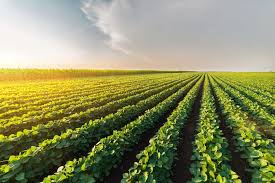

A new global database shows progress concentrated in Asia and Africa, yet only 10 per cent of 1.2 billion hectares pledge achieved as deadline looms. Blueprint.ng correspondent reports.
A landmark assessment released by the International Union for Conservation of Nature (IUCN), revealed that more than 124.3 million hectares of degraded land are currently undergoing restoration, rehabilitation or improved management across the globe.
The figure, equivalent to twice the size of France, reflects what IUCN calls “growing momentum” in global efforts to repair ecosystems damaged by deforestation, agriculture, climate change and conflict. But it also reveals a sobering reality: the world has delivered just 10.4 per cent of the 1.2 billion hectares that countries collectively pledged to restore by 2030.
The findings were published in the global Land Restoration Achievement Database: 2026 Report launched during the 17th session of the Conference of the Parties to the United Nations Convention to Combat Desertification (UNCCD COP17) in Ulaanbaatar, Mongolia.
Commitments
Countries made their restoration commitments under four major international frameworks, the UN Decade on Ecosystem Restoration 2021-2030, the Kunming-Montreal Global Biodiversity Framework, the UNCCD Land Degradation Neutrality targets, and Nationally Determined Contributions under the UN Framework Convention on Climate Change. While timelines vary, most targets converge on 2030, now just four years away.
IUCN’s analysis, based on official government data and government-endorsed sources, show that at the current pace, those commitments will not be met.
Programme Officer Muneeswaran Mariappan, lead author of the report, IUCN Senior, said: “This is the first time we have a structured, comparable global synthesis of what has actually been achieved on the ground.
“The data tells us restoration is no longer just talk. It is happening. But the scale is still far below what science and policy say we need.
Investments
IUCN Director-General, Dr Grethel Aguilar, framed restoration not only as an environmental necessity but as an economic and social imperative.
“Healthy ecosystems underpin our lives and economies. They provide the air we breathe, the water we drink, the food we eat, and the resources on which we all depend,” Aguilar said.
“Restoration isn’t just an environmental fix; it’s one of the smartest investments we can make. Revived grasslands and farmland bring degraded soil back to productivity, supporting food security and rural livelihoods.”
She stressed that restored ecosystems can also buffer communities against climate shocks, reduce disaster risk, and create jobs in rural areas.
“Restoration is already taking root across the globe, demonstrating what is possible. Now we have an opportunity to build on this momentum and scale up action, so we can meet the existing global commitments to restore over a billion hectares of degraded land by 2030 and deliver lasting benefits for people and nature,” Aguilar added.
Asia, Africa in front
The report highlighted that restoration progress is not evenly distributed. Three regions account for about 80% of the total documented area under restoration.
East Asia leads globally with 38.8 million hectares representing 31% of the total. The region’s progress is driven largely by large-scale forest restoration programmes in China and neighboring countries, supported by decades of investment and robust monitoring systems. East Asia has achieved approximately 35% of its national restoration commitments.
South Asia ranks second with 37.8 million hectares or 30 per cent of the global total. Much of the work comes from agricultural interventions aimed at improving soil fertility, water management and land productivity. South Asia has delivered 40 per cent of its pledged targets and the highest completion rate recorded anywhere in the world.
Sub-Saharan Africa comes third with 23.3 million hectares 19% of the total. Restoration in Africa is focused on drylands, rangelands and agricultural landscapes. Flagship initiatives such as the African Forest Landscape Restoration Initiative (AFR100) and the Great Green Wall are driving implementation across more than 20 countries.
However, Africa’s achievement rate tells a different story. Despite the large area under restoration, the region has reached only about 5% of its collective target of restoring 480 million hectares by 2030 the most ambitious regional pledge globally.
IUCN noted that limited access to finance, weak institutional coordination and gaps in data collection continue to constrain progress in many African countries. Several nations reported only partial implementation of their commitments.
“Other regions contributed far less, Europe, North America, Latin America and Oceania each accounted for between 6 per cent and as little as 0.1 per cent of the global restoration area, reflecting both smaller pledges and weaker reporting systems.
Pledging to deliver
UNCCD Executive Secretary, Dr Yasmin Fouad, said the report should serve as both encouragement and a wake-up call.
“This report shows both progress and the scale of the challenge ahead. Restoration is happening, but we are still far from the level of implementation required to match countries’ commitments,” Fouad said.
She argued that the next phase of global land policy must shift from pledging to delivery.
“The next phase of the land agenda must be about implementation at scale. Ultimately, restoration will be judged not by hectares pledged, but by hectares restored and by the difference that makes to people, livelihoods and resilience,” she stressed.
Fouad called for urgent action to remove barriers and strengthening national capacities, improving monitoring systems, unlocking finance, and building stronger partnerships between governments, the private sector and local communities.
Mariappan cautioned that the 124.3 million hectares figure should be treated as a conservative estimate.
“The regions reporting the largest areas under restoration are all places where national policy priorities align to promote restoration, but that isn’t the only factor that explains their dominance,” he said.
“The figures also reflect differences in the scale of restoration efforts and how consistently progress is monitored and reported.”
He explained that many community-led and local government restoration projects may not yet be captured in international datasets because of weak reporting infrastructure.
“The global results should therefore be interpreted as a lower-bound estimate of restoration progress,” Mariappan said.
“To ensure no restoration effort goes unnoticed in the future, we need stronger national monitoring systems, more cross-country alignment on how data is reported and enhanced integration between reporting frameworks.”
The report draws on IUCN’s Global Restoration Achievements Database, a new platform designed to provide transparent and standardised evidence for tracking restoration across countries and frameworks. It was funded by the UNCCD through its G20 Global Land Initiative.
Why 2030 matters
The 2030 deadline is critical because it aligns with multiple global goals, ending hunger, halting biodiversity loss, and limiting global warming to 1.5°C. Degraded land is a key driver of all three crises.
“When land loses productivity, farmers are forced to clear new forests, carbon is released into the atmosphere, and rural poverty deepens. Conversely, restoring land can sequester carbon, increase crop yields, and provide habitat for wildlife.
Experts said that meeting the 1.2 billion hectare target could generate up to $7 trillion in economic benefits and remove billions of tonnes of CO2 from the atmosphere.
But with only 124 million hectares documented so far, the world needs to restore roughly 270 million hectares per year between now and 2030 to stay on track more than double the average rate achieved in the last five years.
Way forward
The IUCN report concludes with a clear message: momentum exists, but acceleration is essential.
Governments will need to integrate restoration into national budgets, agriculture policy, and climate plans. Development banks and private investors will need to see restoration as bankable. And communities, especially women and youth in rural areas, will need to be at the center of implementation.
For countries like Nigeria, which is part of both AFR100 and the Great Green Wall, the findings underscore both opportunity and urgency. With vast areas of degraded farmland and grazing land in the Sahel and Middle Belt, scaling restoration could directly address food insecurity and farmer-herder conflicts.
Aguilar called for action, restoration is already taking root. Now we must scale it. The next four years will determine whether we meet our promises to people and to the planet.
As COP17 delegates continue negotiations in Mongolia, the 124 million hectares restored stand as proof of what is possible. The remaining 1.07 billion hectares will determine whether 2030 becomes a milestone or a missed opportunity.



Enugu Monarch Faces ₦2bn Lawsuit Over Alleged Unlawful Detention

International Energy Insurance Slumps 26.6% to Lead Weekly Losers

Police dismantle bandit camps in Kaduna

SERAP, NGE raise the alarm over N20m foreign aid bill penalty

Nafiu Gombe led ADC rejects Atiku’s use of party identity, rules out 2027 alliance

Sokoto Specialist Hospital CMD denies ‘shortage of doctors’ claim

Trans-Sahara highway: Minister gives fresh orders to save buildings, others