News
IDEAS-TVET: FG, service providers train over 450 Nigerians on furniture making, livestock farming in Suleja

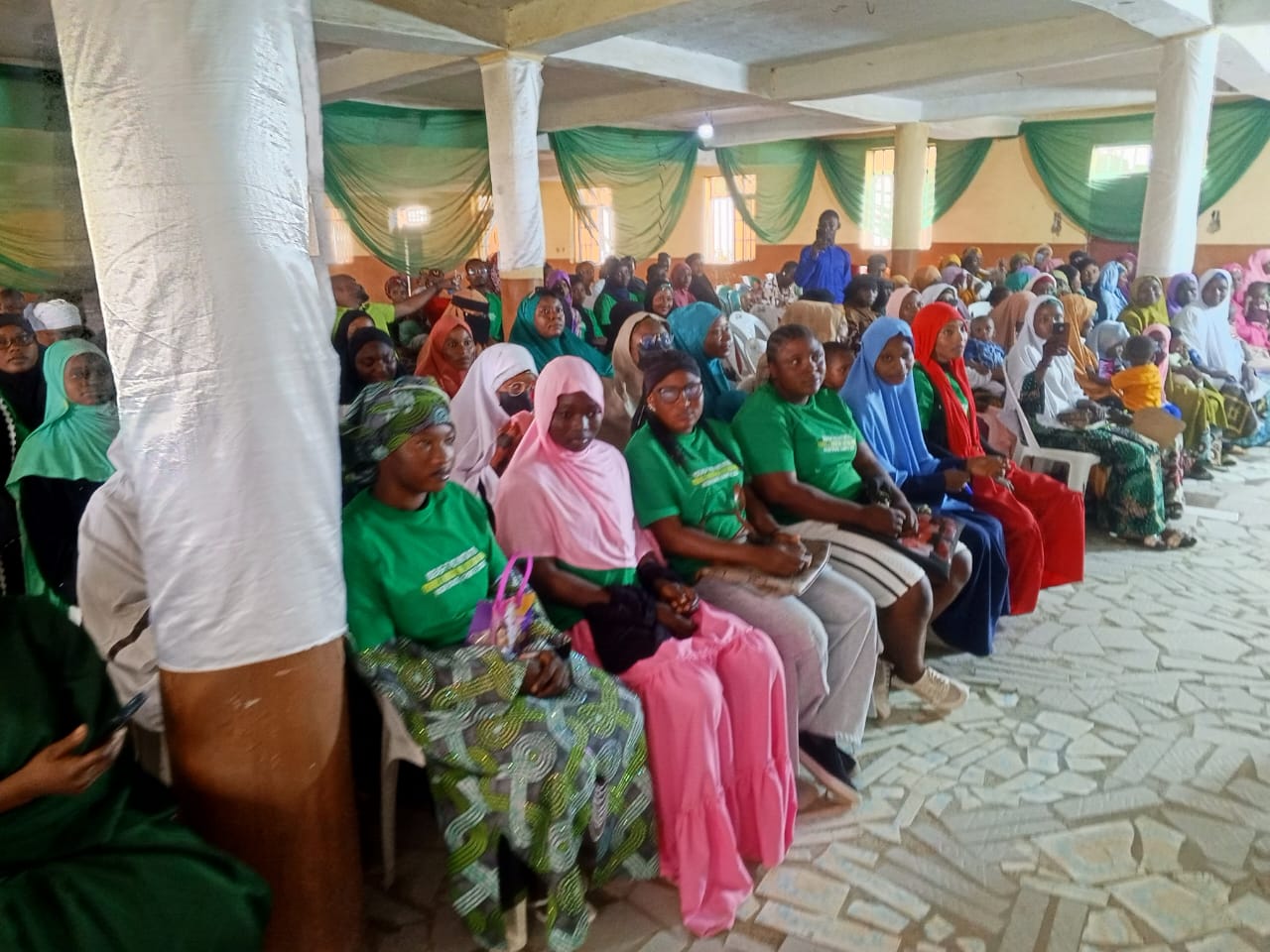
The Federal Ministry of Education, in collaboration with Denzino Global Concept Limited, Ikbishop Farms Limited and Donec Engineering Services Limited, Thursday, October 1, flagged off the training of 450 youths and women in Suleja, Niger State, on fisheries and aquaculture, livestock farming/animal husbandry, poultry farming, furniture and upholstery.
The training is part of Cohort 3 of the Innovation, Development and Effectiveness in the Acquisition of Skills (IDEAS) and Technical and Vocational Education and Training (TVET) Initiative implemented by the Ministry of Education and funded by the World Bank.
The IDEAS Project was approved by the World Bank on 18th February, 2020 and subsequently became effective in March 2021.
It was developed to promote a stronger, more relevant and market-oriented skills development system capable of equipping Nigerians with practical competencies for employment, entrepreneurship and
participation in both the formal and informal sectors of the economy.
Some beneficiaries of the Federal Government’s IDEAS-TVET skills acquisition programme have already started establishing small businesses before completing their six-month training, the training service providers disclosed.
The trainers said the development demonstrated the potential of the programme to promote entrepreneurship, self-reliance and employment among Nigerian youths, particularly women and other vulnerable groups.
Denzino Global Concepts speaks
Jennifer Morris, a staff member of Denzino Global Concepts Limited, said her organisation was training 150 beneficiaries in fisheries and livestock production, comprising 75 trainees in each category.
Morris said the programme, supported by the World Bank in collaboration with the Federal Ministry of Education, had provided participants with both theoretical knowledge and practical experience in their chosen fields.
She expressed satisfaction with the commitment and attendance of the trainees, noting that some participants had already started establishing small-scale farms while the training was ongoing.
“We have students currently who have started their farms in their mini home. Many of them have sent me pictures of their farms, right at the mini location of their homes,” she said.
According to her, the development demonstrates that the programme is already achieving its objective of promoting self-employment among young people.
Morris expressed optimism that the trainees would become successful agricultural entrepreneurs and employers of labour, adding that some participants had expressed ambitions to establish large fishery and livestock businesses in Niger State.
She, however, advised the trainees to prepare for the challenges associated with entrepreneurship, stressing that success in business requires patience, resilience and determination.
“If anybody tells you that now that you have learned how to put up a fish pond or set up a livestock farm, you are going to be successful, that is not true. You are going to face a lot of challenges,” she cautioned.
She urged the participants to remain committed to their dreams, assuring them that Denzino Global Concepts Limited would continue to provide guidance and encouragement beyond the formal training period.
Morris also commended the Federal Government, the Federal Ministry of Education and the World Bank for supporting the initiative, urging them to sustain the programme to expand its impact across the country.
She disclosed that a total of 450 trainees were being trained by the participating training service providers represented at the event, describing the initiative as a significant contribution to reducing unemployment and social vices.
“To have that number of people equipped with the knowledge that can help them survive at their own level is a blessing to society. That’s less unemployment, more entrepreneurs and less social vices,” she said.
On the post-training support, Morris disclosed that beneficiaries who successfully complete the programme and meet its requirements would receive starter packs to enable them to establish their businesses.
She added that the organisation was working towards ensuring that the trainees successfully graduate and receive the packages in accordance with the programme’s guidelines.
Ikbishop Farms representative
Also speaking, Ibrahim Yusuf, Monitoring and Evaluation Officer of Ikbishop Farms Limited, said his organisation had 100 trainees, comprising 83 females and 17 males, undergoing skills acquisition training.
He described the programme as an opportunity to equip beneficiaries with practical knowledge rather than certificates alone.
“What we are giving them here is ‘sabificate’. Let them know how to do something. Through training physically,” he said.
Yusuf explained that the organisation initially encountered language barriers while training women recruited from rural communities, many of whom could not communicate effectively in English.
He said the challenge was addressed by engaging people who could interpret and translate lessons into languages understood by the trainees.
He added that the government was providing each beneficiary with a monthly stipend of N30,000 to support them during the training.
Yusuf urged the participants, particularly married women, to apply the skills acquired to become financially independent rather than relying entirely on their spouses.
“My advice to the trainees at the end of this six-month training is that they should put whatever knowledge they acquired during this six months into practice. It shouldn’t just be about the money,” he said.
Donec Engineering Services trains furniture makers
Similarly, Sheikh Muhammad, Programme Coordinator of Donec Engineering Services Limited, said his organisation was training about 200 beneficiaries in different vocational skills, including furniture making and upholstery.
Muhammad said the programme, which was already in its fourth month, had only two months remaining, expressing optimism that beneficiaries would become self-employed and economically independent after completing the training.
He said the initiative was designed to address unemployment by providing young Nigerians and other interested individuals with practical skills that could enable them to establish businesses rather than depend on government employment.
“The labour market is saturated. There are a lot of unemployed youths, including those with good degrees. So this is an opportunity for everyone, especially those from 15 years and above to 45 years, to come and acquire skills and become self-employed and self-reliant,” he said.
According to him, the training would enable participants to start their own businesses without waiting for employment opportunities from the federal, state or local governments.
Muhammad, however, identified participants’ interest in the monthly stipends rather than the actual skills acquisition as one of the challenges confronting the programme.
“The little challenge is that a lot of people are just after the stipends, but we mostly advise them to be steadfast. They shouldn’t look at the N30,000 or what have you. Instead, they should be interested in learning the programme for future purposes,” he said.
He noted that attendance had been over 85 per cent, although most beneficiaries were present and demonstrated willingness to learn.
The coordinator also highlighted the participation of women in furniture making and upholstery, traditionally regarded as male-dominated occupations, saying some female trainees had demonstrated their ability to excel in the trades.
“Furniture making is a male-dominated programme, but what a man can do, some few women can do it better. Some of the women have also proved their case here,” he said.
He added that students who were combining the training with their academic activities had been given flexible schedules to enable them to participate in the practical sessions.
Muhammad expressed hope that the beneficiaries would continue practising their respective skills after the six-month programme, disclosing that they would be provided with equipment to sustain their training and entrepreneurial activities.
He described the programme as a standardised government intervention aimed at equipping Nigerians with relevant vocational skills, urging citizens to embrace skills acquisition instead of depending on financial handouts.
Explaining the selection process, Muhammad said the organisation embarked on extensive community mobilisation across Suleja and neighbouring communities to identify interested beneficiaries.
He said application forms were distributed at religious centres, including mosques and churches, as well as football grounds, social gatherings and other public places.
“We went to religious places like mosques and churches. We even went to gatherings, football pitches, everywhere. I was able to cover Suleja and its environment. Some people collected the forms, while others rejected them, but at the end of the day, I was able to gather the 200 people,” he said.
The three representatives commended the Federal Government and the World Bank for supporting the IDEAS-TVET initiative, expressing hope that the programme would be sustained to expand opportunities for youths and women across the country.
Beneficiaries speak
In separate interviews with our reporter, the trainees, including Ukpai Marvelous (Livestock), Shahida Abdullahi (Fisheries/Aquaculture) and Ademola Adedotun (Furniture/ Upholstery), commended the Federal Government for the opportunity to be trained on skills, saying the training will make them to be gainfully employed in the future and to be employers of labour.
Attendance
In attendance at the event were Mr. Aleshe Ademuyiwa, Monitoring and Evaluation Representative of IDEAS, Alhaji Lawwal (Yariman Zuba), Malam Salisu Yakubu, Education Secretary, Suleja Local Government, Engr. Suleiman Ahmad, Assistant Director, Geological Survey, Abuja, Dr. Yusuf Barde, Coordinator National Teachers’ Institute (NTI), Kubwa, Hajiya Hauwa Badaru, Deputy Director, Monitoring and Evaluation of Private Schools, Suleja Local Government.
Also, Hon. Gambo Hussain (Supervisory Councilor on Agriculture, Suleja Local Government, represented the Executive Chairman of Suleja Local Government Area, Hon. Isyaku Bawa Na’ibi, Malam Shuaibu D Alhassan represented Director Agriculture Suleja Local Government, while Mr. Haruna Salaudeen represented the member representing Gurara/Suleja/Tapa constituency in the House of Representatives, Hon Tanko Adamu Lakoja.



“She wants me to stop talking against husband snatchers” — Rita Edochie speaks as she appears in court over the ₦1bn lawsuit filed against her by Judy Austin

“I started listening to Fela Kuti when I first got Spider-Man role” — Andrew Garfield reveals how Nigerian music legend inspired his role

ARISE News anchor Somtochukwu Maduagwu was pushed to d3ath by robber, police officer tells Abuja court

Adamawa governorship candidates sign peace accord ahead of 2027

‘I enjoyed myself’ – Tinubu speaks after vacation in Europe

Lagos: LASEMA clears 7up gridlock, battles Mushin fire

Nigeria: Energy consortium targets 100 CNG stations in 24 months

2027: Learning Yoruba not enough – Lagos APC tackles Rhodes-Vivour
-

 Special Reports3 days ago
“She wants me to stop talking against husband snatchers” — Rita Edochie speaks as she appears in court over the ₦1bn lawsuit filed against her by Judy Austin
- Special Reports3 days ago
“I started listening to Fela Kuti when I first got Spider-Man role” — Andrew Garfield reveals how Nigerian music legend inspired his role
- Special Reports3 days ago
ARISE News anchor Somtochukwu Maduagwu was pushed to d3ath by robber, police officer tells Abuja court
- Politics3 days ago
Adamawa governorship candidates sign peace accord ahead of 2027