News
Finance ministry signs MoU with CBN on fiscal-monetary policy coordination

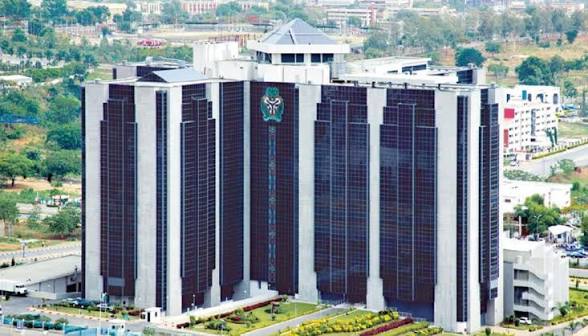

The Federal Ministry of Finance and the Central Bank of Nigeria (CBN) Friday in Abuja signed a Memorandum of Understanding (MoU), formalising coordination between fiscal and monetary policy.
The Minister of Finance and Coordinating Minister of the Economy, Mr. Taiwo Oyedele, said the agreement has institutionalised collaboration that had previously relied on the working relationship between the minister of finance and the CBN governor, replacing it with structured, design-based coordination anchored in existing institutions and statutory provisions.
The MoU leverages coordination mechanisms Nigeria already has in place – including the Economic Management Team and the National Economic Council – and builds on statutory linkages between the two institutions under the CBN Act, which provides for the Bank’s operational autonomy, alongside governance representation from the ministry of finance and the office of the accountant-general of the federation.
“Today is important not simply because we are signing a Memorandum of Understanding, but because of what it represents,” said Mr. Taiwo Oyedele, Minister of Finance and Coordinating Minister of the Economy.
He said: “Our mandates are distinct, but our outcomes are interconnected. Strong economies are not built around strong personalities. They are built around strong institutions.”
In his remarks, the Governor of the CBN, Olayemi Cardoso, said, “Economic stability is strengthened, investor confidence is enhanced, policy outcomes improve and the foundation for sustainable growth becomes more secure. The signing strengthens an enduring partnership and reinforces our shared commitment to work together in the national interest. Through this partnership, we can help build a more stable and resilient economy that creates greater opportunity for all Nigerians.”
Key elements of the agreement include aligning macroeconomic assumptions and more consistent forecasts for inflation, GDP growth, revenue, liquidity, financing requirements and the external sector.
Stronger, more structured information-sharing between the two institutions, with clearer mechanisms for resolving areas where fiscal and monetary actions could otherwise work at cross-purposes, he added.



₦1,470 Petrol: ADC Says Tinubu Pushing Nigerians To Breaking Point

2027: InterSociety threatens int’l sanctions against Soludo, Alia, four other govs

Anambra Govt Challenges Peter Obi’s ₦2.13 Billion Ecological Fund Claim

Police arrest four over alleged sexual assault, shop-breaking

Nigerian politicians and celebrities mourn veteran actor Olu Jacobs

NAF receives 5 helicopters to boost fight against insecurity
âHe kept throwing pÂ¥nches at meâ â Babcock University lecturer Seun Ebiesuwaâs wife accuses him of ass@ult

Businesses seek joint tax audits as federal, state authorities face coordination gaps
-

 News3 days ago
₦1,470 Petrol: ADC Says Tinubu Pushing Nigerians To Breaking Point
- Politics3 days ago
2027: InterSociety threatens int’l sanctions against Soludo, Alia, four other govs
- Breaking3 days ago
Anambra Govt Challenges Peter Obi’s ₦2.13 Billion Ecological Fund Claim
- Politics3 days ago
Police arrest four over alleged sexual assault, shop-breaking