News
Dan Orbih: As the voice of Edo politics falls silent…

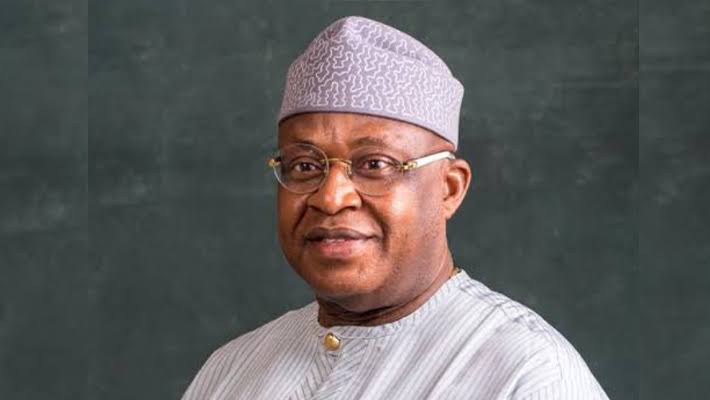

Blueprint.ng correspondent from Benin City examines the life and times of the National Vice Chairman of the Peoples Democratic Party (PDP) South-South, Chief Dan Orbih, who died at the age of 64 on Monday, 30th August 2026
How late Orbih will be remembered
For a man who spent decades in the noisy and unforgiving theatre of Nigerian politics, Chief Dan Osi Orbih may ultimately be remembered not for the political battles he fought, but for the people he left behind.
On Monday, August 31, 2026, the arguments stopped. The meetings ended. The phone calls that once connected him to friends, associates and political loyalists suddenly became calls of condolence.
Chief Dan Orbih, whose voice had for decades been part of the political conversation in Edo state and the South-South, was gone. He was 64.
For his wife, Mrs Florence Orbih; his children, Ms Winifred Anwosiobor Orbih and Dr Mildred Omonemi Orbih; his brothers and sisters; and members of his extended family, the news was not about the death of a political heavyweight. It was the loss of a husband, a father, a brother, an uncle and a friend. And that is where the real weight of his passing lies.
Politics will find another chairman. Parties will elect another leader. Institutions will appoint another administrator. But a family cannot appoint another husband or father.
That is the human story behind the death of Chief Orbih.
Born on October 27, 1961, in Ogbona, Etsako Central Local Government Area of Edo state, Orbih grew into a man whose life became deeply intertwined with the political history of his state.
Orbih as a builder of relationships
Yet beyond the titles, political calculations and alliances was a man who built relationships and maintained friendships across decades.
One of those relationships was with Nyesom Wike, Minister of the Federal Capital Territory and former governor of Rivers state.
Wike’s reaction to Orbih’s death revealed a side of the deceased that political biographies often fail to capture. He did not merely mourn a politician. He mourned a friend.
Describing Orbih as a true friend and committed political associate, Wike said his death represented the fall of one of the biggest trees in Edo political forest.
Behind that metaphor was the grief of a man who had lost someone he trusted. That dimension of Orbih’s life matters.
Politics is often portrayed as a world of calculations, betrayals and temporary alliances. But Orbih’s relationships suggested that even in that difficult terrain, he was capable of building bonds that survived political seasons.
His political journey began long before the battles that defined the later years of his career.
He rose through the ranks of the Peoples Democratic Party (PDP), eventually becoming chairman of the party in Edo state and later National Vice Chairman, South-South.
For years, he was one of the men who understood the PDP’s political machinery from the grassroots.
He knew the structures. He knew the people. He knew the excitement of victory and the bitterness of defeat. He also knew that politics was rarely a straight road.
His years in Edo politics were marked by some of the most intense contests within the PDP.
During the administration of former Governor Godwin Obaseki, Orbih emerged as one of the leading figures of the PDP’s Legacy Group and became deeply involved in the prolonged crisis that divided the party.
It was not always a comfortable place to stand. But Orbih was not known for choosing the easiest political path. He held strongly to his positions.
That quality helped make him influential, but it also made him a formidable participant in political disagreements.
He was respected by some, opposed by others and watched closely by many. But even those who disagreed with him understood that he mattered.
The Edo PDP acknowledged that influence in its condolence message, describing Orbih not merely as a former state chairman or its serving National Vice Chairman, South-South, but as a leader whose contributions over decades extended into the wider political and democratic development of Edo state and Nigeria.
His political life, therefore, was not measured only by the offices he occupied.
It was also measured by the people he mentored, the relationships he cultivated and the structures he helped build.
His political fortunes changed again in 2024 when Orbih and his allies supported the emergence of Senator Monday Okpebholo in the Edo governorship election.
Following Okpebholo’s emergence as governor, Orbih was appointed Pro-Chancellor and Chairman of the Governing Council of Ambrose Alli University, Ekpoma.
It was another chapter in a life that had already passed through several political seasons.
For Orbih, the appointment offered an opportunity to move beyond the familiar battlefield of party politics and contribute to the development of an institution. And it was a responsibility he embraced with seriousness.
In mourning him, Governor Okpebholo described Orbih as a “bridge-builder and a voice of reason”.
At Ambrose Alli University, the governor said Orbih demonstrated an unwavering commitment to the institution’s developmental agenda and played an important role in strengthening the relationship between the state government and the university.
The university also credited him with bringing courage, wisdom, experience and a strong commitment to restoring its lost glory.
He wanted the institution repositioned. He wanted academic excellence strengthened. He wanted stability and good governance. But death came before the work could run its full course.
Perhaps that is one of the cruelest things about death: it does not wait for a man to finish his plans.
There were still conversations to be had; meetings to attend; plans to pursue.
People who expected to hear his voice on the other end of a telephone. Then, suddenly, there was silence.
Ambrose Alli University now mourns not simply the chairman of its Governing Council, but a man whose tenure had begun to leave an imprint on the institution.
Governor Okpebholo’s words also reflected the sense of unfinished work, describing Orbih’s death as a significant loss to his family, Edo state and the university community.
But even as political and institutional leaders mourned him, the deepest grief was unfolding far away from government offices, party secretariats and university boardrooms. It was unfolding at home.
For those who knew Orbih as husband and father, his greatest legacy may have had little to do with party congresses, political appointments or public arguments. It may live instead in ordinary moments. The conversations at home. The familiar voice. The private jokes. The counsel given to a child. The presence of a husband at the end of a long day. T
he assurance that someone who had always been there would still be there tomorrow. Those are the memories political statements cannot capture.
Ex-gov Obaseki mourns
Even Obaseki, whose administration was caught up in the political disagreements that placed Orbih and his allies on opposing sides, mourned his death.
The former governor described him as a prominent Edo son and renowned politician whose long engagement in public affairs earned him a place in the political history of the State.
In another circumstance, their political differences might have occupied the headlines. In death, they no longer matter. What matters is that an Edo son is gone.
APC mourns
The APC in Edo also mourned Orbih, describing him as a distinguished elder statesman whose contributions transcended partisan boundaries.
It acknowledged his years of service, leadership and the relationships he built across political and social divides.
Beyond party lines
That recognition from across the political divide says something important about the man.
Orbih may have been a partisan politician, but his life was bigger than his party. His influence stretched beyond the PDP. His relationships crossed political lines. His public service touched institutions beyond party structures.
And his death has brought together people who might ordinarily stand on opposite sides of the political divide.
Perhaps that is one of the quiet lessons of Orbih’s passing. Political battles can consume years.
Men argue over power, positions, candidates and control. They carry old grievances from one political season into another.
But eventually, every political career comes to the same destination.
The final journey does not recognise party membership.
It does not distinguish between PDP and APC.
It does not ask who won the election or who lost.
At 64, Orbih leaves behind a political record that will continue to attract interpretation, praise and criticism.
History will take care of that.
The family will remember something different.
A political biography can record that Dan Orbih was born in Ogbona. It can list the offices he held, his political associates, the battles he fought and his appointment at Ambrose Alli University.
It can reproduce the tributes of governors, party leaders and political associates. But it cannot adequately record what made him irreplaceable to those closest to him.
Only they know the little things.
The routines. The laughter. The disagreements that ended in reconciliation. The advice.
The phone calls. The moments when his presence alone was enough. Those are the memories that will now sustain the Orbih family.
And perhaps, in the months and years ahead, those private memories will become more important than the political headlines.
Dan Orbih spent his life in the arena. He knew power. He knew politics. He knew friendships and rivalries. He knew triumph and disappointment. He knew what it meant to stand his ground when political winds shifted.
But when the final chapter came, he left the arena as every human being eventually must — leaving behind the people who loved him and the memories of a life that cannot be repeated.
The political forest of Edo has lost one of its most recognisable trees.
But before he was a political tree, he was a human being. A husband. A father. A brother. An uncle. A friend. A mentor to some. A political opponent to others. A bridge-builder and, in the words of Governor Okpebholo, a voice of reason.
To those who knew him beyond the microphone, the party secretariat, the political meeting and the public office, that is the Dan Orbih they will mourn most. The rest will become history. The man will remain in memory.
May his soul rest in perfect peace.



Enugu Monarch Faces ₦2bn Lawsuit Over Alleged Unlawful Detention

International Energy Insurance Slumps 26.6% to Lead Weekly Losers

2027: Why opposition parties should unite behind single presidential candidate – Lukman

2027: Makinde appoints Ehilebo as special adviser on media

How investors can legally reduce tax they pay on investments

INEC Denies 2027 Ad-Hoc Staff Recruitment, Warns Against Fake Website

BREAKING: Abducted NYSC member regains freedom after days in captivity

Nigerians Divided as Pastor Kingsley Okonkwo Launches ₦700,000 VIP Marriage Platform
-

 Breaking3 days ago
Enugu Monarch Faces ₦2bn Lawsuit Over Alleged Unlawful Detention
- Finance2 days ago
International Energy Insurance Slumps 26.6% to Lead Weekly Losers
- Politics2 days ago
2027: Why opposition parties should unite behind single presidential candidate – Lukman
- News3 days ago
2027: Makinde appoints Ehilebo as special adviser on media