News
Beyond the blackouts: Inside FG’s four-pronged plan to re-wire energy sector

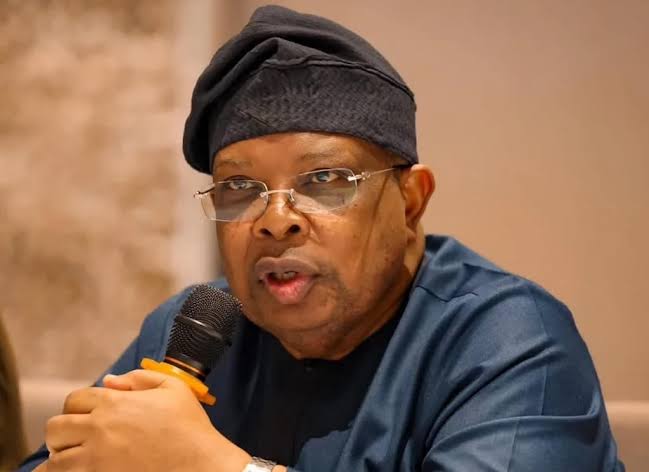
With its four-pronged strategy to the nation’s energy challenges, the federal authorities has acknowledged that its new roadmap will ship 24-hour electrical energy the place industries are concentrated. However, consultants ponder whether or not it’s a breakthrough or a better-organised type of rationing; BENJAMIN UMUTEME writes.
Nigeria has 13,625 megawatts of put in grid capability. For most of 2026, it has delivered roughly 4, 000MW of it. On November 17, the Nigerian Independent System Operator (NISO) logged a peak of three,981.70MW at 21:45pm, with 92,511.62MWh generated and 90,945.08MWh despatched out. The grid collapsed twice in January alone.
Against that backdrop, the federal authorities has urged Nigerians to imagine in a unique form of repair. Rather than repairing the entire nationwide grid directly, the Ministry of Power’s new roadmap concentrates efforts on the locations the place the economic system really lives; therefore, industrial and industrial vitality corridors have promised round the clock provides.
The plan was laid out on the sixth Annual Conference of the Power Correspondents Association of Nigeria (PCAN) in Abuja, themed, “$1 Trillion Economy: Nigeria’s Roadmap to Reliable and Affordable Power Supply.”
The query it raises is as previous because the sector itself: is Nigeria lastly fixing its energy downside or just deciding extra effectively who will get the sunshine?
The four-prong technique
The roadmap rests on 4 pillars: grid stabilisation, sector liquidity and sustainability, asset optimisation and enlargement, and enhancement of the grid. Each is supposed to unblock the following.
Grid stabilisation is the shortest-term lever, and the one the general public will decide first. The Ministry has named the Lagos–Ogun axis and the Abuja franchise space, which collectively account for greater than half of nationwide calls for, as pilots for “24-hour energy zones,” with rollout focused at high-energy viable sub-sectors.
Next in line are the Benin–Enugu–Port Harcourt and Abuja–Kaduna–Kano corridors. The minister, Chief Joseph Tegbe, represented by the Special Adviser on Administration and Projects, Martins Olajide, additionally held a closed-door assembly with chosen distribution firms (DisCos) to work out the industrial framework, and the ministry plans to exchange the National Grid Control Centre, greater than 60 years previous, with a brand new facility in Osogbo.
The authorities has additionally permitted a N3.3 trillion plan to settle verified legacy money owed owed to technology firms (GenCos) and fuel suppliers, with N1.23 trillion raised up to now.
Officials have mentioned the primary tranche has eased strain on GenCos and improved their potential to pay for fuel and preserve crops. Alongside it, the Presidential Metering Initiative has metered greater than 2.8 million prospects, a direct assault on the industrial losses that starve the worth chain of money.
According to the federal government, greater than N10 trillion has been invested within the sector since privatisation. Yet the identical failures recur: fuel that doesn’t attain generators, tariffs that don’t cowl prices, DisCos that don’t acquire, and a single nationwide grid that collapses when one hyperlink breaks.
The Electricity Act 2023 modified the structure. It opened the door for states to control their very own electrical energy markets, and it led to the carving of NISO out of TCN, in order that the management room and the metal at the moment are separate establishments.
Energy economist Wumi Iledare, a Professor Emeritus at Louisiana State University, USA, argues the prognosis itself has been mistaken.
“Nigeria’s electricity problems have been repeatedly misdiagnosed, with excessive focus on engineering solutions instead of the economic realities shaping power systems. Cost recovery, market design, fuel security, transmission constraints, and governance failures require coordinated reforms,” he mentioned.
The Chief Executive Officer of the Association of Power Generation Companies (APGC), Dr. Joy Ogaji, made the identical level from the operators’ aspect, saying, “The vitality generated by GenCos is metered and documented.
“These form the basis of invoices rendered under bilateral agreements. Revising figures outside established reconciliation frameworks erodes market confidence – the government must ensure that the debt profile stops growing again.”
Tegbe’s prognosis
The energy minister declared that “scattering scarce capital thinly across a fragile nationwide network” was a recipe for stagnation.
Addressing stakeholders on the Power Correspondents Association of Nigeria (PCAN) discussion board in Abuja not too long ago, he mentioned the nation’s “industrial survival demands targeted, disciplined execution.”
“Every serious conversation about Nigeria’s industrial future eventually arrives at the question of power,” Tegbe mentioned, explaining why the Ministry adopted a corridor-based triage mannequin moderately than chasing symbolic megawatt targets.
He mentioned, “By concentrating preliminary 24-hour vitality zones within the Lagos–Ogun axis and Abuja hubs representing over half of nationwide electrical energy demand and the majority of business collections, the federal government seeks to show industrial viability first and generate revenues to assist wider enlargement.
“We need disciplined reform implementation rather than isolated interventions or short-term solutions.”
According to the minister, the newly commissioned technical audit will dictate sequencing in order that capital can circulate to strains and substations with the very best industrial payoff.
On sector money owed, he mentioned, “President Bola Ahmed Tinubu approved a N3.3 trillion plan to clear verified legacy debts owed to generating companies, and we have raised N1.23 trillion under that plan.”
Tegbe additionally confirmed a coordinated anti-vandalism marketing campaign backed by stricter authorized penalties, urging journalists to carry establishments accountable by “giving citizens the facts they need to form their own judgements.”
What it means for Nigeria’s industrialisation
There’s nowhere the stakes are increased than on the nation’s manufacturing facility flooring. For over a decade, erratic grid energy has acted as an implicit tax on manufacturing, eroding competitiveness and driving corporations in another country.
Speaking in Lekki, Lagos, Dangote introduced that his group is lifting its African funding programme from $50 billion to about $70 billion, increasing inner captive energy from practically 1,500MW to between 4,500MW and 5,000MW alongside a separate 10,000MW energy technology initiative throughout Africa, doubtlessly together with Nigeria.
“Across the group, we currently have almost 1,500 megawatts. By the time we complete Vision 2030, that could rise to between 4,500 and 5,000 megawatts. That is captive power—electricity for our own operations. Separately, part of the vision is to intervene in power generation with 10,000 megawatts across Africa, potentially including Nigeria,” Dangote mentioned.
He warned that non-public self-generation can’t change a working public grid for smaller companies: “Installing solar power for yourself does not mean the wider problem has been solved. Other people may not have that option. A vibrant economy is driven by small and medium-sized enterprises. Large companies such as ours help sustain those businesses, but SMEs are essential to economic activity. When you generate electricity using diesel or petrol, it becomes very difficult to make money.”
When industrial giants self-generate off-grid, they relieve large baseload strain on fragile transmission strains, liberating grid capability for SMEs inside industrial corridors offered regulators implement clear open-access wheeling guidelines.
Experts’ take
From manufacturing, the tone is pressing pragmatism. “Manufacturers are paying heavily for energy – both through steep Band A tariffs and trillions of naira spent on diesel and gas self-generation, yet grid reliability remains erratic,” mentioned Dr. Ifeanyi Okoye, the president of MAN.
“Combining distributed generation, solar, and dedicated industrial power solutions is no longer optional; it is how manufacturers survive and maintain production competitiveness.”
Within the ability journalism and business group, seasonal gasoline dangers stay entrance and centre.
PCAN chairman Obas Esiedesa warned that dry-season hydropower dips between November and March routinely expose fuel shortages.
“Reduced water inflows into hydroelectric power stations often affect generation, while gas supply constraints to thermal power plants further compound the problem,” Esiedesa mentioned, noting that “no economy can sustainably attain significant growth without adequate and dependable power supply.”
Consumer advocates, together with the Electricity Consumer Protection Advocacy Centre (ECPAC) and allied client teams, demand verifiable service supply earlier than tariff changes.
“Which subsidy are they eradicating? What is the quality-of-service supply within the first place?
“What is the investment of the DisCos? With all the claims being made in the sector, can we conduct an audit of the investments of the DisCos, consumer investments and the collections from electricity consumers,” Princewill Okorie, the Executive Director of ECPAC requested.
In a chat with Blueprint Weekend, an economist, Adefolarin Olamilekan, recommended the minister’s hall reset whereas stressing that transmission upgrades will falter except fuel economics and value-chain self-discipline are mounted concurrently.
He mentioned, “While the present Minister of Power could also be recommended for his strategy in tackling energy sector challenges, his technique should recognise that Nigeria’s electrical energy disaster shouldn’t be merely a technical downside of infrastructure.
“The issues are intertwined with political coordination, market viability, energy security, investment confidence, and institutional accountability. Nigeria’s electricity reset cannot succeed by focusing predominantly on transmission infrastructure while neglecting the fuel and financial foundations of power generation, specifically gas, which is the lifeline of our thermal plants.”
Last be aware
Nigeria’s energy sector has by no means lacked a grasp plan. It has lacked follow-through.
The hall roadmap by the ability minister is probably the most disciplined articulation of priorities in years, and its deal with money, fuel and the industrial worth chain accurately identifies the place previous efforts broke down. It can be judged not by the speeches in Abuja or Lagos, however by whether or not a manufacturing facility in Ota, a market in Kano and a family in Port Harcourt can plan their day across the mild.
Experts have opined that till grid knowledge reveals 5, 000MW as the ground moderately than the ceiling, mills will proceed to maintain their place in compounds.



INEC targets 336 polling items for pre-2027 election simulation in Taraba

FirstBank Expands Digital Banking Services With Enhanced LIT App, Launches Nationwide Campaign

Second wives and people who marry divorcees won’t make heaven – Nigerian born once more Christian says

Nigeria-China commerce jumps 35% to $18bn as Lagos pushes joint ventures

US names extra Nigerians in ‘Worst of the Worst’ listing

2027 polls ‘ll be most challenging in Nigeria’s historical past – Varcity don Albert

Three arrested over alleged theft, and kidnapping in Kano

Happily-married man discovers he is really been lacking for 33 years after seeing poster of himself
-

 Politics3 days ago
INEC targets 336 polling items for pre-2027 election simulation in Taraba
- Finance3 days ago
FirstBank Expands Digital Banking Services With Enhanced LIT App, Launches Nationwide Campaign
- Special Reports3 days ago
Second wives and people who marry divorcees won’t make heaven – Nigerian born once more Christian says
- Business3 days ago
Nigeria-China commerce jumps 35% to $18bn as Lagos pushes joint ventures