News
2027 elections: Ballason, Sowore, Okoye increase issues over electoral credibility, judicial interference

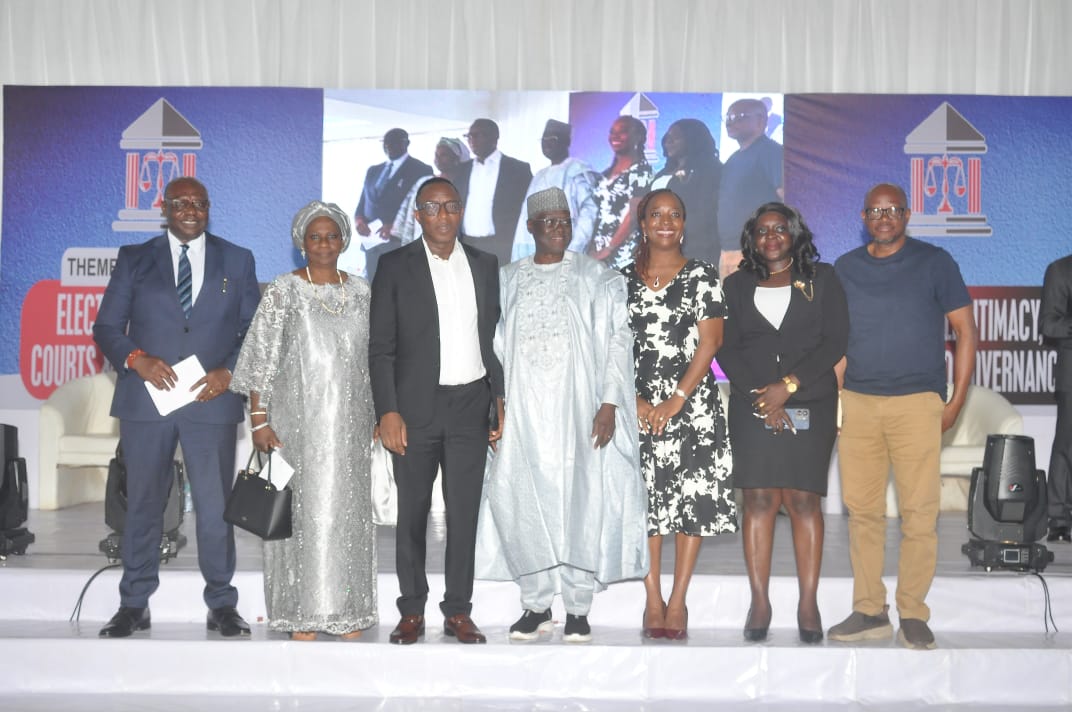
Founder and Chief Executive Officer of the House of Justice Group, Gloria Mabeiam Michael Ballason; former National Commissioner of the Independent National Electoral Commission (INEC), Festus Okoye; presidential candidate of the African Action Congress (AAC) and human rights activist, Omoyele Sowore, have expressed issues over the credibility of the electoral course of forward of 2027 normal elections, warning that political violence, weak democratic establishments, judicial controversies and restrictions on political participation might undermine the legitimacy of the polls.
The trio spoke on the eleventh House of Justice Summit and Sparkle Silver Banquet, Kaduna the place stakeholders examined the connection between electoral legitimacy, the judiciary and good governance in opposition to the backdrop of preparations for the 2027 elections, blueprint experiences.
The summit, chaired by former Chief of Defence Staff, General Martin Luther Agwai, had as its theme, Electoral Legitimacy, Courts and Good Governance, with Professor Obiora Chinedu Okafor of Johns Hopkins University, Washington DC, because the keynote speaker.
In her opening handle, Ballason warned that Nigeria was approaching one other electoral cycle amid rising questions on whether or not the nation would conduct elections able to reflecting the real needs of its residents.
She stated the rising variety of electoral disputes and the affect of judicial selections on political outcomes had raised issues concerning the extent to which the sovereignty of the individuals was being revered.
Ballason warns in opposition to transition from democracy to ‘judocracy’

Ballason, a authorized practitioner, stated many Nigerians had been more and more apprehensive that the nation was step by step shifting away from democracy in the direction of what she described as a “judocracy”, the place the courts appeared to train the sovereignty constitutionally vested within the individuals.
She defined that the House of Justice organised its annual summit to supply a platform for troublesome nationwide inquiries to be examined and for residents to demand accountability from establishments entrusted with defending democracy.
According to her, the 2027 elections current a possibility to deal with longstanding issues concerning the relationship between electoral mandates and judicial pronouncements.
She drew consideration to the variety of election petitions recorded throughout Nigeria’s electoral cycles since 1999, disclosing that the nation recorded 62 petitions in 2003, 748 in 2007, 483 in 2011, 533 in 2015, 543 in 2019 and 943 in 2023.
Ballason stated the rising figures ought to provoke severe reflection on the credibility and acceptability of elections, including that the nation should look at why electoral disputes proceed to generate such in depth litigation.
“If the number of election petitions are a measure of acceptability or the absence of credibility, then we must count so that we can account for the outcomes,” she stated.
Plateau election dispute raises questions on judicial interventions
The House of Justice founder cited the political developments in Plateau State following the 2023 normal elections for example of how judicial selections might considerably have an effect on electoral mandates.
She recalled that the Court of Appeal nullified a number of election victories involving PDP candidates within the state over alleged irregularities within the social gathering’s congresses and nomination processes.
However, the Supreme Court subsequently overturned the choice within the case involving Governor Caleb Mutfwang, whose mandate was preserved.
According to Ballason, the totally different outcomes on the appellate and Supreme Court ranges, regardless of arising from the identical underlying authorized dispute, illustrate the implications of judicial interventions on the political selections of residents.
She argued that the constitutional provision vesting sovereignty within the individuals should stay central to the dedication of electoral issues.
Referencing Section 14(2)(a) of the 1999 Constitution, which offers that sovereignty belongs to the individuals of Nigeria, Ballason maintained that the citizens have to be allowed to decide on those that govern them.
She insisted that the individuals’s constitutional proper to find out their leaders shouldn’t be undermined by different authorized provisions or interpretations inconsistent with the Constitution.
Ballason identifies troubling developments forward of 2027
The lawyer listed a number of developments she stated had been already elevating issues concerning the forthcoming elections.
These embrace the failure of social gathering primaries to carry in some constituencies, reported killings, alleged restrictions on opposition events’ use of public areas, claims of synthetic intelligence-generated names on voters’ registers, hate speeches and different actions able to undermining the electoral atmosphere.
She stated these developments made it mandatory for political actors, electoral establishments, safety businesses and the judiciary to be guided by constitutional ideas.
“We are very concerned about whether we’re going to have legitimate elections or not,” she stated.
On the judiciary, Ballason maintained that though the courts remained an vital establishment for shielding the rights of residents, judicial selections ought to prioritise substantive justice over technicalities.
She additionally urged authorized practitioners to make sure that instances had been correctly introduced earlier than the courts to allow them to reach at selections that advance justice.
Explaining the affect of the House of Justice’s annual summits, she stated the rising participation of residents over time demonstrated rising curiosity in civic training and democratic accountability.
She added that the organisation would proceed offering platforms that empower residents to know their rights and take better accountability for governance.
Okoye describes political ambiance as poisonous

Also talking, Okoye expressed concern over the political atmosphere forward of the 2027 normal elections, describing it as poisonous due to rising political violence and the failure of political events to conduct credible primaries.
The former INEC National Commissioner stated the developments had not given Nigerians ample confidence that the subsequent elections can be free, honest, clear and credible.
He warned that rising frustration amongst younger Nigerians was step by step pushing some in the direction of unconstitutional governments as a doable resolution to the nation’s challenges.
However, he cautioned in opposition to such expectations, recalling that Nigeria had experimented with navy rule and different unconstitutional preparations with out reaching the specified outcomes.
He urged Nigerians to stay dedicated to democratic participation and demand that political leaders who did not ship ought to give strategy to people with clear ideological convictions and the capability to maneuver the nation ahead.
Okoye stated the accountability for credible elections didn’t relaxation completely with INEC, noting that the conduct of political events, the safety atmosphere and the willingness of residents to take part had been equally vital.
INEC should enhance public communication, says former commissioner
On the duties of the electoral fee, Okoye referred to as for extra aggressive public enlightenment to deal with misconceptions about electoral procedures and the authorized framework governing elections.
He stated INEC wanted to speak extra successfully about its preparations, constitutional duties and the provisions of the Electoral Act.
Using digital transmission of election outcomes for example, he defined that Section 60(3) of the Electoral Act offers for digital transmission of outcomes to the INEC Result Viewing Portal, whereas Section 60(5) empowers the fee to find out the mode of transmission of outcomes for collation.
He stated the excellence was vital as a result of public discussions generally did not replicate the precise provisions of the legislation.
According to him, INEC ought to clarify these procedures to Nigerians quite than enable misinformation and inaccurate interpretations to dominate public discourse.
He additionally acknowledged that the fee had its personal institutional challenges however argued that some issues attributed to it had been truly penalties of the broader electoral atmosphere.
Okoye defined that political violence might discourage political events from campaigning freely, make Nigerians unwilling to function presiding officers and forestall voters from popping out to train their franchise.
He additional famous that some polling models had been situated in troublesome terrains, together with forests, mountains and riverine communities, requiring particular safety preparations for election personnel and supplies.
In some riverine areas, he stated, the Navy needed to escort electoral supplies and personnel utilizing gunboats.
He maintained that INEC wanted to elucidate these operational difficulties to the general public whereas taking accountability for shortcomings inside its management.
Okoye proposes switch of electoral officers, prosecution of offenders

The former commissioner additionally beneficial the switch of electoral officers and assistant electoral officers who had remained in the identical native authorities areas past two electoral cycles.
He argued that extended keep in a single location might expose electoral officers to native political affect and compromise their independence.
According to him, electoral officers who stay in the identical atmosphere for too lengthy threat changing into a part of the native political institution.
He additionally referred to as for strict enforcement of electoral legal guidelines, insisting that electoral officers, presiding officers and collation officers who violate rules ought to face applicable penalties.
Okoye stated INEC might solely regain public confidence via its actions and demonstrated dedication to electoral integrity quite than official assurances.
Why Okoye needs INEC unbundled
Expanding on his place throughout the summit’s panel discussions, Okoye advocated the unbundling of INEC, arguing that the fee was carrying too many duties that might be higher dealt with by specialised establishments.
He disclosed that he was a part of the electoral reform committee that served between 2007 and 2008 beneath the Justice Uwais Electoral Reform Committee.
According to him, the committee beneficial that sure duties ought to be faraway from INEC to allow it to focus on its core accountability of organising and conducting elections.
He proposed that the registration and regulation of political events, monitoring of political campaigns and prosecution of electoral offenders ought to be transferred to separate businesses.
He additionally recommended that constituency delimitation ought to be dealt with independently.
Okoye argued that separating these duties would enable specialised establishments to develop the mandatory experience and professionalism whereas liberating INEC from administrative burdens.
He defined that the fee was already occupied with coaching presiding officers, assistant presiding officers, supervisory presiding officers and collation officers, in addition to testing electoral gear and figuring out polling areas.
He added that the fee would want to deploy roughly 1.4 million advert hoc personnel for the forthcoming elections, a job involving in depth logistical preparations, lodging, transportation and safety.
He warned that the prevailing political violence might make it troublesome to recruit sufficient certified Nigerians prepared to function election officers.
Okoye criticises political defections, requires ideological events
The former INEC commissioner additionally criticised the ideological weaknesses of Nigeria’s political events, describing a lot of them as special-purpose autos established primarily to safe political places of work.
He argued that politicians often moved from one social gathering to a different every time they did not safe nomination tickets, quite than remaining dedicated to identifiable political ideas.
According to him, real political events ought to be constructed round shared ideologies, values and coverage positions that members are prepared to defend no matter electoral fortunes.
He due to this fact proposed constitutional amendments to forestall politicians from defecting from their political events inside an electoral cycle.
Okoye recommended that anybody becoming a member of a political social gathering ought to be required to stay in that social gathering for at the very least 4 years, permitting one electoral cycle to be accomplished.
He additionally questioned the observe of elected governors abandoning the political platforms on which they secured their mandates, arguing that such actions undermined the expectations of voters.
He maintained that Nigeria wanted political events with clear ideological identities quite than platforms pushed largely by particular person ambitions and the pursuit of elective positions.
Sowore disagrees with blanket criticism of political events
Reacting to Okoye’s proposal that current political events ought to be restructured or scrapped, Sowore agreed that almost all events lacked ideological route however rejected the suggestion that each one of them ought to be handled alike.
The activist argued that some political events had been successfully managed by highly effective people and operated as private political platforms, whereas others had been constructed round grassroots mobilisation and sustained engagement with residents.
Defending his political platform, Sowore stated his social gathering remained energetic even after elections, not like events that grew to become largely dormant exterior election durations.
He maintained that the social gathering’s energy got here from its reference to abnormal Nigerians and its willingness to have interaction in protests, political campaigns and different types of civic motion.
Sowore additionally argued that the monetary sources accessible to established political pursuits gave them a bonus over smaller events that relied on members’ contributions and private sources.
He insisted that the ideological and organisational shortcomings of some political events shouldn’t be used to dismiss these making real efforts to construct different political platforms.
Sowore expresses doubts about prospects of free and honest elections
On the prospects of credible elections in 2027, Sowore expressed deep reservations, arguing that the political institution can be reluctant to help an electoral course of able to threatening its pursuits.
“We have to be ready for the worst and hope for the best,” he stated.
He maintained that the issue prolonged past the conduct of elections to the broader democratic atmosphere, which he argued was characterised by restrictions on political participation and unequal alternatives for opposition events.
Citing Kaduna State for example, Sowore alleged that opposition events confronted restrictions in displaying marketing campaign posters and that people who criticised the federal government risked intimidation.
He questioned whether or not real democracy might exist in an atmosphere the place political actors couldn’t freely categorical themselves, mobilise supporters or take part in political actions with out concern.
Sowore argued that freedom of expression, political affiliation and participation have to be assured as a part of the democratic course of.
He additionally maintained that the existence of elections alone didn’t essentially translate into democracy, insisting that residents should have the liberty to affect selections and maintain these in authority accountable.
Sowore advocates energetic participation, rejects electoral violence
Despite his reservations concerning the electoral atmosphere, Sowore urged Nigerians to not abandon the democratic course of or resort to violence.
He inspired residents to take part actively within the 2027 elections, insisting that widespread voter participation and vigilance might make electoral manipulation harder.
He stated Nigerians ought to be ready to defend their votes via lawful democratic engagement quite than undertake a “rig and die” mentality.
Sowore particularly cautioned in opposition to violence, stressing that the nation had already misplaced too many lives and that political disagreements mustn’t end in additional deaths.
He urged voters to take part with their votes, bodily presence and understanding of the electoral course of, including that residents have to be able to problem irregularities via official means.
The activist additionally argued that democracy shouldn’t be lowered to periodic elections, describing it as a broader system of well-liked participation through which residents train their sovereignty and affect selections affecting their lives.
He characterised revolution as a type of well-liked democratic motion geared toward restoring a system that works for the individuals, whereas sustaining that he didn’t help violence.
Agwai requires justice, accountability and stronger establishments

Earlier, Agwai, Chairman of the 2026 House of Justice Summit, stated the energy of a nation was not measured solely by its navy capability, financial sources or infrastructure but additionally by the boldness residents repose in public establishments.
The former Chief of Defence Staff stated safety with out justice couldn’t assure lasting peace, whereas improvement with out accountability couldn’t guarantee equitable progress.
Drawing from his years in navy service, together with his tenure as Chief of Army Staff and Chief of Defence Staff, Agwai maintained that lasting peace required credible establishments, accountable management, public belief and respect for the rule of legislation.
He stated the navy, judiciary, legislature, govt, legislation enforcement businesses, media and civil society every had indispensable duties in constructing a secure and democratic society.
Agwai additionally confused that public workplace ought to be handled as a accountability quite than a privilege, including that establishments have to be stronger than the people occupying positions of authority.
He recommended Ballason and the House of Justice Group for sustaining a platform that brings collectively students, policymakers, authorized practitioners, public servants and civil society actors to look at points affecting justice and nationwide improvement.
He urged individuals to make sure that the summit’s deliberations translated into sensible suggestions able to strengthening establishments, bettering justice supply and restoring public confidence.
The summit additionally featured contributions from authorized practitioners, lecturers, policymakers and civil society representatives, with discussions specializing in electoral accountability, judicial independence, institutional reforms and the safety of residents’ democratic rights.



US names extra Nigerians in ‘Worst of the Worst’ listing

Nigeria-China commerce jumps 35% to $18bn as Lagos pushes joint ventures

INEC targets 336 polling items for pre-2027 election simulation in Taraba

Second wives and people who marry divorcees won’t make heaven – Nigerian born once more Christian says

2027 polls ‘ll be most challenging in Nigeria’s historical past – Varcity don Albert

Three arrested over alleged theft, and kidnapping in Kano

Man accused of killing spouse whose physique was discovered 6 years after she went lacking

Happily-married man discovers he is really been lacking for 33 years after seeing poster of himself
-

 Special Reports3 days ago
US names extra Nigerians in ‘Worst of the Worst’ listing
- Business3 days ago
Nigeria-China commerce jumps 35% to $18bn as Lagos pushes joint ventures
- Politics3 days ago
INEC targets 336 polling items for pre-2027 election simulation in Taraba
- Special Reports3 days ago
Second wives and people who marry divorcees won’t make heaven – Nigerian born once more Christian says