Politics
2027: Equip yourselves with election processes to avoid litigation – INEC tasks journalists

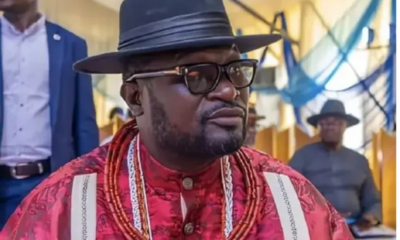
The Kaduna State Resident Electoral Commissioner of the Independent National Electoral Commission (INEC), Prof. Saidu Ahmed, has charged journalists to understand the various stages leading to the 2027 general elections to ensure accurate and responsible reporting.
Ahmed said journalists should familiarise themselves with the provisions of the Electoral Act 2026 and understand the processes covering party primaries, nomination of candidates, publication of candidates’ lists, campaigns, pre-election litigation, election-day activities and post-election petitions.
The REC made the appeal at a retreat organised by the Kano State Correspondents’ Chapel of the Nigerian Union of Journalists (NUJ).
Represented by an INEC supervisor, Ahmed Musa, the REC spoke on election reporting, the legal framework, security and ethical boundaries.
Ahmed said journalists were involved in critical role of shaping public perception and could either contribute to nation-building or undermine national cohesion through irresponsible reporting.
“You can make or break even a nation. So it is always on you to try to make a nation, not to break a nation,” he said.
He urged journalists to situate their election reports within the new legal framework and understand the rights and limitations attached to media accreditation.
According to him, the Electoral Act 2026, signed into law by President Bola Tinubu on February 18, 2026, introduced significant changes that would affect the conduct and reporting of the 2027 general elections.
Ahmed said Section 47 of the Act made the use of the Bimodal Voter Accreditation System (BVAS) a legal requirement, while electronic transmission of polling-unit results had also become mandatory.
He said Section 60(6) prescribed penalties for presiding officers who deliberately obstructed the electronic transmission of results, while Section 62(9) provided severe punishment for returning or collation officers who intentionally collated or announced false results.
He said the new law had also abolished indirect voting in political party primaries, requiring parties to adopt direct primaries or consensus.
Ahmed said courts could no longer stop a primary election or electoral process through injunctions, as electoral disputes would be addressed after the relevant process.
He reiterated that journalists needed to understand the various stages leading to the 2027 elections, including party primaries, nomination of candidates, publication of candidates’ lists, campaigns, pre-election litigation, election-day activities and post-election petitions.
He advised journalists to rely on INEC’s official channels of communication to avoid publishing unverified information.
“At the national level, the official communication channel is through the INEC Chairman and the National Commissioner in charge of voter education and publicity.
“At the state level, the official channel is the Resident Electoral Commissioner, who may delegate another official to communicate on behalf of the state office,” he said.
He cautioned journalists against treating WhatsApp messages, Facebook posts, voice notes, photographs or documents circulated by individual INEC staff or political party agents as official statements of the commission.
“An agent does not work for INEC. If it is not on the record from a named officer or a signed commission document, then it is not INEC speaking,” he said.



2027: Act fast, Umahi hates Niger Delta – APC’s Ayiri Emami to Tinubu

NDC Taraba crisis deepens as legal adviser rejects chairman’s removal

Kebbi APC challenges ADC over Malami’s alleged 48 properties

âI cannot be disrespectedâ â American rapper, Megan Thee Stallion opens up about split with NBA star, Klay Thompson

Wike: Probe Ebonyi Police Commissioner now – PDP

Model Brooks Nader gives bizarre reason for exposing bare body in presence of her dad

DisCos’ billing, collection failures undermining Nigeria’s power market – Experts

Invite him and see trouble – Dino Melaye issues warning to EFCC over probing Atiku
-

 Politics2 days ago
2027: Act fast, Umahi hates Niger Delta – APC’s Ayiri Emami to Tinubu
- Politics3 days ago
NDC Taraba crisis deepens as legal adviser rejects chairman’s removal
- Politics3 days ago
Kebbi APC challenges ADC over Malami’s alleged 48 properties
- Special Reports3 days ago
âI cannot be disrespectedâ â American rapper, Megan Thee Stallion opens up about split with NBA star, Klay Thompson