News
With N15trn saved from fuel subsidy removal, $1trn economy target realistic – Tinubu

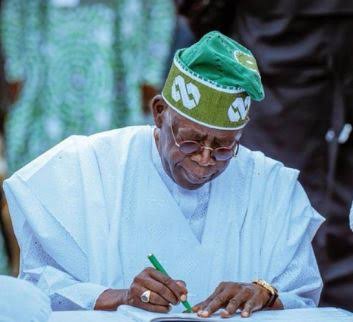

President Bola Ahmed Tinubu has declared again that the removal of fuel subsidy was a necessary decision that redirected national resources into productive sectors.
Similarly, former Bauchi state Governor Isa Yuguda faulted a proposal by former Vice President Atiku Abubakar to restore the subsidy regime ahead of the 2027 elections.
Atiku is the presidential candidate of the African Democratic Congress (ADC) in the 2027 General Elections.
The duo spoke Tuesday at the second edition of the Asiwaju Scorecard Series/Asiwaju Policy Roundtable in Abuja.
Represented by the National Chairman of the All Progressives Congress (APC), Prof. Nentawe Goshwe Yilwatda, Tinubu said his administration was determined to move Nigeria “from economic uncertainty to stability, from stability to growth, and from growth to prosperity.”
The president stated further that recent economic indicators had shown the country’s reforms were beginning to deliver greater stability and growth.
He also said Nigeria’s gross external reserves had risen to about $52.7 billion by August 2026, while consolidated non-oil revenue increased from approximately N13.63 trillion in 2023 to N16.4 trillion in the first two quarters of 2026.
The president highlighted the country’s improved trade position, saying the country moved from a merchandise trade surplus of about N44.8 billion for the whole of 2023 to approximately N7.54 trillion in the first quarter of 2026 alone.
He added that real Gross Domestic Product (GDP) grew by 4.43 per cent in the second quarter of 2026, while inflation had fallen significantly from its earlier peak to about 15.4 per cent.
“The ultimate test is when stability translates into cheaper food, more jobs, affordable credit, reliable electricity and greater purchasing power for Nigerians,” said the APC leader.
Yilwatda said Tinubu’s $1 trillion economy target was not merely a numerical ambition but a national mission aimed at making Nigeria produce and export more, attract investment, create jobs and give young Nigerians a greater stake in the country’s future.
He attributed the emerging economic stability to difficult reforms undertaken by the Tinubu administration since its inauguration on May 29, 2023, including the removal of fuel subsidy and reform of the foreign exchange market.
According to him, the reforms became necessary because the administration inherited an economy characterised by fuel subsidy distortions, multiple exchange-rate windows, weak revenue mobilisation, foreign-exchange shortages, rising debt-service pressures and years of inadequate investment in critical infrastructure.
He urged Nigerians to consider whether the country should abandon or accelerate infrastructure investment, discourage investors or make Nigeria one of Africa’s preferred investment destinations, and maintain the ports primarily for domestic trade or transform the country into a maritime gateway for the wider African hinterland.
“For the All Progressives Congress, the answer is clear. We choose progress, productivity, investment, infrastructure, innovation, Nigerian enterprise, exports, human capital, and we choose President Bola Ahmed Tinubu,” he said.
Yilwatda said the administration’s ultimate objective was to transform Nigeria from a large domestic market into a “maritime, industrial, digital and logistics powerhouse for Africa.”
He declared that the foundation had been laid for the next phase of the administration’s economic agenda, which he said, would take Nigeria “from reform to results, from results to growth, from growth to prosperity, and from prosperity to a $1 trillion economy by 2030.”
…Yuguda
While criticising former Vice President Abubakar’s plan to reintroduce fuel subsidy, Chairman Board of Trustees of the APC Professionals Forum, Dr. Yuguda, defended Tinubu’s removal of fuel subsidy, saying the policy had reportedly saved more than N15 trillion and created additional fiscal space for government to invest in critical sectors of the economy.
Yuguda said the removal of fuel subsidy should be viewed against the backdrop of historical weaknesses of the scheme, rather than solely through the immediate hardship associated with the policy.
He said his assessment was informed by his experience as chairman of the Fuel Subsidy Task Force in 2009, where he said the committee uncovered serious irregularities, fraudulent practices and financial leakages within the subsidy regime.
According to him, the subsidy system had become inefficient and was consuming huge amounts of public resources that could have been channelled into education, healthcare, security, agriculture, infrastructure and other productive areas.
“The additional fiscal space created by the subsidy reform has strengthened the capacity of the federal, state, and local governments to address critical national priorities, with over N15 trillion reportedly saved following the removal of fuel subsidy,” he said.
The former governor argued that the significance of the savings should be assessed not merely as a financial figure but in terms of the investments and programmes that could be funded when resources previously committed to subsidy were redirected.
The APC chieftain identified education as one of the areas receiving attention, citing the Nigerian Education Loan Fund, NELFUND, which he said was expanding access to higher education and reducing financial barriers for students.
He also pointed to increased funding for the security sector, improved operational support and investment in modern equipment as measures aimed at strengthening the capacity of the armed forces and other security agencies.
Yuguda, however, acknowledged that Nigeria continued to face serious security challenges, attributing some of the difficulties to instability in neighbouring countries, porous borders and the cross-border movement of armed groups and criminal networks into Nigerian territory.
According to him, these external pressures have complicated the federal government’s security efforts and, in some cases, allowed terrorist and criminal elements to infiltrate communities and perpetrate violence.
He, therefore, urged the administration to sustain efforts to strengthen border security, intelligence gathering, regional security cooperation, surveillance capabilities and the operational capacity of security agencies.
With the 2027 election approaching, Yuguda warned Nigerians to carefully examine political promises, particularly proposals concerning the possible return of fuel subsidy.
Yuguda said the old subsidy arrangement was associated with massive leakages, fraudulent claims, inefficiency and a significant drain on public finances.
He warned that restoring the system without first addressing those structural weaknesses could undermine the fiscal space created by its removal.
While acknowledging the democratic right of politicians to offer alternative economic policies, he said such choices must be tested against facts, experience and long-term sustainability.
“The 2027 Presidential election should therefore be about issues, achievements, and realistic solutions,” he said.
Yuguda said Nigerians deserved an honest national conversation about what the subsidy regime actually cost the country and what could be achieved by directing the resources towards sectors capable of improving citizens’ lives.
“Every Nigerian has the democratic right to present alternative policies, but economic choices must be guided by facts, experience, sustainability, and the long-term interest of the country,” he said.



Enugu Monarch Faces ₦2bn Lawsuit Over Alleged Unlawful Detention

International Energy Insurance Slumps 26.6% to Lead Weekly Losers

Trans-Sahara highway: Minister gives fresh orders to save buildings, others

How investors can legally reduce tax they pay on investments

2027: Why opposition parties should unite behind single presidential candidate – Lukman

INEC Denies 2027 Ad-Hoc Staff Recruitment, Warns Against Fake Website

2027: Makinde appoints Ehilebo as special adviser on media

Nigerians Divided as Pastor Kingsley Okonkwo Launches ₦700,000 VIP Marriage Platform
-

 Breaking2 days ago
Enugu Monarch Faces ₦2bn Lawsuit Over Alleged Unlawful Detention
- Finance2 days ago
International Energy Insurance Slumps 26.6% to Lead Weekly Losers
- News3 days ago
Trans-Sahara highway: Minister gives fresh orders to save buildings, others
- Business2 days ago
How investors can legally reduce tax they pay on investments


