News
Why Tinubu can’t control petrol price – Minister Lokpobiri

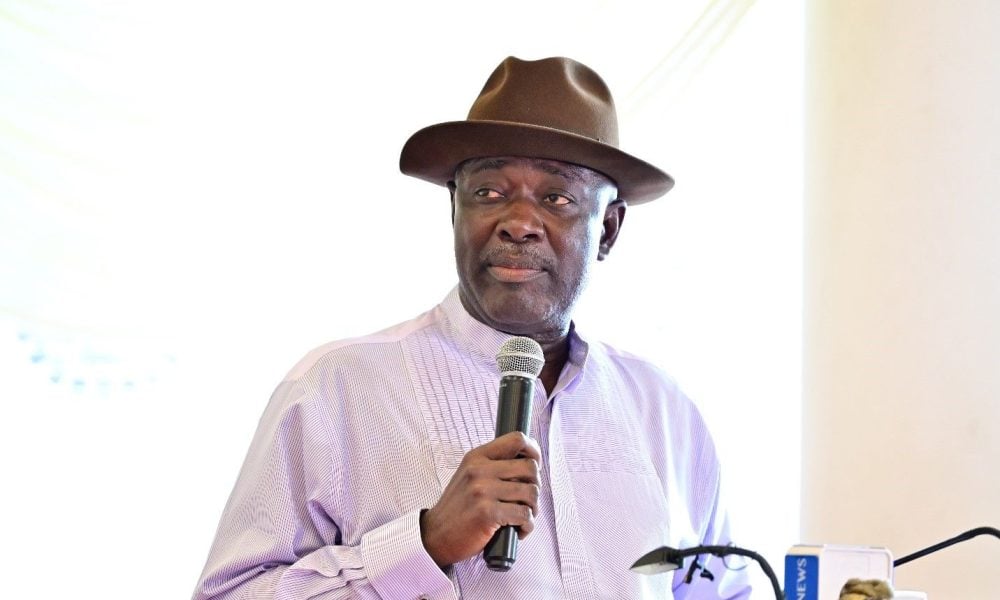

The Minister of State for Petroleum Resources (Oil), Heineken Lokpobiri, has said the Federal Government lacks the power to directly reduce or increase the price of petrol because the downstream oil sector has been fully deregulated.
Lokpobiri stated this while appearing on Channels Television’s Politics Today on Tuesday, explaining that petrol prices in Nigeria are influenced by global market forces rather than determined by the Federal Government.
“The Bola Tinubu government doesn’t have any power to reduce or increase the price of petrol. It is completely deregulated in line with global best standards,” the minister said.
He explained that crude oil and refined petroleum products are traded in an international market, making it difficult for the Nigerian government to arbitrarily determine pump prices without reintroducing fuel subsidies.
“Crude oil and refined products are a global business. Nigeria doesn’t exist in isolation. You cannot arbitrarily reduce prices unless you want to roll back to subsidy,” Lokpobiri said.
The minister spoke in response to former Vice President Atiku Abubakar’s call for a production subsidy that would enable locally refined petrol to be sold at a lower price to Nigerians.
Lokpobiri rejected the proposal, arguing that it lacked legal, fiscal and financial justification.
According to him, Atiku’s proposal could not be implemented under the current deregulated structure of the downstream petroleum sector.
He also dismissed the argument that petrol refined locally should be substantially cheaper simply because it is produced at the Dangote Refinery.
Lokpobiri explained that locally produced crude oil supplied to domestic refineries is still traded at international market prices, meaning that domestic refining does not automatically translate into government-controlled petrol prices.
“They sell crude to the refinery at the same global price,” he said.
The minister, however, maintained that Nigerians are already benefiting from increased domestic refining, particularly through improved availability of petroleum products and comparatively lower pump prices.
“We already benefit. That’s why our price is lower than that of the U.S.,” Lokpobiri said.
He further noted that the United States, despite being one of the world’s largest oil producers and having substantial refining capacity, sells petrol at prices that can be higher than Nigeria’s average pump price.
Lokpobiri’s comments come amid continuing debate over petrol prices, domestic refining and the impact of deregulation on Nigerian consumers.
The removal of petrol subsidy under the Tinubu administration has shifted the pricing structure from government-supported pump prices to a market-based system, with changes in crude oil prices, exchange rates, refining costs and other market factors influencing the cost of petrol.
The minister maintained that returning to a system where government deliberately lowers pump prices would effectively amount to bringing back some form of subsidy.



APC presidential campaign council to Atiku: Explain legal basis, ₦21 trillion cost of petrol subsidy plan

Yusuf, Bells, Chimsom Chuka evicted from #BBNaija Season 11

I’ll return youths to farming, SMEs if elected president – Peter Obi

22-year-old allegedly st@bs another to d3ath in Bauchi

Igbos only have ears for Peter Obi not Soludo – Sam Amadi

BBNaija S11: Yusuf, Chimsom Chuka evicted from reality show

CBN Faces Rate-Cut Decision as Inflation Falls to 15.39%, Reserves Top $54bn

37 miners’ death: I’m just chief security officer by mouth – Gov Bago
-

 News3 days ago
APC presidential campaign council to Atiku: Explain legal basis, ₦21 trillion cost of petrol subsidy plan
- Breaking3 days ago
Yusuf, Bells, Chimsom Chuka evicted from #BBNaija Season 11
- Breaking3 days ago
I’ll return youths to farming, SMEs if elected president – Peter Obi
- Special Reports3 days ago
22-year-old allegedly st@bs another to d3ath in Bauchi