News
UNICEF tasks media on solution, ethical reportage on children

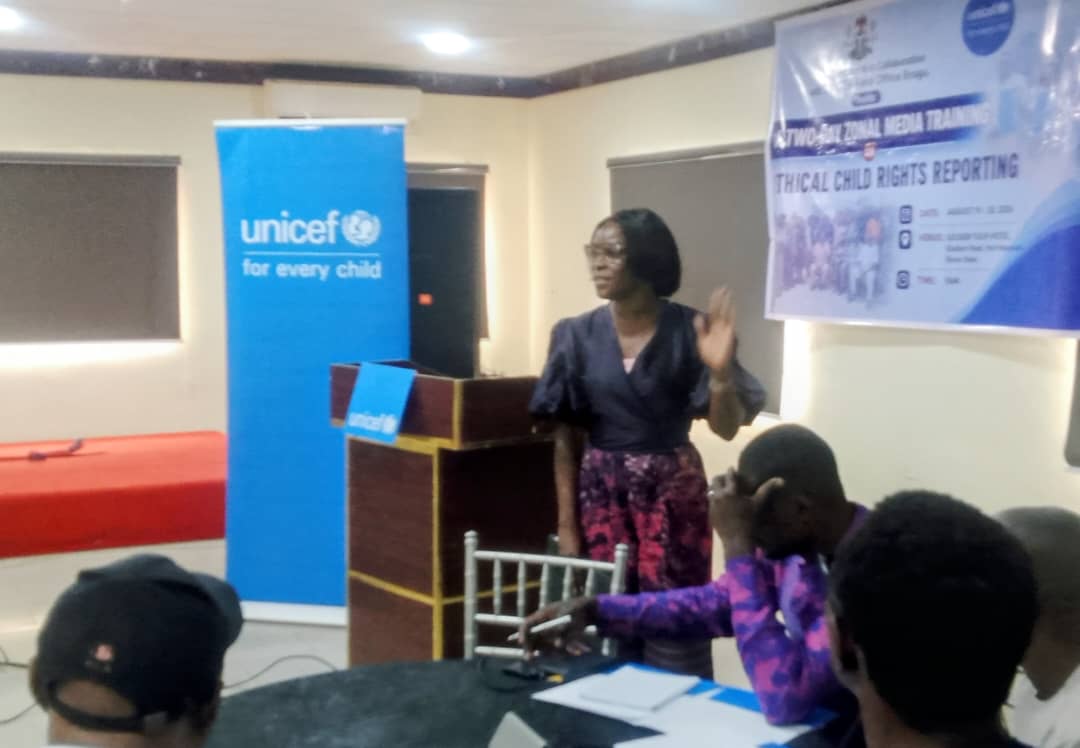
The United Nations Children’s Fund, (UNICEF), has urged journalists to imbibe ethical reporting by shielding children identities, and focus on solutions in their news coverage.
UNICEF’s child rights experts made the call on Thursday in Port Harcourt at a two-day training organised for journalists on Ethica Reporting of Children.
The two-day zonal workshop brought together editors, correspondents and media practitioners from print and broadcast organisations across nine states, to align reporting with Nigeria’s legal obligations and the realities children face.
In her keynote, UNICEF Nigeria Communications Specialist, Sussan Akila, said journalists must prioritise the dignity and safety of children, especially in cases of abuse and molestation, warning that poor coverage could lead to stigmatisation, trauma and long-term harm.
“Reports should be presented in a manner that justice can be done. A stigmatised child feels he has nothing to lose and, therefore, has a greater propensity to become an armed robber, bandit, or engage in other forms of criminality,” she said.
Also speaking, a media consultant, Dr Geoffrey Njoku, highlighted provisions of the UN Convention on the Rights of the Child and the Child Rights Act 2003, noting that a child is any person under 18 and that their best interest must be paramount.
“The law also prohibits child use in armed conflict, exposure to drugs, pornography and degrading treatment, he added.
On his part, Dr. Jide Johnson of the Nigerian Institute of Journalism presented data from the 2022 Child Labour Survey, showing that 50.5 per cent of children are in economic activity, 39.2 in child labour and 22.9 per cent in hazardous work.
According to him, one in two children live in income poverty and that newborn mortality stands at 41 per 1,000.
Speaking on balancing public interest with protection, Mr Lanre Idowu, outlined children’s rights to survival, development, protection and participation, stressing quality, inclusive and child-friendly education.
Speakers emphasised that ethical reporting means avoiding identification of victims, obtaining parental consent and child assent, anonymising details, and focusing on systemic issues rather than pity-driven stories.
They stressed that while children in Nigeria face insecurity, poverty and stigma, the media can either worsen their burden or help protect them and hold institutions accountable.









NDC condemns City Boys Movement’s ‘extravagant’ lifestyle

Niger abductions: AIG Olaiya leads tactical team for safe rescue operation

Over 7,000 People Abducted, N7.8bn Ransom Paid Across Nigeria In One Year – Report

Nigeria targets $7tn halal economy to drive non-oil exports

Nigeria’s outlook lifted to ‘positive’ by Moody’s on reform gains

How rising fuel imports is forcing export focus despite strong local supply capacity – Dangote Refinery

Police detain officer over shooting that killed 22-year-old UNIPORT graduate

Explainer: Nigeria is getting its second chance with global investors after hard reset
-

 Politics3 days ago
NDC condemns City Boys Movement’s ‘extravagant’ lifestyle
-
 News3 days ago
Niger abductions: AIG Olaiya leads tactical team for safe rescue operation
- News3 days ago
Over 7,000 People Abducted, N7.8bn Ransom Paid Across Nigeria In One Year – Report
- Business3 days ago
Nigeria targets $7tn halal economy to drive non-oil exports