World News
Trump expands punishing airstrikes in Iran as US hits bridges and critical infrastructure

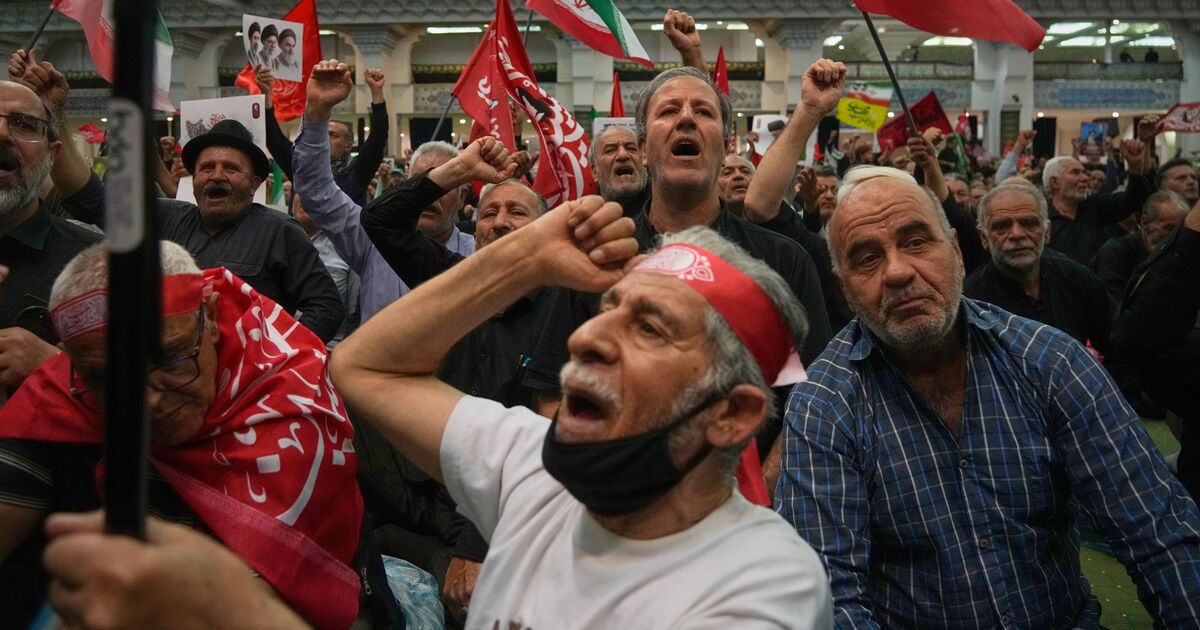
The United States has progressively widened the range of its strikes against Iran during two weeks of intensive airstrikes that increasingly mirror the conflict’s initial assault.
Following a short-lived ceasefire in June after an interim agreement was signed to halt hostilities, fighting over control of the Strait of Hormuz broke out, destroying the truce and driving the nations back toward the brink of full-scale war throughout the Middle East.
The U.S. began with concentrated waves of strikes targeting Iran’s naval forces and coastal defenses earlier this month, seeking to diminish Tehran’s capacity to attack vessels in the strategically critical strait essential to global energy supplies. In recent days, the U.S. has broadened its targets, bombing bridges and infrastructure in the south and conducting strikes further into Iran’s interior and on the outskirts of its capital, Tehran.
Despite its increasing intensity and breadth, the revived U.S. air campaign is not as severe in either respect as the one at the conflict’s outset, which commenced on Feb. 28. In merely the first 100 hours of the war, the U.S. and Israel struck hundreds of military sites and eliminated senior Iranian leaders, including Ayatollah Ali Khamenei.
The Iranian Health Ministry reports 3,434 people have been killed since the war started, including 55 during the recent escalation. The most recent U.S. strikes temporarily disrupted transportation and communications within Iran, and damaged water infrastructure serving thousands of people.
The U.S. military has stated its recent strikes were designed to weaken Iran’s capacity to threaten vessels in the strait. However, Iran has not relented.
It has escalated attacks on ships in the strait and on Gulf nations hosting U.S. bases, resulting in the deaths of at least four American soldiers and causing damage to vital infrastructure. Israel has not been targeted in this latest phase of hostilities, and it has not participated alongside the U.S. in conducting strikes.
Shortly after the nations had agreed to an interim ceasefire arrangement, Iran commenced attacking ships in the Strait of Hormuz, sparking retaliatory exchanges with the U.S. By July 12, the U.S. military escalated its bombing operations, and a day later, President Trump reinstated a U.S. blockade on Iranian ports.
During two days of bombardment, the U.S. military reported it hit dozens of targets, including air-defense installations, coastal radar facilities, missile and drone manufacturing sites and launchers, and small boats. It deployed precision munitions, naval vessels and, for the first time, one-way attack sea drones.
The airstrikes targeted coastal regions bordering the strait and Persian Gulf: Khuzestan, Bushehr and Hormozgan provinces. The city and port of Bandar Abbas, situated on the strait and housing vital naval and commercial infrastructure, sustained the heaviest initial damage.
Attacks also struck strategic islands in the Gulf — Qeshm, Abu Musa and Kish. Additionally, naval and military installations in Sistan and Baluchistan province along the Gulf of Oman came under fire.

A wave of strikes across two days damaged no fewer than six bridges and one tunnel in the Bandar Abbas area, according to footage broadcast on state television. The apparent objective was to cut off Revolutionary Guard installations there from the remainder of the nation.
An additional strike targeted a railway hub west of the coastal city. Local residents documented images of traffic congestion on certain roadways following the attacks.
During the preceding two weeks, separate strikes in Bandar Abbas targeted the facilities of the radio and communications regulatory authority, which oversees Iran’s radio-frequency spectrum. For three consecutive days, the U.S. struck a maritime communications tower at one of the city’s ports, completely demolishing it on July 17.
A second communications tower was hit approximately 120 kilometers (75 miles) along the coastline.











Troops foil ₦7m ransom assortment, rescue kidnap sufferer in Borno

Matawalle inspects AFRIDEX venue forward opening

NDC Slams Tinubu, APC Over ₦1bn SUVs for Youth Leaders

Dangote Cement steps up driver security requirements throughout Africa

Troops foil kidnapping try, rescue victims in Benue

2027: Nafiu Bala-led ADC faction unveils presidential marketing campaign council

Two kidnapped Rivers youngsters freed, reunite with household (video)

Stanbic IBTC Holdings’ Nine-Month Profit Rises 33% to N370.36bn as Assets Hit N9.60tn
-

 Politics3 days ago
Troops foil ₦7m ransom assortment, rescue kidnap sufferer in Borno
- News3 days ago
Matawalle inspects AFRIDEX venue forward opening
- Breaking3 days ago
NDC Slams Tinubu, APC Over ₦1bn SUVs for Youth Leaders
- News3 days ago
Dangote Cement steps up driver security requirements throughout Africa