News
Tribute: Life and times of late elder statesman, Dr. Bamanga Tukur

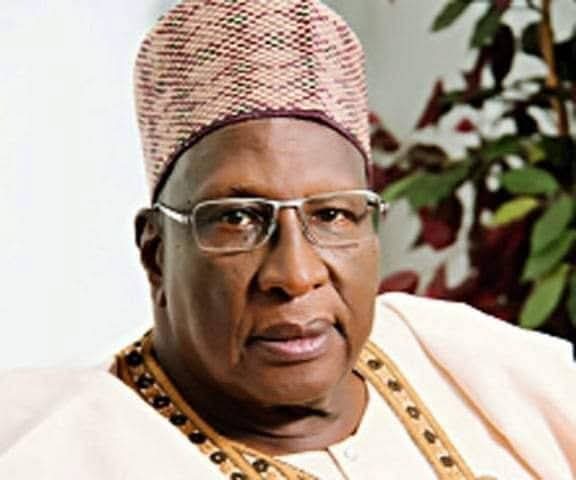

Nigeria was thrown into mourning Saturday, September 12, 2026 when she lost an elder statesmen, businessman and politician, Dr. Bamanga Muhammad Tukur.
The death of Tukur at the age of 90, marked the end of a remarkable chapter in Nigeria’s political, administrative and business history.
In his honour, the Adamawa state government has declared three days of mourning with all government flags to fly at half-mast.
Early life and education
Born on September 15, 1935, in present day Adamawa state, Dr. Bamanga Tukur grew into one of northern Nigeria’s most recognisable political and business figures.
Tukur was born into the community and traditions of present-day Adamawa state. His early education took him through Jada Elementary School, Yola Middle School and Bauchi Secondary School before he proceeded to further studies in administration and management.
His educational journey eventually extended beyond Nigeria, including studies at the University of Pittsburgh in the United States.
Those formative years helped prepare him for a career that would combine professional administration with public leadership.
Career
From his early days as an accountant in the Adamawa Native Authority, Tukur demonstrated an aptitude for organisation, management and public administration.
Tukur, a prominent figure in Nigeria’s public life had a long standing career. For more than five decades, he was at various times a public administrator, businessman, state governor, federal minister and National Chairman of the Peoples Democratic Party (PDP)
His career moved between public administration, commerce and politics, giving him a rare vantage point from which to witness some of the country’s most important political transitions.
Tukur’s life of service at NPA
One of the defining chapters of Tukur’s professional life was his association with the Nigerian Ports Authority (NPA).
He joined the NPA as a management cadet in 1963 and steadily rose through the ranks. He served in several capacities, including Assistant Chief Traffic and Commercial Manager and Ports Manager, before becoming General Manager and Chief Executive of the authority from 1975 to 1982.
His tenure coincided with an important period in Nigeria’s economic history. The country was experiencing major increases in imports, particularly during the cement-importation era, placing enormous pressure on port infrastructure and management.
Tukur consequently became nationally recognised as an administrator capable of managing one of the country’s most strategically important institutions.
His experience in the maritime sector also gave him an international profile.
He held leadership positions in organisations connected with ports, shipping and cargo handling, contributing to his emergence as an important figure in Africa’s business community.
Tukur’s tenure at the ports became an important chapter in his public-service career and helped to establish his reputation as an administrator with experience in managing major national institutions.
Governor of the old Gongola state
Tukur’s transition from administration to partisan politics brought him into the political history of Nigeria’s Second Republic.
In 1983, he won election as governor of the old Gongola state, an expansive territory that included what are today Adamawa and Taraba states.
His time in office, however, was extremely brief. He assumed office in October 1983, but the military coup of December that year brought the Second Republic to an abrupt end.
Thus, although his governorship lasted only a short period, it became an important part of the political history of the region and of Tukur’s own public career.
The truncation of the democratic government did not end Tukur’s public career. Instead, he moved into the private sector and continued to cultivate relationships and influence within Nigeria’s political and economic establishment.
Businessman and Pan-African economic advocate
Beyond government, Bamanga Tukur was a prominent entrepreneur and business leader. He founded BHI Holdings, popularly associated with the DADDO Group of Companies, and became involved in several commercial ventures.
His interests, however, extended beyond personal enterprise. Tukur became an advocate for greater private-sector participation in Africa’s economic development.
He served in senior positions within the Africa Business Roundtable and the NEPAD Business Group and was associated with several continental business initiatives.
Through these activities, he became part of a generation of African business leaders who argued that the continent’s development required stronger private enterprise, investment and regional economic cooperation.
His career in the maritime and business sectors also earned him international recognition.
Among other distinctions, he served in leadership roles connected to international port and harbour organisations and became the first African vice-president of the International Association of Ports and Harbours, according to biographical accounts.
Federal Minister of Industries
Tukur returned to the centre of national public administration in the 1990s when he was appointed Minister of Industries under the military administration of General Sani Abacha.
His ministerial service added another dimension to a career that had already crossed the boundaries of civil administration, politics and business. He brought to the ministry the experience he had accumulated from decades of management and private enterprise.
Contemporary biographical records place his tenure as Minister of Industries in the 1990s, with reports commonly identifying the period as 1993–1995 or 1994–1996.
His tenure was brief as the military coup of December 1983 brought the Second Republic to an abrupt end.
Tukur remained active in national affairs and was later appointed Minister of Industries during the administration of General Sani Abacha in the 1990s.
He also became prominent in the African business community, serving in leadership roles connected with the Africa Business Roundtable and promoting greater private-sector participation in Africa’s economic development.
National Chairman of the Peoples Democratic Party
Perhaps the most politically controversial chapter of Tukur’s career came much later, when he returned to frontline partisan politics.
In March 2012, he became National Chairman of the Peoples Democratic Party, then Nigeria’s ruling party under President Goodluck Jonathan.
Tukur assumed the position at a challenging moment in the party’s history. The PDP was experiencing internal disagreements involving its leadership structures, governors, elected officials and competing political interests.
He advocated a stronger and more independent party organisation. Among the initiatives associated with his tenure was an effort to strengthen the party’s membership structure through electronic registration and to assert the supremacy of the party organisation over individual political interests.
His approach earned him both admirers and opponents.
The internal crisis eventually became increasingly difficult to contain. Tukur resigned as National Chairman in January 2014 after less than two years in the position.
His departure came amid one of the most turbulent periods in the PDP’s history.
The Tafidan Adamawa
Tukur’s influence was not limited to formal political and business institutions.
He also occupied an important place within the traditional structure of Adamawa.
He was honoured with the traditional title of Tafidan Adamawa, a recognition that reflected his standing within the emirate and his longstanding contributions to his community. He also held the title of Wakili Chamba of Ganye.
These traditional honours complemented the national recognition he received during his lifetime, including the Commander of the Order of the Niger (CON).
Whatever one’s assessment of his tenure, his decision to pursue organisational reforms demonstrated a characteristic that had followed him throughout his career: a willingness to confront institutional challenges rather than simply occupy an office.
As Nigeria reflects on the passing of Bamanga Tukur, attention will now turn to his family, political associates and the wider legacy of a man whose public career spanned military rule, the Second Republic, the return to democracy and the evolution of Nigeria’s Fourth Republic.



2027: Act fast, Umahi hates Niger Delta – APC’s Ayiri Emami to Tinubu

Model Brooks Nader gives bizarre reason for exposing bare body in presence of her dad

DisCos’ billing, collection failures undermining Nigeria’s power market – Experts

Invite him and see trouble – Dino Melaye issues warning to EFCC over probing Atiku

Man left fighting for his life in hospital after wife allegedly bites his private p@rt

2027: APC fires back at Kwankwaso over promise to take care of Atiku

2027 Delta governorship election: NYCN backs Eshor

NCAA fines RwandAir N15m over unresolved baggage issue and also directs airline to compensate passenger
-

 Politics2 days ago
2027: Act fast, Umahi hates Niger Delta – APC’s Ayiri Emami to Tinubu
- Special Reports3 days ago
Model Brooks Nader gives bizarre reason for exposing bare body in presence of her dad
-
 News3 days ago
DisCos’ billing, collection failures undermining Nigeria’s power market – Experts
- Special Reports3 days ago
Invite him and see trouble – Dino Melaye issues warning to EFCC over probing Atiku