World News
Shipping industry panic over Hormuz tolls plan as US yet to strike deal


Iran and Oman are approaching an agreement to reopen the Strait of Hormuz that may involve a “service fee” for vessels navigating the vital waterway, triggering widespread international condemnation.
Sources with knowledge of the situation revealed that under the proposed arrangement, vessels entering the Persian Gulf would use a channel under Iranian control, while those departing would utilize one managed by Oman.
Iranian authorities have emphasized that no tolls would be imposed. Nevertheless, a “service fee” would be established to address the environmental consequences of maritime traffic, vessel and tanker protection, and personnel costs. Income generated from these fees would be split evenly between Iran and Oman.
Reports of the prospective agreement rapidly sparked international alarm, with eight maritime industry organizations calling on the United Nations to reject the service fees in an open letter released earlier this week.
“Once such a precedent is established, it becomes increasingly difficult to resist similar measures elsewhere, creating uncertainty for international shipping and global commerce,” the shipping groups stated in a collective open letter to the U.N. and the International Maritime Organization, cautioning that the fees could increase expenses for consumers.
“These consequences extend beyond shipping costs, contributing to higher energy prices, higher inflation, and higher economic uncertainty. Ultimately, these impacts will carry a human cost, affecting livelihoods around the world,” the letter stated.
Should Iran and Oman proceed with implementing the fees, it would represent a significant departure from the pre-war period, when no single nation exercised complete authority over the vital waterway. Notably, Iran had committed to refraining from imposing fees or tolls on the Strait for 60 days through a Memorandum of Understanding with the U.S. That agreement, however, rapidly fell apart after the countries couldn’t reach consensus on multiple provisions within the 14-point treaty.
Any toll or fee imposed on the waterway would be unacceptable to the Trump administration. U.S. Secretary of State Marco Rubio recently emphasized that the Strait of Hormuz must be restored as an open waterway, as it existed before hostilities commenced on Feb. 28.
DON’T MISS…
Iranian schoolboy pictured in archery practice ‘for killing Trump’
US uses ‘virtually all’ long-range precision missiles 5 months into Iran war
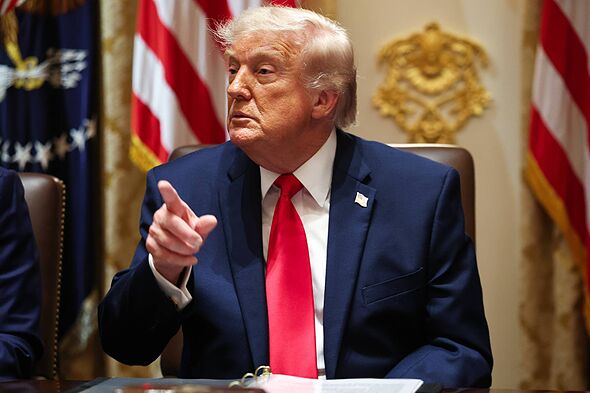
“If we create a precedent in the Middle East where a nation state can decide that they are going to control an international waterway,” Rubio stated during a gathering of Southeast Asian officials, “charge a toll and if you don’t pay them blow up your ships, we have created a very dangerous precedent, which will repeat itself in other parts of the world.”
“What is at stake here is not simply the issue of what is happening in the Straits of Hormuz, it’s a very fundamental principle about freedom of navigation,” he added, arguing that “he rules which have underpinned 150 years of international trade and commerce are also threatened, and that cannot be allowed to happen.”









FG targeting 6,500MW of power supply by December, says Tegbe

BBNaija: Biggie gives Flora secret mission to make Aikou fall in love

‘Win With Tinubu’ team to meet Ododo, targets 239 wards in Kogi

President Tinubu condemns mass abduction in Niger state, orders immediate rescue operation

Oluwo urges Tinubu to grant Nnamdi Kanu presidential amnesty

Strong demand pushes one-year T-bills rate lower to 17.15%

MTN Nigeria emerges as key driver of Group’s first half 2026 growth

My employee stole from me – Tolanibaj claims
-

 Breaking3 days ago
FG targeting 6,500MW of power supply by December, says Tegbe
- Breaking3 days ago
BBNaija: Biggie gives Flora secret mission to make Aikou fall in love
- News3 days ago
‘Win With Tinubu’ team to meet Ododo, targets 239 wards in Kogi
- Special Reports3 days ago
President Tinubu condemns mass abduction in Niger state, orders immediate rescue operation