Connect with us

News

Okonjo-Iweala, Cardoso urge Africa, Nigeria to sustain economic reforms

Published

on

FB IMG 1785393856655

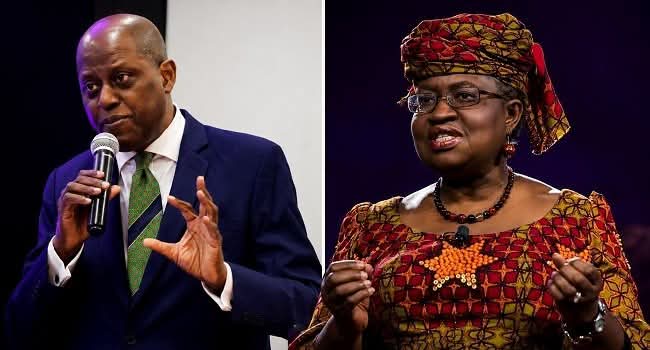
World Trade Organization Director-General Ngozi Okonjo-Iweala and Central Bank of Nigeria Governor Olayemi Cardoso on Wednesday called on African countries to sustain economic reforms, deepen regional integration and strengthen governance institutions.

The pair spoke at the 7th Africa Emerging Markets Forum in Abuja, themed “Building Africa’s Resilience Amidst Geoeconomic Uncertainties.”

They said the continent must turn geopolitical tensions, shifting supply chains and global trade uncertainty into opportunities for growth, investment and job creation.

Global shift, not retreat

Okonjo-Iweala said global economic friction reflects a shift from cooperative to competitive interdependence rather than a retreat from globalisation.

She said multinational companies are diversifying supply chains away from reliance on single countries, a shift she described as an opening for African economies to position themselves as alternative investment destinations.

She urged African governments to move past raw material exports and build integrated regional value chains around the continent’s mineral reserves, workforce and domestic markets, warning that Africa risks missing a historic opportunity if it does not act decisively. She called for coordinated regional industrialisation under the African Continental Free Trade Area (AfCFTA), rather than a bilateral approach.

Nigeria’s reforms must reach citizens

On Nigeria, Okonjo-Iweala acknowledged the CBN’s recent monetary and foreign exchange reforms but said macroeconomic stability must translate into job creation for the country’s young population, adding that Nigerians need to feel the benefits of reform in the real economy.

Cardoso, responding in a fireside dialogue, said the CBN’s measures to stabilise the foreign exchange market, strengthen the banking system and refocus on price stability speak for themselves.

He said institutional credibility has become central to investment decisions as global capital markets tighten, arguing that the period of liquidity chasing returns without regard to risk has ended, and describing credibility as a national economic asset and not solely a central bank concern.

Intra-African trade, local capital

Cardoso pointed to intra-African trade levels of roughly 16 percent of the continent’s total trade volume as a target for reform, calling for streamlined customs procedures, modernised cross-border payment systems and improved infrastructure to support AfCFTA implementation.

He also called for greater domestic resource mobilisation to reduce reliance on external capital, citing Nigeria’s recent bank recapitalisation exercise, in which domestic investors accounted for about 75 percent of capital raised.

Okonjo-Iweala said foreign direct investment and development assistance are unlikely to return to levels seen in past decades, adding that attracting foreign capital depends on building conditions that give local investors confidence to invest at home first.

Asked what single factor would determine Africa’s trajectory over the next decade, Okonjo-Iweala pointed to leadership, saying the continent needs leaders committed to transparency, job creation, reform implementation and addressing the real constraints to economic growth.

is an emerging journalism talent at NOP News Nigeria, bringing fresh energy and dedication to the media landscape. Inspired by global icons Christiane Amanpour and Richard Quest, she combines rigorous reporting with a commitment to journalistic excellence.

Trending