News
Nigeria must close IDP camps within two years, build new communities — PeacePro

Advertisement
Advertisement
…says prolonged displacement is creating a “lost generation”
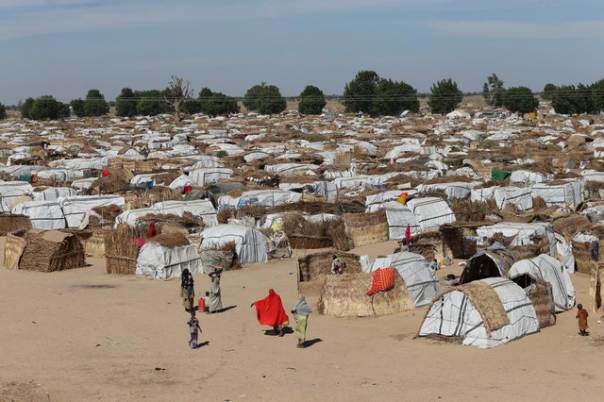
The Foundation for Peace Professionals, PeacePro, has called on the Federal Government to adopt a two-year national plan to phase out long-term Internally Displaced Persons, IDP, camps and replace them with purpose-built communities where displaced Nigerians can rebuild their lives with dignity, security and sustainable economic opportunities.
PeacePro said Nigeria’s displacement crisis, largely triggered by the Boko Haram insurgency since 2009, had persisted for more than 15 years and could no longer be treated as a temporary humanitarian emergency.
In a statement signed by its Executive Director, Abdulrazaq Hamzat, the organisation warned that the country was gradually creating a “lost generation” of children and young people who had spent their formative years in displacement camps rather than in classrooms, workplaces and stable communities.
The organisation said Nigeria’s relatively low life expectancy made the prolonged stay of millions of citizens in IDP camps even more concerning.
Citing World Bank data, PeacePro said Nigeria’s life expectancy at birth was approximately 55 years, arguing that people who had spent between 10 and 15 years in displacement had lost between one-fifth and more than one-quarter of their expected lifetime to conflict, uncertainty and dependence on humanitarian assistance.
“An IDP camp was never designed to become a permanent home. It was created as an emergency response. When people spend 10 to 15 years in camps in a country where life expectancy is only about 55 years, we are asking them to sacrifice a significant part of their lives waiting for a future that may never come,” Mr Hamzat said.
PeacePro noted that many children born during the insurgency had never experienced normal community life, quality education or stable economic opportunities.
“Some children have known nothing but displacement since birth. If we fail to act now, Nigeria will inherit a generation whose memories are defined by conflict instead of opportunity,” the group said.
Mr Hamzat proposed that the Federal Government should prioritise the development of new, planned communities rather than continue expanding or managing long-term displacement camps.
According to PeacePro, the proposed communities should provide affordable housing, schools, hospitals, electricity, potable water, markets, agricultural zones, industrial clusters, digital infrastructure and employment opportunities.
The organisation said such investments would enable displaced persons to become productive and economically independent citizens rather than remain long-term beneficiaries of humanitarian assistance.
PeacePro said voluntary return to ancestral communities should remain an option where security had been restored and sustainable livelihoods were available.
However, it noted that many rural communities affected by the insurgency lacked basic infrastructure even before the conflict, warning that returning displaced persons to areas without adequate social amenities and economic opportunities could recreate the conditions that contributed to their vulnerability.
“Returning people to communities without roads, schools, hospitals, electricity and sustainable economic opportunities may simply recreate the conditions that existed before displacement.
“Nigeria should see this tragedy as an opportunity to build stronger, smarter and more economically viable communities,” the statement said.
The organisation argued that concentrating infrastructure and essential services in newly developed communities would make public investment more sustainable while improving access to education, healthcare, employment and other social services.
PeacePro also maintained that the continued provision of food and other humanitarian support to millions of displaced Nigerians without a long-term resettlement strategy was neither economically sustainable nor socially productive.
“Humanitarian assistance saves lives, but it cannot become a permanent development policy. Every displaced farmer who returns to production strengthens food security. Every child who returns to school strengthens Nigeria’s human capital.
“Every entrepreneur empowered strengthens the national economy,” the group said.
PeacePro added that the success of Nigeria’s fight against terrorism should not be measured only by the number of insurgents neutralised or territories reclaimed, but also by the number of displaced persons whose lives had been rebuilt and whose futures had been restored.
The organisation therefore urged the Federal and state governments to launch a Two-Year National IDP Transformation Programme aimed at gradually closing long-term camps through voluntary relocation to newly developed communities supported by housing, infrastructure, skills acquisition centres, education, healthcare and sustainable livelihoods.
“The greatest victory over terrorism will not be won on the battlefield alone. It will be won when displaced families regain their dignity, children reclaim their future and communities destroyed by violence become centres of prosperity.
“Nigeria must stop managing displacement and start rebuilding lives,” PeacePro said.



Zenith Bank Charts New Path to Scale Nigeria’s $6.1bn Non-Oil Export Market

FG targeting 6,500MW of power supply by December, says Tegbe

Oluwo urges Tinubu to grant Nnamdi Kanu presidential amnesty

‘Win With Tinubu’ team to meet Ododo, targets 239 wards in Kogi

President Tinubu condemns mass abduction in Niger state, orders immediate rescue operation

ADC challenges Tinubu to clarify ‘all is fair in politics’ remark

MTN Nigeria emerges as key driver of Group’s first half 2026 growth

Police arrest two suspects over transnational crime in Oyo
-

 Finance3 days ago
Zenith Bank Charts New Path to Scale Nigeria’s $6.1bn Non-Oil Export Market
- Breaking2 days ago
FG targeting 6,500MW of power supply by December, says Tegbe
- News2 days ago
Oluwo urges Tinubu to grant Nnamdi Kanu presidential amnesty
- News2 days ago
‘Win With Tinubu’ team to meet Ododo, targets 239 wards in Kogi