World News
NDAA Section 219 Controversy Explained: Are US And Israel Military Merging Under New Bill?

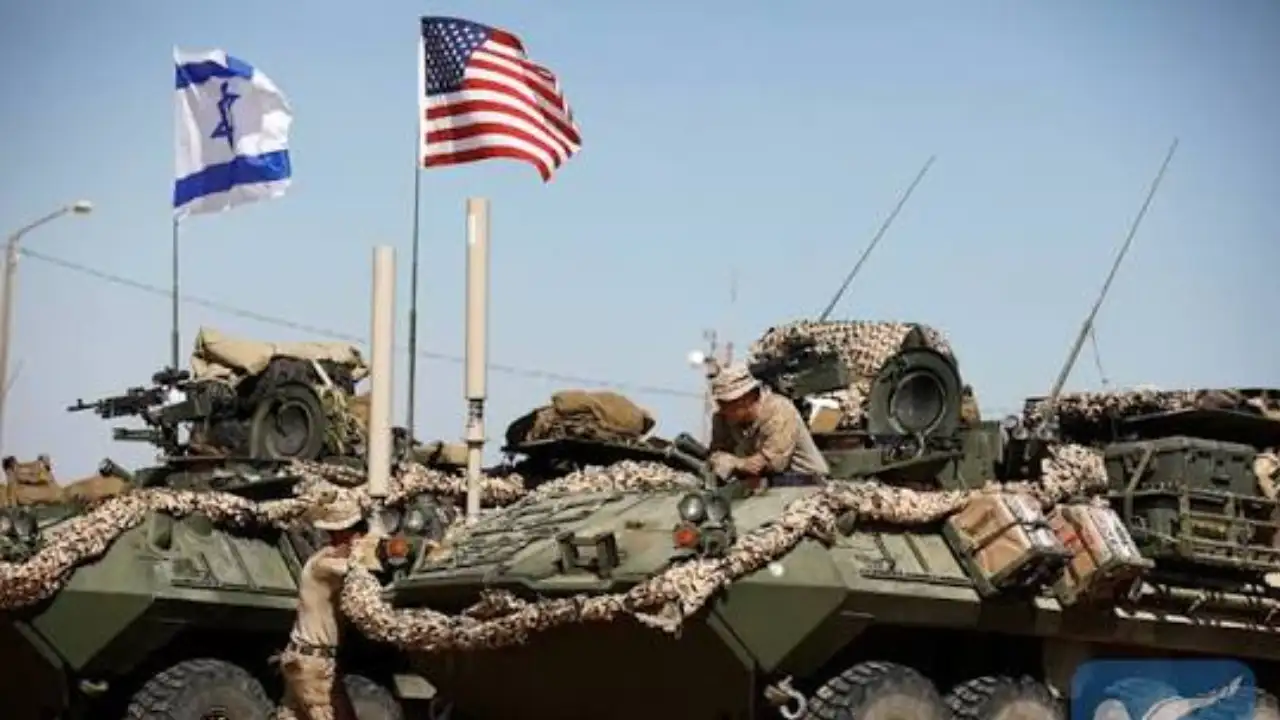
The House of Representatives has advanced the Fiscal Year 2027 National Defense Authorization Act, retaining Section 219, which enhances US-Israel defense technology cooperation.
The House of Representatives is moving forward with the Fiscal Year 2027 National Defense Authorization Act (NDAA) with Section 219 still included in the roughly 1.1 trillion dollar defense bill, preserving a proposal that would significantly expand US-Israel defense technology cooperation.
The chamber voted 214-211 on Tuesday to approve the rule governing debate on H.R. 8800, allowing lawmakers to proceed to a final NDAA vote while blocking consideration of a bipartisan amendment that sought to remove Section 219.
The amendment, introduced by Republican Representative Thomas Massie of Kentucky and Democratic Representative Ro Khanna of California, would have stripped the provision from the bill. Because the Rules Committee did not make the amendment eligible for floor consideration, lawmakers will not receive a separate vote on whether to remove the section.
The House is expected to hold a recorded vote on the full NDAA on Wednesday.
What Section 219 would do
Section 219 would require the defense secretary to appoint a Pentagon executive agent to oversee a United States-Israel Defense Technology Cooperation Initiative.
That official would coordinate bilateral defense research, development, testing, evaluation, industrial cooperation and supply chain collaboration between the two countries.
The provision originated from the bipartisan United States-Israel FUTURES Act, introduced in the House by Representatives Ronny Jackson and Don Davis, with companion legislation in the Senate from Ted Budd and Kirsten Gillibrand.
Supporters say the initiative would help preserve America’s technological edge and accelerate the transition of emerging defense technologies into military use.
Technologies covered by the initiative
The proposal would cover a broad range of advanced military technologies, including:
The legislation also envisions joint testing, production, procurement, supply chain coordination and the incorporation of Israeli or jointly developed technologies into US military programs.
The House Armed Services Committee said the executive agent would be responsible for “synchronizing cooperative efforts” between the United States and Israel and would be required to report regularly to congressional defense committees.
Opposition from both parties
Massie criticized House leaders for preventing debate on the provision and announced that he would vote against the NDAA with Section 219 included.
“Unfortunately, the Rule passed just now and no debate or vote was allowed on section 219, integration of US military technology and supply chains with Israel’s. The NDAA will receive a recorded vote tomorrow with section 219 in it. I’ll vote no,” he wrote on X.
Khanna argued that the United States should not integrate its military infrastructure with another country in a way that could affect American sovereignty.
The amendment attracted support from a bipartisan group of lawmakers, including Jim McGovern, Jesús “Chuy” García, Rashida Tlaib, Don Beyer, Jill Tokuda, Derek Tran and Joe Courtney.
The amendment attracted support from a bipartisan group of lawmakers, including Jim McGovern, Jesús “Chuy” García, Rashida Tlaib, Don Beyer, Jill Tokuda, Derek Tran and Joe Courtney.
Representative Anna Paulina Luna also submitted a separate amendment to strike Section 219, but it was not made eligible for consideration.
Senate contains a parallel proposal
The Senate version of the NDAA includes a similar initiative in Section 1217, which incorporates the FUTURES Act framework.
That provision would establish the same United States-Israel Defense Technology Cooperation Initiative and expand bilateral research, technology development, testing, information sharing and industrial collaboration.
Senator Bernie Sanders has objected to the measure, arguing that Congress should not grant Israel a level of military integration that exceeds arrangements with some NATO allies.
Sanders was joined by Chris Van Hollen, Elizabeth Warren, Ed Markey, Jeff Merkley and Peter Welch, who urged Senate leaders not to advance the NDAA without a separate debate on the Israel-related defense and intelligence provisions.












FG targeting 6,500MW of power supply by December, says Tegbe

ADC challenges Tinubu to clarify ‘all is fair in politics’ remark

Oluwo urges Tinubu to grant Nnamdi Kanu presidential amnesty

‘Win With Tinubu’ team to meet Ododo, targets 239 wards in Kogi

President Tinubu condemns mass abduction in Niger state, orders immediate rescue operation

MTN Nigeria emerges as key driver of Group’s first half 2026 growth

BBNaija: Biggie gives Flora secret mission to make Aikou fall in love

CBN’s OMO reopening tests the price of government domestic borrowing
-

 Breaking2 days ago
FG targeting 6,500MW of power supply by December, says Tegbe
- Politics3 days ago
ADC challenges Tinubu to clarify ‘all is fair in politics’ remark
- News3 days ago
Oluwo urges Tinubu to grant Nnamdi Kanu presidential amnesty
- News2 days ago
‘Win With Tinubu’ team to meet Ododo, targets 239 wards in Kogi